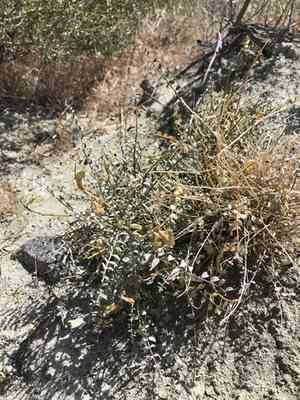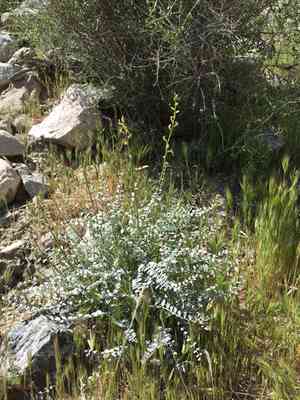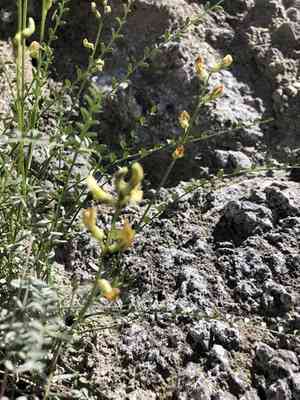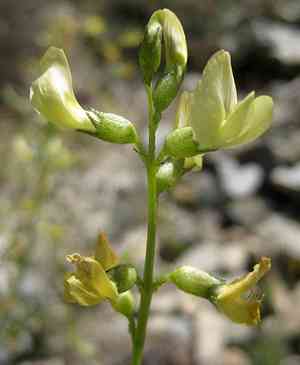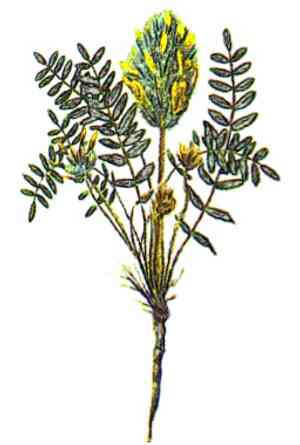
Triplerib milkvetch(Astragalus tricarinatus)

Triplerib milkvetch (Astragalus tricarinatus)

Also known as: Cushenbury Milk-vetch

Triplerib milkvetch (Astragalus tricarinatus) is a distinctive perennial herb, named for its characteristic triple-ridged seed pods. It thrives in rocky or gravelly soils in mountainous regions due to several key adaptations. Its deep root system anchors the plant and accesses deeper moisture, while its low, compact growth minimizes wind exposure and water loss. The plant's slender stems and pinnately compound leaves emerge in dense tufts, efficiently utilizing available nutrients. Additionally, triplerib milkvetch forms symbiotic relationships with nitrogen-fixing bacteria, enhancing its nutrient uptake in poor soils. These features collectively enable the plant to endure and flourish in its challenging habitat.

Attributes of Triplerib milkvetch

Lifespan
Perennial
Plant Type
Herb
Plant Height
15-25 cm
Spread
10-20 cm
Leaf Color
Green
Flower Size
0.5-1 cm
Flower Color
Purple, Pink

ForwardPlant - Identify plants with a snap

Identify and diagnose plants, get toxicity alerts, and explore safety guides for all types of fungi.

Try for Free

Images of Triplerib milkvetch

Triplerib milkvetch(Astragalus tricarinatus)

Quickly Identify Triplerib milkvetch

1
It can be identified by its thin, branched stems, narrow leaves with multiple leaflets, and small, pea-like flowers typically in a purple or pink hue. Flowering occurs in the spring.

Scientific Classification of Triplerib milkvetch

Phylum
Vascular plants
Class
Dicotyledons
Order
Fabales
Family
Legume
Genus
Milkvetch
Species
Triplerib milkvetch

Planting and Growing of Triplerib milkvetch

Care Difficulty
Moderate
Watering Schedule
Every 2 days
Sunlight Requirements
Partial sun
Sunshine Duration
4-6 hours
Ideal Temperature
60-75℉
Soil Type
Potting Mix, Peat Mix
Soil pH
6.5-7.5
Fertilizer Type
Balanced
Pruning Season
Spring, Summer
Pruning Area
Branches, Leaves
Pruning Frequency
2 times a year
Repotting Season
Spring
Pot Type
Plastic, Ceramic

water icon How to Water Triplerib milkvetch?

For Astragalus tricarinatus, the watering should be deep but not too frequent. Water until the soil is saturated, allowing excess water to drain out completely. This helps the roots to drink deeply and promote healthy plant growth.
What are the symptoms of an underwatered Triplerib milkvetch?
What should I do if my Triplerib milkvetch is not getting enough water?
What are the symptoms of an overwatered Triplerib milkvetch?
How to save an overwatered Triplerib milkvetch?

sunlight icon What Are the Sunlight Requirements for Triplerib milkvetch?

Sunlight Requirements: Partial sun
Duration of light: 4 to 6 hours
Astragalus tricarinatus thrives best in partial sun conditions, receiving 4 to 6 hours of light per day. This ensures balanced growth, leaf vitality, and optimum energy for blooming if applicable.
What is the ideal light for Astragalus tricarinatus?
How to achieve ideal lighting for Astragalus tricarinatus?
What are the benefits of ideal lighting for Astragalus tricarinatus?

temperature icon What Is the Ideal Temperature Range for Triplerib milkvetch?

Ideal Temperature: 60 ~ 75℉
The ideal temperature range for Astragalus tricarinatus is between 60°F and 75°F. This range ensures optimal growth and helps maintain the plant's overall health. Within these temperatures, the plant can efficiently conduct its physiological processes, ensuring steady growth and resilience against diseases.

soil icon What Soil is Best for Triplerib milkvetch?

Soil type: Loam, Sandy loam
Soil PH: 6.5 ~ 7.5
Astragalus tricarinatus thrives best in well-drained soil. It's important to prevent water accumulation, as this plant is sensitive to root rot. Well-drained soil promotes healthy root development and enhances nutrient uptake, ensuring robust growth. This plant requires soil with moderate nutrient levels. Overly rich soil can lead to excessive vegetative growth, hindering flower and seed production. A balanced nutrient profile supports steady growth and resilience against environmental stressors. A pH range between 6.5 and 7.5 is ideal for Astragalus tricarinatus. This range ensures optimal nutrient availability and uptake. Maintaining this pH supports the plant's metabolic activities, leading to vibrant foliage and healthy blooms.

fertilize icon How to Fertilize Triplerib milkvetch?

Fertilizer type: Balanced
For Astragalus tricarinatus, an appropriate amount of fertilizer is crucial for balanced growth. Typically, 1/4 to 1/2 of the recommended dose on the fertilizer package is suitable, ensuring not to overwhelm the plant's natural resilience.

prune icon How to Prune Triplerib milkvetch?

Pruning Time: Spring, Summer
Start by cutting away any dead, damaged, or diseased stems to prevent pest infestations and improve the plant's aesthetic. Cut these sections back to healthy wood, ensuring the cut is clean. Trim the plant to maintain its shape and encourage bushier growth. Focus on cutting back overgrown sections to maintain balance, and trim above a leaf node to promote new growth from that point. Prune inner branches that may be overcrowded to increase airflow, which helps prevent fungal diseases. Ensure the interior of the plant is not too dense, allowing for air circulation and light penetration. More About Pruning Techniques

propagate icon How to Propagate Triplerib milkvetch plant?

Propagate Time: Spring, Early summer
1
Collect seeds during the appropriate season and clean them from any pulp or debris. Soak seeds in water for 12-24 hours to help soften the seed coat, improving germination rates.
2
Fill seed trays with a well-draining soil mix. Scatter the seeds evenly and cover lightly with soil. Maintain moderate moisture by misting regularly to support germination.
3
Choose healthy stems from the parent plant. Cut about 4-6 inches of stem at a node to ensure proper rooting. Dip the cut end in rooting hormone before planting in a sterile medium.
More About Propagating Techniques

repot icon How to Repot Triplerib milkvetch plant?

Repotting frequency: Every 2-3 years
1
Astragalus tricarinatus signals its need for repotting when it becomes root-bound or shows stunted growth. The ideal time is early spring or autumn when the plant is in its dormant or less active stages. Repotting during these periods allows the plant to adjust more efficiently, minimizing stress and promoting healthier root development.
2
Choose a pot that is one size larger than the current one, with ample drainage holes. This prevents waterlogging, which can lead to root rot. A slightly bigger pot allows room for growth without overwhelming the plant with excess soil that retains moisture. Opt for materials like terracotta or clay that offer breathability, fostering a healthier root environment.
3
For Astragalus tricarinatus, a well-draining sandy mix is crucial. This soil type mimics its natural habitat, ensuring excess water is quickly drained, which prevents root rot. The mix should be light and airy yet capable of retaining the necessary moisture for the plant's nutrient uptake. Adding some perlite or gravel can enhance the drainage properties further.

ForwardPlant - Identify plants with a snap

Find the best spots for them to optimize their health, simply using your phone.

Try for Free