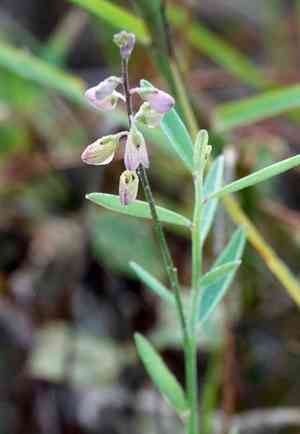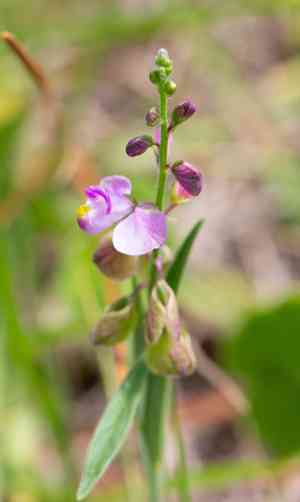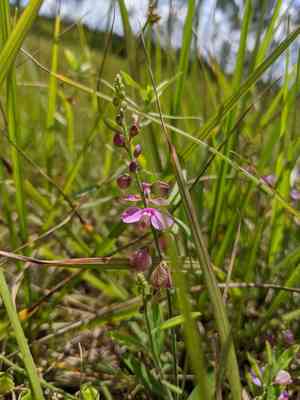
Showy milkwort(Asemeia grandiflora)

Showy milkwort (Asemeia grandiflora)

Also known as: None

Showy milkwort (Asemeia grandiflora) thrives in its native habitat due to several distinctive factors:

1. **Fire Adaptation**: This plant has evolved to flourish in environments prone to wildfires. It often blooms within two months following a fire, taking advantage of reduced competition and nutrient-rich ash.
2. **Seed Dispersal Mechanism**: Its seeds are dispersed through an explosive mechanism from the seed pods after they dry out, ensuring widespread distribution.
3. **Pollinator Relationships**: The vibrant flowers are particularly attractive to leafcutter bees, which play a crucial role in its pollination.
4. **Drought Tolerance**: Adapted to dry conditions, showy milkwort is well-suited to survive and prosper in arid climates.

These factors collectively enhance the plant's ability to grow and reproduce robustly in its native environment.

Attributes of Showy milkwort

Lifespan
Annual
Plant Type
Herb
Plant Height
25 cm to 50 cm
Spread
Approximately 0.5 to 1 meter
Leaf Color
Green
Flower Size
1.3 cm
Flower Color
Purple Pink

ForwardPlant - Identify plants with a snap

Identify and diagnose plants, get toxicity alerts, and explore safety guides for all types of fungi.

Try for Free

Images of Showy milkwort

Showy milkwort(Asemeia grandiflora)

Quickly Identify Showy milkwort

1
Asemeia grandiflora can be identified by its large, colorful flowers, typically pink or purple. The leaves are usually lance-shaped and arranged alternately along the stem.

Scientific Classification of Showy milkwort

Phylum
Vascular plants
Class
Dicotyledons
Order
Fabales
Family
Milkwort
Genus
Asemeia
Species
Showy milkwort

Planting and Growing of Showy milkwort

Care Difficulty
Easy
Watering Schedule
Every 4 days
Sunlight Requirements
Partial sun
Sunshine Duration
4-8 hours
Ideal Temperature
65-75℉
Soil Type
Potting Mix, Peat Mix
Soil pH
6.5-7.5
Fertilizer Type
Balanced
Pruning Season
Spring, Summer
Pruning Area
Branches, Leaves
Pruning Frequency
2 times a year
Repotting Season
Spring
Pot Type
Plastic, Ceramic

water icon How to Water Showy milkwort?

For Asemeia grandiflora, it's essential to water until the soil is thoroughly moistened but not waterlogged. This typically means about 200ml per watering, depending on pot size and soil type.
What are the symptoms of an underwatered Showy milkwort?
What should I do if my Showy milkwort is not getting enough water?
What are the symptoms of an overwatered Showy milkwort?
How to save an overwatered Showy milkwort?

sunlight icon What Are the Sunlight Requirements for Showy milkwort?

Sunlight Requirements: Partial sun
Duration of light: 4 to 6 hours
Partial sun exposure with 4 to 6 hours of light daily helps Asemeia grandiflora thrive by providing enough energy for photosynthesis, while preventing the potential damages of overexposure and sustaining healthy growth.
Optimal Sunlight Exposure
Monitor Light Intensity
Seasonal Adjustment

temperature icon What Is the Ideal Temperature Range for Showy milkwort?

Ideal Temperature: 65 ~ 75℉
The ideal temperature range for Asemeia grandiflora is between 65°F and 75°F. This range provides optimal conditions for the plant's growth, ensuring that it receives adequate warmth for photosynthesis without being exposed to excessive heat or cold. Maintaining this temperature ensures vibrant blooms and overall plant health.

soil icon What Soil is Best for Showy milkwort?

Soil type: Sandy soil, Loam
Soil PH: 6.5 ~ 7.5
Asemeia grandiflora thrives best in soil that offers great drainage capabilities. Well-drained soils prevent waterlogging, which can lead to root rot, ensuring the plant maintains healthy roots and robust growth. This plant prefers soil that is moderately rich in nutrients. Balanced nutrient levels support vibrant foliage and prolific blooms, allowing Asemeia grandiflora to reach its full ornamental potential. A neutral pH soil, ranging from 6.5 to 7.5, is ideal, as it optimizes nutrient absorption. It ensures the plant can effectively access essential minerals for healthy growth and development.

fertilize icon How to Fertilize Showy milkwort?

Fertilizer type: Balanced
When fertilizing Asemeia grandiflora, use a balanced fertilizer with equal parts nitrogen, phosphorus, and potassium. A quarter strength solution for liquid fertilizers is recommended. Adjust based on plant response.

prune icon How to Prune Showy milkwort?

Pruning Time: Spring, Summer, Autumn
Start by sterilizing your pruning shears to prevent disease spread. Identify dead or damaged stems and carefully remove them. Aim to cut just above a node or leaf joint, which stimulates new growth. Focus on maintaining a balanced shape, ensuring sunlight reaches all parts of the plant. Finish by cleaning up any debris around the plant to prevent pest and disease issues. Consider the natural growth habit of Asemeia grandiflora and adjust the structure for aesthetic balance. Target long unruly stems, reducing them by up to a third to maintain control over the size of the plant. Promotes stronger branching and more prolific flowering as a result. More About Pruning Techniques

propagate icon How to Propagate Showy milkwort plant?

Propagate Time: Spring,Early spring
1
Choose mature and healthy seeds from a parent Asemeia grandiflora plant. Ensure the seeds are disease-free and have been stored in a cool, dry place to maintain their viability.
2
Use a well-draining, sterile growing medium such as a mix of peat and sand. Fill the seed trays or pots with this medium, leaving some space at the top to allow for watering.
3
Sow the seeds or plant the cuttings into the growing medium at the appropriate depth. For seeds, cover lightly with soil. For cuttings, insert them so at least a third is submerged below the soil.

repot icon How to Repot Showy milkwort plant?

Repotting frequency: Every 2-3 years
1
Asemeia grandiflora shows signs it needs repotting through root-bound symptoms like roots coming out of drainage holes, slowed growth, and soil that dries out quickly. Spring or early summer, during active growth, is the ideal time to allow for optimal adaptation.
2
Select a pot with a diameter 2 inches larger than the current one to provide growth space without overwhelming the plant. The pot should have ample drainage holes to prevent waterlogging, which benefits root health and prevents rot.
3
A well-draining, acidic soil mix is ideal for Asemeia grandiflora. Such a blend supports adequate moisture retention while ensuring excess water doesn't accumulate, mimicking the plant's natural habitat and promoting healthy growth.

ForwardPlant - Identify plants with a snap

Find the best spots for them to optimize their health, simply using your phone.

Try for Free