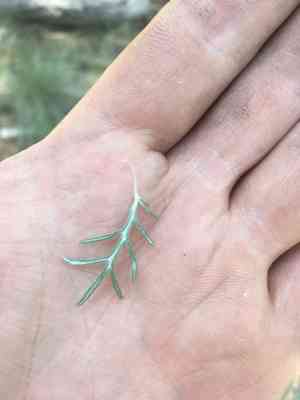
Carruth's sagewort (Artemisia carruthii)
Also known as: Carruth's sage, Carruth sagebrush
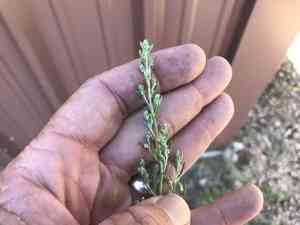
Carruth's sagewort (Artemisia carruthii) is a robust perennial herb characterized by its finely divided, silvery-green foliage. The leaves emit a distinct, camphor-like scent. This plant is native to North America and flourishes in dry, rugged environments, often inhabiting rocky or sandy soils. It produces small, yellowish-green flowers that grow in clusters on sturdy stems, making it well-suited to withstand its tough, arid habitat.
In This Article
Attributes of Carruth's sagewort
Lifespan
Perennial
Plant Type
Herb
Plant Height
0.5 to 1 meter
Spread
0.5 to 1 meter
Leaf Color
Gray-green
Flower Size
Less than 1 cm
Flower Color
Yellowish or whitish
Images of Carruth's sagewort
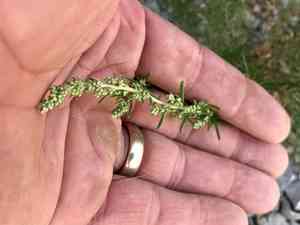
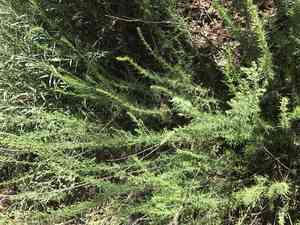
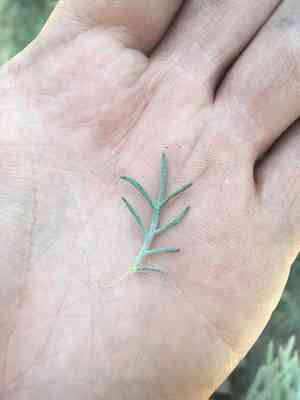
Quickly Identify Carruth's sagewort
1
Artemisia carruthii can be identified by its finely divided, gray-green leaves and its small, inconspicuous yellowish or whitish flowers. The plant has a characteristic sage-like aroma.
Scientific Classification of Carruth's sagewort
Phylum
Vascular plants
Class
Dicotyledons
Order
Asterales
Family
Daisy
Genus
Mugworts
Species
Carruth's sagewort
Planting and Growing of Carruth's sagewort
Care Difficulty
Moderate
Watering Schedule
Every 2 days
Sunlight Requirements
Full sun
Sunshine Duration
6-12 hours
Ideal Temperature
50-77℉
Soil Type
Potting Mix, Peat Mix
Soil pH
6.5-7.5
Fertilizer Type
Balanced
Pruning Season
Spring, Summer
Pruning Area
Branches, Leaves
Pruning Frequency
2 times a year
Repotting Season
Spring
Pot Type
Plastic, Ceramic
 How to Water Carruth's sagewort?
For Artemisia carruthii, ensure the soil remains slightly moist but never soggy. Water the plant with approximately 250 ml of water per session. The goal is to dampen the root zone without waterlogging, which could harm the plant. Ensure excess water drains away to prevent root rot.
What are the symptoms of an underwatered Carruth's sagewort?
›
What should I do if my Carruth's sagewort is not getting enough water?
›
What are the symptoms of an overwatered Carruth's sagewort?
›
How to save an overwatered Carruth's sagewort?
›
 What Are the Sunlight Requirements for Carruth's sagewort?
This plant thrives best in full sun to partial sun conditions. By providing 6 to 8 hours of sun exposure daily, Artemisia carruthii grows vigorously and remains healthy, enjoying the lushness and enhanced resistance to environmental stresses.
Preferred Light Intensity
›
Solution for Ideal Sunlight
›
Effects of Ideal Lighting
›
 What Is the Ideal Temperature Range for Carruth's sagewort?
For Artemisia carruthii, an ideal growth environment should have temperatures between 50°F and 77°F. This range ensures optimal physiological processes, such as photosynthesis and respiration, allowing the plant to thrive and maximize its growth and flowering potential.
 What Soil is Best for Carruth's sagewort?
Artemisia carruthii thrives in well-drained soils, preventing root rot and other water-related diseases. Ensuring proper drainage is key to maintaining the plant's health and robust growth. This plant prefers soil with moderate fertility levels. Too much fertility can lead to excessive leaf growth and reduced aromatic qualities, while moderate fertility supports its characteristic appearance and fragrance. Artemisia carruthii often thrives best in slightly alkaline conditions, benefiting from a pH range that supports its nutrient uptake effectively while maintaining its vibrant coloration and structure.
 How to Fertilize Carruth's sagewort?
For Artemisia carruthii, you should use about half the recommended dose on the fertilizer packaging, as this plant thrives in less nutrient-rich soils. Too much fertilizer can lead to excessive growth and reduced hardiness.
 How to Prune Carruth's sagewort?
Prune Artemisia carruthii during its active growing seasons in spring and summer. This timing encourages robust new growth and helps maintain the health and appearance of the plant. While maintaining shape is important, excessive pruning can stress the plant. Always ensure that enough foliage remains to support the plant’s photosynthesis and overall vitality.
More About Pruning Techniques→
 How to Propagate Carruth's sagewort plant?
1
For seed propagation, a well-draining, fertile soil mix is essential. Mix part potting soil with part sand or perlite to enhance drainage and provide a good medium for seedlings or new plants to establish roots.
2
Select healthy, non-flowering stems for cuttings that are about 4-6 inches long. Make a clean cut just below a node and remove the lower leaves, leaving a few at the tip, to focus energy on root development.
3
For division propagation, dig up the entire plant carefully avoiding root damage. Separate the clumps ensuring each has a healthy root system and replant them in a prepared soil mix, ensuring they are well watered initially.
 How to Repot Carruth's sagewort plant?
1
Artemisia carruthii signals its need for repotting when its roots start to outgrow the pot and become visible through the drainage holes. Another telltale sign is that the soil doesn't hold moisture as it used to, drying out too quickly. Ideally, this should be done during its growth phases in spring or autumn.
2
Choose a pot that is just a couple of inches larger than the existing one. A pot too large can retain excessive moisture, leading to root rot. Opt for a container with ample drainage holes to ensure proper aeration and water flow, vital for the plant's health.
3
Select a well-draining loamy mix to ensure that water does not stagnate around the roots, which Artemisia dislikes. This mix should provide the right balance of nutrients and drainage, mimicking its natural habitat and promoting healthy growth.
Learn More About Carruth's sagewort Diseases
Anthracnose
Bacterial Leaf Spot
Bacterial Wilt
Crown Gall
Cyst Nematode
Damping-off
Downy Mildew
Drought Stress
Fusarium Wilt
Gray Mold
Leaf Spot
Mosaic
Nutrient Deficiency
Nutrient Toxicity
Powdery Mildew
Root Rot
Root-knot Nematode
Rusts
Sooty Mold
Spider Mites
Temperature Stress
Thrips Damage
White Mold



