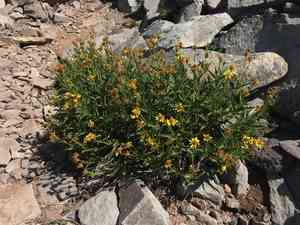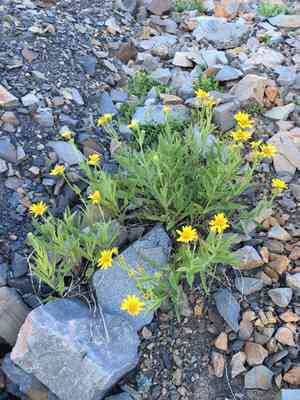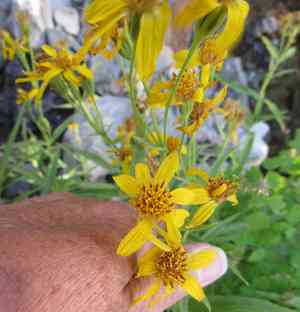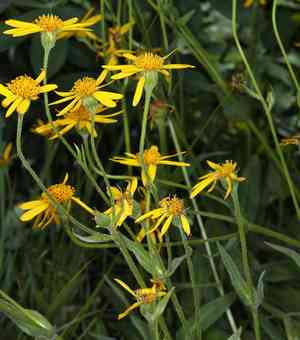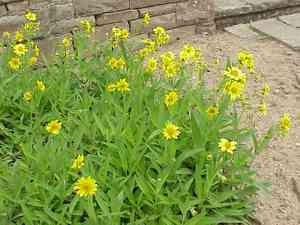
Spearleaf arnica(Arnica longifolia)

Spearleaf arnica (Arnica longifolia)

Also known as: Long-leafed Arnica, Narrow-leaved Arnica

Arnica longifolia, also known as longleaf arnica, is a perennial herbaceous plant often forming extensive groundcover in moist, cool habitats. Here are its distinguishing features:

**Physical Characteristics:**
- **Leaves:** Narrow, lance-shaped, and rough-textured, typically growing in pairs. The foliage is mint-green and can be sticky due to glandular secretions.
- **Flowers:** Erect stems bear daisy-like flower heads with bright yellow ray florets and disc florets that can range from yellow to reddish or orange. Blooms appear from late spring to early summer.
- **Fruit:** Produces reddish achenes, each topped with a small pappus that aids in wind dispersal.
- **Growth Habit:** Forms large, dense patches through its rhizomatous root system.

**Habitat:**
- Thrives in moist, cool environments such as meadows, stream banks, and forest margins.
- Commonly found at mid to high elevations, particularly in mountainous regions of western North America.

This plant is noted for its medicinal uses, although it should be handled carefully due to potential toxicity.

Attributes of Spearleaf arnica

Lifespan
Perennial
Plant Type
Herb
Plant Height
30 cm to 61 cm
Spread
10-20 cm
Leaf Color
Green
Flower Size
4-6 cm
Flower Color
Yellow

ForwardPlant - Identify plants with a snap

Identify and diagnose plants, get toxicity alerts, and explore safety guides for all types of fungi.

Try for Free

Images of Spearleaf arnica

Spearleaf arnica(Arnica longifolia)

Quickly Identify Spearleaf arnica

1
Arnica longifolia can be identified by its long, narrow leaves that are typically 8-20 cm in length. The stems are loosely hairy and bear bright yellow, daisy-like flowers with a diameter of about 4-6 cm. The flowers are notably aromatic and tend to bloom in summer.

Scientific Classification of Spearleaf arnica

Phylum
Vascular plants
Class
Dicotyledons
Order
Asterales
Family
Daisy
Genus
Mountain tobaccos
Species
Spearleaf arnica

Planting and Growing of Spearleaf arnica

Care Difficulty
Easy
Watering Schedule
Every 2 days
Sunlight Requirements
Full sun
Sunshine Duration
4-8 hours
Ideal Temperature
65-75℉
Soil Type
Potting Mix, Peat Mix
Soil pH
6-7.5
Fertilizer Type
Balanced
Pruning Season
Spring, Summer
Pruning Area
Branches, Leaves
Pruning Frequency
2 times a year
Repotting Season
Spring
Pot Type
Plastic, Ceramic

water icon How to Water Spearleaf arnica?

Watering should be moderate, ensuring the soil is moist but not waterlogged. Aim for about 500ml each time, depending on the plant's size and the pot's capacity, ensuring complete absorption without excess pooling.
What are the symptoms of an underwatered Spearleaf arnica?
What should I do if my Spearleaf arnica is not getting enough water?
What are the symptoms of an overwatered Spearleaf arnica?
How to save an overwatered Spearleaf arnica?

sunlight icon What Are the Sunlight Requirements for Spearleaf arnica?

Sunlight Requirements: Full sun, Partial sun
Duration of light: 4-8 hours daily
Arnica longifolia prefers full to partial sunlight, ideally 4 to 8 hours daily. This range promotes optimal photosynthesis, ensuring healthy growth and a robust flowering phase, critical for the plant's overall vigor and lifecycle.
What's the best light for thriving?
How can I achieve ideal lighting for Arnica longifolia?
What happens if Arnica gets sufficient light?

temperature icon What Is the Ideal Temperature Range for Spearleaf arnica?

Ideal Temperature: 65 ~ 75℉
Arnica longifolia thrives best in temperatures ranging from 65°F to 75°F. This range provides the most conducive conditions for photosynthesis and other vital physiological processes, ensuring optimal growth and development of the plant.

soil icon What Soil is Best for Spearleaf arnica?

Soil type: Loam, Sandy loam
Soil PH: 6 ~ 7.5
Arnica longifolia thrives in well-drained soil, preventing waterlogging which could lead to root rot. A soil with good drainage allows for air circulation and maintenance of a healthy root system. A nutrient-rich substrate ensures that Arnica longifolia gets the necessary minerals and nutrients. The plant will develop vibrant foliage and a strong resistance to pests. High organic matter contributes to fertility and moisture retention. This enriches the growth medium and helps sustain Arnica longifolia during dry spells.

fertilize icon How to Fertilize Spearleaf arnica?

Fertilizer type: Balanced
When fertilizing Arnica longifolia, a gentle touch is key. Use a diluted liquid fertilizer with a concentration of 50% strength once every two weeks during the growing season. This plant prefers low to moderate nutrient levels, making it essential to avoid over-fertilization.

prune icon How to Prune Spearleaf arnica?

Pruning Time: Spring, Summer, Autumn
Always start by sterilizing your pruning tools with a solution of one part bleach to three parts water. This helps avoid transferring diseases between plants. Trim back any overgrown or straggly stems to encourage a fuller shape. Focus on maintaining a balanced form to ensure even growth. Carefully cut away any dead or yellowing leaves. These unsightly leaves can sap energy from the plant and reduce its flowering potential. More About Pruning Techniques

propagate icon How to Propagate Spearleaf arnica plant?

Propagate Time: Spring,Early summer
1
Start by preparing a well-drained seed bed filled with a mix of peat and perlite. Ensure the soil is moist but not overly saturated. This environment is ideal for germinating Arnica longifolia seeds.
2
Gently place the seeds on the surface of the prepared seed bed. Cover them lightly with a thin layer of soil. Keep the seed tray in a sunny position but avoid direct harsh sunlight.
3
For division propagation, dig up mature Arnica longifolia plants in early summer. Gently separate the roots into smaller clusters using a sterile knife. Replant these clusters immediately to prevent drying.
More About Propagating Techniques

repot icon How to Repot Spearleaf arnica plant?

Repotting frequency: Every 2-3 years
1
Look for signs such as roots growing out of the drainage holes or the soil becoming too compacted. Arnica longifolia benefits from repotting when its growth feels stunted or the existing soil can't provide adequate nutrition. Opt for repotting during its growth spikes in spring or when the surroundings are mild in autumn.
2
Select a pot that is at least 2 inches larger in diameter than the current one. Ensure it has adequate drainage to prevent root rot. A terracotta pot is preferred as it allows for better breathability and moisture control, essential for the root health of Arnica longifolia.
3
Choose a well-draining sandy soil mix that mimics its natural alpine habitats. This will ensure excellent aeration and quick drainage, preventing the common issue of overwatering. Such soil helps the plant's roots expand freely while retaining minimal yet sufficient moisture.

ForwardPlant - Identify plants with a snap

Find the best spots for them to optimize their health, simply using your phone.

Try for Free

Toxicity

Ingestion, Dermal contact

Identify toxic plants for your safety

Learn which plants are harmful to you and your pets, and make informed choices for a safer home!

Try for Free
WARNING
The judgment on toxicity and danger is for reference only. We DO NOT GUARANTEE any accuracy of such judgment. Therefore, you SHALL NOT rely on such judgment. It is IMPORTANT TO SEEK PROFESSIONAL ADVICE in advance when necessary.