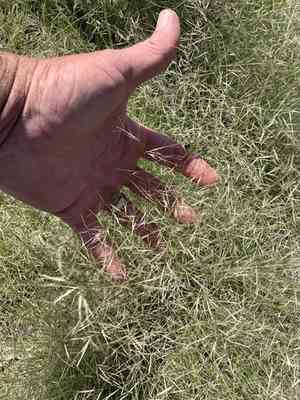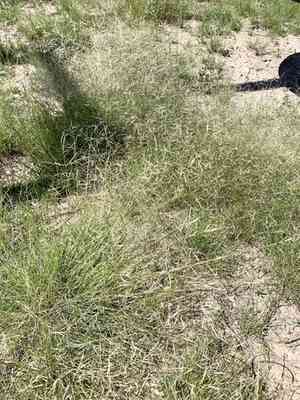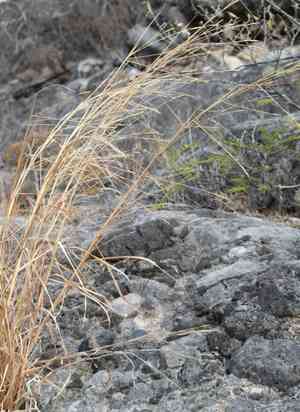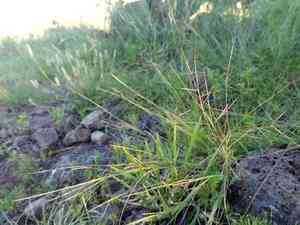
Havard's threeawn(Aristida havardii)

Havard's threeawn (Aristida havardii)

Also known as: Harvard threeawn

Havard's threeawn (Aristida havardii) is a resilient perennial bunchgrass that flourishes in arid environments. Key features include:

1. **Growth Form**: Forms dense clumps, growing between 1-3 feet tall.
2. **Leaves**: Characterized by narrow, rough-textured leaves.
3. **Seed Heads**: Notable for their three long awns, which aid in seed dispersal and give the plant a distinctive appearance.

**Habitat Preferences**:
1. **Soil**: Prefers sandy or rocky soils that offer good drainage.
2. **Environment**: Commonly found in dry, open areas such as grasslands, deserts, and scrublands.
3. **Climate**: Thrives in hot, arid, and semi-arid conditions.

Havard's threeawn is well-adapted to survive in harsh, dry landscapes, showcasing its subtle beauty and hardiness in regions where few plants can thrive.

Attributes of Havard's threeawn

Lifespan
Perennial
Plant Type
Grass
Plant Height
50-100 cm
Spread
N/A
Leaf Color
Green
Flower Size
Small spikelets, less than 1 cm
Flower Color
Brownish

ForwardPlant - Identify plants with a snap

Identify and diagnose plants, get toxicity alerts, and explore safety guides for all types of fungi.

Try for Free

Images of Havard's threeawn

Havard's threeawn(Aristida havardii)

Quickly Identify Havard's threeawn

1
To identify Aristida havardii, look for its tall, slender form with a bushy top, distinctive long awns on the seed heads, and the presence of narrow leaves often rolled inward which are relatively sparse along the stem.

Scientific Classification of Havard's threeawn

Phylum
Vascular plants
Class
Monocotyledons
Order
Poales
Family
Grass
Genus
Threeawn
Species
Havard's threeawn

Planting and Growing of Havard's threeawn

Care Difficulty
Moderate
Watering Schedule
Every 2 days
Sunlight Requirements
Full sun
Sunshine Duration
4-8 hours
Ideal Temperature
60-75℉
Soil Type
Potting Mix, Peat Mix
Soil pH
6.5-7.5
Fertilizer Type
Balanced
Pruning Season
Spring, Summer
Pruning Area
Branches, Leaves
Pruning Frequency
2 times a year
Repotting Season
Spring
Pot Type
Plastic, Ceramic

water icon How to Water Havard's threeawn?

Aristida havardii, commonly known as Havard's three-awn, requires a measured approach to watering. Aim for 250 mL of water to mimic the sporadic rainfall of its native habitat. This ensures the soil remains dry for periods, preventing root rot while still providing necessary moisture for the plant's growth.
What are the symptoms of an underwatered Havard's threeawn?
What should I do if my Havard's threeawn is not getting enough water?
What are the symptoms of an overwatered Havard's threeawn?
How to save an overwatered Havard's threeawn?

sunlight icon What Are the Sunlight Requirements for Havard's threeawn?

Sunlight Requirements: Full sun
Duration of light: 8-10 hours
Aristida havardii performs best under full sun, with ideal conditions involving uninterrupted sunlight throughout the day. This supports vigorous growth, highlighting its unique texture and color.
What is the ideal light exposure for Aristida havardii?
How to ensure Aristida havardii receives optimal sunlight?
What benefits does ideal light provide to Aristida havardii?

temperature icon What Is the Ideal Temperature Range for Havard's threeawn?

Ideal Temperature: 60 ~ 75℉
Aristida havardii thrives best in temperatures ranging from 60°F to 75°F, where the plant experiences optimal growth and health. During this temperature range, the plant can photosynthesize efficiently, leading to vigorous growth and resilience. Consistent exposure to these conditions allows for robust root and shoot development, enhancing overall plant vitality.

soil icon What Soil is Best for Havard's threeawn?

Soil type: Sandy soil, Calcareous soil
Soil PH: 6.5 ~ 7.5
Aristida havardii thrives in well-drained soils that prevent waterlogging. This is crucial because excess moisture can lead to root rot, significantly harming the plant's health. Ensuring good drainage helps maintain the plant's longevity and vitality. This plant naturally grows in nutrient-poor environments, meaning rich soil is not necessary. Its adaptation to thrive in poor substrates is a survival strategy that makes it a low-maintenance plant ideal for xeriscaping. Aristida havardii does not require soils rich in organic matter. Its native habitat often lacks organic composition, so such soils are preferable as they match its natural growth conditions and prevent overgrowth of competing vegetation.

fertilize icon How to Fertilize Havard's threeawn?

Fertilizer type: Balanced
Aristida havardii, commonly known as Havard's three-awn, is adapted to nutrient-poor soils, indicating that it requires minimal fertilizer. When applying fertilizers, use a low-nitrogen formula to avoid excessive growth that can weaken the plant. A balanced, diluted liquid fertilizer should be used, at half the recommended strength found on the label to ensure that the plant receives just enough nutrients without the risk of nutrient burn.

prune icon How to Prune Havard's threeawn?

Pruning Time: Spring, Summer, Autumn
Start by identifying any dead or damaged parts of the plant, focusing on leaves and stems. Make clean cuts using sharp pruning shears to avoid tearing. Prune during the early spring to stimulate growth and again in late summer to preserve shape and health. Aristida havardii can grow to a substantial size and may require shaping to fit its space in the garden. Trim back any overreaching stems and maintain a balanced shape to encourage uniform growth. Use a combination of thinning out and shearing techniques to achieve a neat appearance. More About Pruning Techniques

propagate icon How to Propagate Havard's threeawn plant?

Propagate Time: Spring, Early summer
1
Select clean, viable seeds of Aristida havardii for sowing. Check for any visible signs of damage or disease, ensuring only the healthiest seeds are used to increase the chances of successful propagation.
2
Spread the seeds evenly in a prepared seed tray filled with a suitable substrate. Ensure that the seeds are spaced adequately to avoid overcrowding, which can impede germination and early growth.
3
Keep the substrate consistently moist but not waterlogged. Monitor moisture levels regularly, as inconsistent watering can lead to poor germination or seedling damping-off.
More About Propagating Techniques

repot icon How to Repot Havard's threeawn plant?

Repotting frequency: Every 2-3 years
1
Repotting Aristida havardii is crucial when you notice its roots growing out of the drainage holes or the plant seems to have outgrown its current pot. Another key moment is when your plant's growth appears stunted despite adequate care. Spring or autumn are ideal as they coincide with active root growth, allowing the grass to recuperate quickly from the transplant shock.
2
Selecting the right pot is essential for Aristida havardii's health. Choose a pot that is one size larger than the current one to prevent excessive water retention, which can lead to root rot. Ensure it has ample drainage holes to facilitate the swift escape of excess water, thus maintaining root health and preventing fungal issues.
3
Opt for a well-draining sandy soil mix for Aristida havardii to mimic its natural environment. The sandy texture encourages aeration, preventing water from clinging to the roots and thereby avoiding rot. A soil mix rich in minerals will also support its growth by providing essential nutrients vital for exuberant foliage.

ForwardPlant - Identify plants with a snap

Find the best spots for them to optimize their health, simply using your phone.

Try for Free