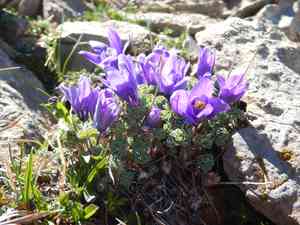
Jones' columbine (Aquilegia jonesii)
Also known as: Jones' Columbine
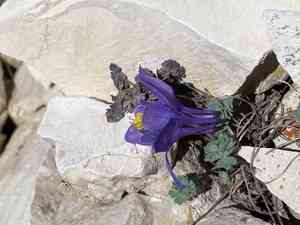
Jones' columbine (Aquilegia jonesii) is a perennial plant notable for its vibrant blue to violet flowers, which feature distinctive curved spurs. The plant has finely divided, fern-like leaves and a compact growth form, making it well-suited to high-altitude, rocky alpine environments. Found primarily in the western United States, Jones' columbine typically blooms from late spring to early summer, offering a brief but beautiful display that attracts various pollinators with its nectar-rich flowers.
In This Article
Attributes of Jones' columbine
Lifespan
Perennial
Plant Height
0 mm to 30 cm
Spread
10-20 cm
Leaf Color
Green, occasionally with a bluish tint
Flower Size
2-3 cm
Flower Color
Blue-purple
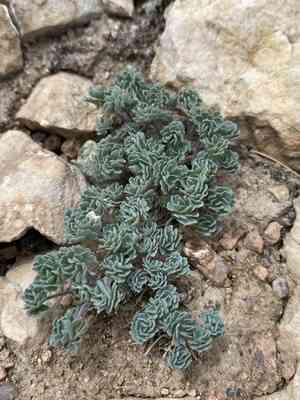
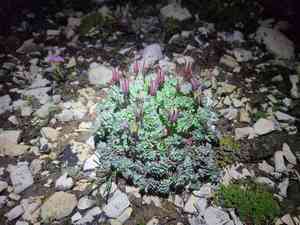
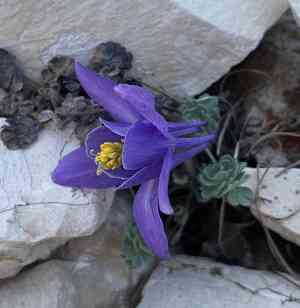
Images of Jones' columbine
Quickly Identify Jones' columbine
1
Aquilegia jonesii can be identified by its short stature, blue to blue-purple spurred flowers, and deeply lobed leaves forming a basal rosette. The flowers have five sepals and five petals, with long spurs pointing backwards.
Scientific Classification of Jones' columbine
Phylum
Vascular plants
Class
Dicotyledons
Order
Ranunculales
Family
Buttercup
Genus
Columbine
Species
Jones' columbine
Planting and Growing of Jones' columbine
Care Difficulty
Moderate
Watering Schedule
Every 2 days
Sunlight Requirements
Full sun
Sunshine Duration
6-10 hours
Ideal Temperature
55-70℉
Soil Type
Potting Mix, Peat Mix
Soil pH
6.5-7.5
Fertilizer Type
Balanced
Pruning Season
Spring, Summer
Pruning Area
Branches, Leaves
Pruning Frequency
2 times a year
Repotting Season
Spring
Pot Type
Plastic, Ceramic
 How to Water Jones' columbine?
For Aquilegia jonesii, the watering should be moderate. Ensure that the soil is evenly moist but not waterlogged or soggy. During the active growing season, aim for approximately 250 ml per watering, enough to saturate the soil but allowing excess moisture to drain away.
What are the symptoms of an underwatered Jones' columbine?
›
What should I do if my Jones' columbine is not getting enough water?
›
What are the symptoms of an overwatered Jones' columbine?
›
How to save an overwatered Jones' columbine?
›
 What Are the Sunlight Requirements for Jones' columbine?
Partial sun with some full sun exposure ensures strong bloom production and healthy foliage. Provides the energy required for photosynthesis while avoiding leaf damage.
What are ideal lighting conditions?
›
How to achieve these lighting conditions?
›
What benefits does ideal lighting provide?
›
 What Is the Ideal Temperature Range for Jones' columbine?
For optimal growth, Aquilegia jonesii thrives in temperatures ranging from 55°F to 70°F. This range provides a comfortable environment that mimics their natural habitat, encouraging healthy growth and flowering. Maintaining this temperature range ensures the plant's metabolic processes function efficiently.
 What Soil is Best for Jones' columbine?
Aquilegia jonesii requires well-drained soil to prevent root rot. Ensuring that the soil drains properly helps maintain plant health and vigor by avoiding waterlogged conditions. Nutrient-rich soil supports the robust growth of Aquilegia jonesii by providing essential minerals. Fertile soil enhances flower production and overall vigor of the plant. The soil should have the ability to retain moisture to a moderate extent. Moisture retention helps the plant during dry spells by ensuring a consistent water supply.
 How to Fertilize Jones' columbine?
Aquilegia jonesii requires a careful balance in fertilization. It thrives on light feeding; therefore, when using liquid fertilizer, a dilution of half-strength is sufficient. Over-application can harm the plant, so a bi-weekly feeding of diluted liquid fertilizer is ideal during its growing season.
 How to Prune Jones' columbine?
Begin by inspecting your Aquilegia jonesii for any dead or damaged stems and leaves. Use sharp, clean scissors or pruning shears to remove these parts at their base. This not only tidies up the plant but also promotes healthier growth. Always cut at a 45-degree angle to prevent water from settling on the cut surface, which can lead to rot. To keep your Aquilegia jonesii looking neat and compact, selectively trim back stems that disturb the plant’s overall shape. Aim for a balanced silhouette, as this will help it withstand wind and weather elements better. Be sure to stand back and assess the overall look after each cut. To enhance blooming, remove spent flower heads regularly during the growing seasons of spring and summer. This is known as 'deadheading,' and it redirects the plant’s energy towards producing new buds rather than seed formation. Trust me, your Aquilegia will thank you with more vibrant and frequent blooms!
More About Pruning Techniques→
 How to Propagate Jones' columbine plant?
1
Collect Aquilegia jonesii seeds when the pods are dry and almost splitting open. Store them in a cool, dry place prior to sowing.
2
Sow the seeds indoors using seed trays filled with well-draining potting soil. Lightly cover the seeds and keep the soil moist but not waterlogged.
3
Select a healthy, non-flowering stem and use pruning shears to take a cutting about 10-15 cm long. Remove the lower leaves and dip the cut end in rooting hormone.
 How to Repot Jones' columbine plant?
1
Aquilegia jonesii indicates it's time for repotting when you notice roots poking through the drainage holes or the plant's overall growth appearing stagnated. A lavish growth of flowers and leaves can also signal restricted space. These signs, coupled with slowed growth, point to a cramped root environment needing intervention.
2
Opt for a pot slightly larger than its current one, ensuring efficient drainage with multiple holes. This prevents water logging which aquilegias are sensitive to. Additionally, an unglazed clay pot can offer better breathability for the roots, enhancing root health and growth.
3
Choose a soil blend designed to mimic rocky or alpine environments, such as a gritty, well-draining mix. This ensures that the roots are not waterlogged and promotes healthy growth. A mix with sand and perlite is ideal, allowing for excellent drainage.
Learn More About Jones' columbine Diseases
Anthracnose
Bacterial Leaf Spot
Bacterial Soft Rot
Bacterial Wilt
Black Spot
Chemical Injury
Crown Gall
Cyst Nematode
Damping-off
Downy Mildew
Drought Stress
Fusarium Wilt
Gray Mold
Leaf Curl
Leaf Spot
Mosaic
Nutrient Deficiency
Nutrient Toxicity
Powdery Mildew
Root Rot
Root-knot Nematode
Rusts
Sooty Mold
Spider Mites
Temperature Stress
Thrips Damage
White Mold



