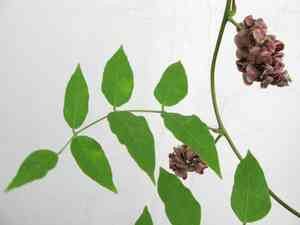
American Groundnut(Apios americana)

American Groundnut (Apios americana)

Also known as: Groundnut, America Hodoimo, Indian Potato

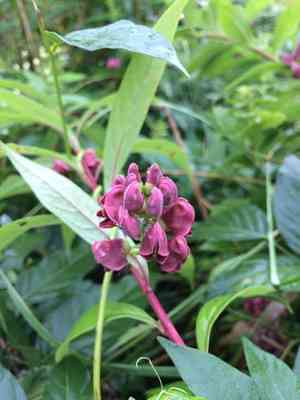
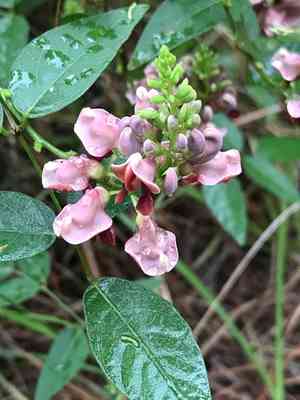
The plant in question is the American Groundnut (Apios americana). This fast-growing vine can climb up to 3 meters in a single season and is known for its striking clusters of fragrant, burgundy-colored flowers. Additionally, it produces edible tubers that are highly valued.

Attributes of American Groundnut

Lifespan
Perennial
Plant Type
Herb, Vine
Plant Height
1.8 m to 3 m
Spread
10 cm to 50 cm
Leaf Color
Green
Flower Size
2.5 cm
Flower Color
Red Brown Pink Purple

ForwardPlant - Identify plants with a snap

Identify and diagnose plants, get toxicity alerts, and explore safety guides for all types of fungi.

Try for Free

Images of American Groundnut

American Groundnut(Apios americana)

Quickly Identify American Groundnut

1
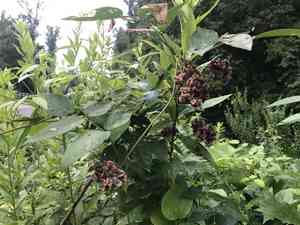
Long climbing vines reach 8-16 feet (2.4-4.9 m).
2
Distinct maroon pea-like flowers in compact racemes.
3
Bean-shaped legume fruit grows 2-4 inches (5-10 cm).
4
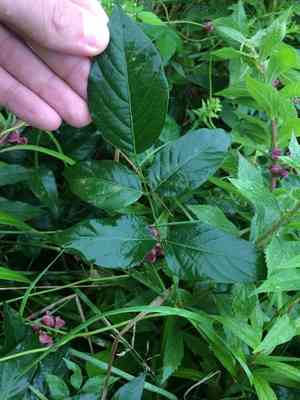
Egg-shaped compound leaves with 5-7 leaflets, up to 2 inches (5 cm) long.
5
Smooth green twining stems, 0.1-0.2 inches (2.5-5 mm) thick.

Scientific Classification of American Groundnut

Phylum
Vascular plants
Class
Dicotyledons
Order
Fabales
Family
Legume
Genus
Apios
Species
American Groundnut

Planting and Growing of American Groundnut

Care Difficulty
Easy
Watering Schedule
Every 6 days
Sunlight Requirements
Full sun
Sunshine Duration
4-8 hours
Ideal Temperature
68-77℉
Soil Type
Potting Mix, Peat Mix
Soil pH
6.5-7.5
Fertilizer Type
Balanced
Pruning Season
Spring, Summer
Pruning Area
Branches, Leaves
Pruning Frequency
2 times a year
Repotting Season
Spring
Pot Type
Plastic, Ceramic

water icon How to Water American Groundnut?

Apios americana, commonly known as groundnut, requires a watering amount that keeps the soil consistently moist but not waterlogged. A good rule of thumb is to water with 500ml until you notice water beginning to drain from the bottom of the pot. This ensures that the entire root system receives adequate moisture.
What are the symptoms of an underwatered American Groundnut?
What should I do if my American Groundnut is not getting enough water?
What are the symptoms of an overwatered American Groundnut?
How to save an overwatered American Groundnut?

sunlight icon What Are the Sunlight Requirements for American Groundnut?

Sunlight Requirements: Full sun, Partial sun
Duration of light: 4 to 8 hours
Apios americana thrives in full sun to partial sun conditions, benefiting from 4 to 8 hours of light. Ideal lighting fosters strong photosynthesis, ensuring healthy growth and vibrant flowering, maximizing ornamental and health benefits.
How much sun does Apios americana need?
What are the solutions for ensuring ideal lighting?
What benefits arise from ideal lighting?
More About Sunlight Requirements Techniques

temperature icon What Is the Ideal Temperature Range for American Groundnut?

Ideal Temperature: 68 ~ 77℉
The ideal temperature range for Apios americana is between 68°F and 77°F. Within this range, the plant can perform essential physiological processes efficiently, such as photosynthesis and respiration, leading to optimal growth and development.

soil icon What Soil is Best for American Groundnut?

Soil type: Loam, Sandy loam, Sand soil
Soil PH: 6.5 ~ 7.5
Apios americana thrives in well-drained soil as it prevents water stagnation, which can cause root rot. A well-drained medium allows the roots to breathe and promotes healthy growth. This plant benefits from a nutrient-rich substrate as it supports the development of its tuberous roots. Nutrient-rich soil provides the necessary elements for robust plant growth and abundant flower production. While Apios americana requires good drainage, the soil should retain sufficient moisture to sustain its growth. Ensuring moisture retention helps maintain hydration levels, especially during dry spells, promoting consistent growth.

fertilize icon How to Fertilize American Groundnut?

Fertilizer type: Balanced
For Apios americana, a balanced, low-strength fertilizer is ideal. Use about half the recommended amount on the package for liquid fertilizers and around 100 grams per square meter for slow-release granules.

prune icon How to Prune American Groundnut?

Pruning Time: Spring, Summer
Begin by removing dead or damaged stems, as well as any diseased branches that you notice. This helps to prevent the spread of disease and promotes healthy growth. Next, shape the plant by cutting back any overgrown or straggly vines. Use sharp, clean pruning shears to make your cuts just above a leaf node. This encourages bushier growth and can enhance flowering. Finish by lightly trimming the ends of any excessively long vines to encourage lateral growth and a fuller appearance. For Apios americana, the best time to prune is during spring and summer. This timing takes advantage of the plant's active growth period, helping to stimulate recovery and new growth. During this time, the plant is less vulnerable to stress and will respond better to cutting. Begin pruning in early spring as the plant starts to develop, and continue with maintenance pruning throughout the summer to keep the plant in check. Do not prune in autumn or winter, as this can weaken the plant heading into dormant periods. More About Pruning Techniques

propagate icon How to Propagate American Groundnut plant?

Propagate Time: Spring, Early spring, Late spring, Early summer
1
Select healthy stems from the Apios americana plant. Use sharp pruning shears to make a clean cut just below a node. Keep the cuttings about 4 to 6 inches long for optimal rooting success.
2
Collect seeds in the autumn and store them in a cool, dry place until early spring. Sow the seeds in a moist, well-draining seed mix and cover them lightly. Keep them in a warm location with indirect sunlight.
3
In early spring, dig up the mature plant carefully to avoid damaging the tubers. Divide the tubers with a clean, sharp knife, ensuring each piece has several growth buds. Replant the divisions immediately in well-prepared soil.
More About Propagating Techniques

repot icon How to Repot American Groundnut plant?

Repotting frequency: Every 2-3 years
1
Apios americana should be repotted when you notice roots protruding from the drainage holes, signaling that the plant has outgrown its current pot. Early signs of slowed growth or nutrient deficits, evident from yellowing leaves, are also indicators that it’s time for a change. Choosing the right moment, ideally in spring or summer, helps ensure a smooth transition to a larger space.
2
Select a pot that is 2-3 inches larger in diameter than the current one to give Apios americana ample space to grow. A pot with adequate drainage holes is crucial to prevent waterlogging, thereby reducing the risk of root rot. The material of the pot can vary, but terracotta provides breathability, which helps in maintaining an optimal moisture level around the roots.
3
For Apios americana, a well-draining sandy loam is ideal, as it ensures that excess water drains away swiftly, avoiding waterlogged roots. This type of soil also retains enough moisture to sustain the plant but prevents it from sitting in water, reducing stress and providing the right balance for healthy growth.

ForwardPlant - Identify plants with a snap

Find the best spots for them to optimize their health, simply using your phone.

Try for Free

Toxicity of American Groundnut

Is American Groundnut toxic to cat?

The American Groundnut represents a significant toxicity risk for cats. The main way cats become poisoned is by consuming inadequately processed components, particularly the tuber. Upon ingestion, a cat may show signs of distress or sickness, which requires urgent veterinary care. To reduce the hazard, cat owners must implement strategies to restrict access to the toxic parts of the American Groundnut and promptly seek treatment at a veterinary clinic if poisoning is suspected.

Is American Groundnut toxic to dog?

American Groundnut presents a significant toxicity hazard for dogs, especially when they consume inadequately processed components of the plant. The tuber, in particular, is recognized for its toxic properties and can cause poisoning if ingested by dogs. This exposure generally happens when dogs dig up and consume these subterranean parts without the necessary preparation that could otherwise mitigate their toxicity. After ingestion, dogs may show a range of symptoms that indicate poisoning. Although the specific toxic compounds are not identified, it is imperative for dog owners to be cautious in preventing their pets from accessing American Groundnut. If poisoning is suspected, seeking immediate veterinary assistance is vital to secure the best possible outcome for the affected dog.

Identify toxic plants for your safety

Learn which plants are harmful to you and your pets, and make informed choices for a safer home!

Try for Free
WARNING
The judgment on toxicity and danger is for reference only. We DO NOT GUARANTEE any accuracy of such judgment. Therefore, you SHALL NOT rely on such judgment. It is IMPORTANT TO SEEK PROFESSIONAL ADVICE in advance when necessary.
More About Toxic Techniques