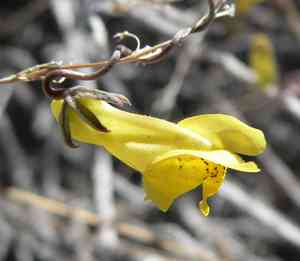
Yellow twining snapdragon (Antirrhinum filipes)
Also known as: Narrowleaf Snapdragon, Tall Snapdragon
The yellow twining snapdragon is a slender, perennial plant with long, delicate stems and small, tubular flowers resembling snapdragons. These flowers, usually pale pink to violet, contrast with its fine, needle-like foliage, giving it a light and airy look. It flourishes in rocky or sandy environments, adapting well to poor soils, and demonstrates remarkable resilience in arid, open terrains.
In This Article
Attributes of Yellow twining snapdragon
Lifespan
Perennial
Plant Type
Herb
Plant Height
30-60 cm
Spread
N/A
Leaf Color
Green
Flower Size
1-2 cm
Flower Color
Pink, White
Images of Yellow twining snapdragon
Quickly Identify Yellow twining snapdragon
1
Antirrhinum filipes can be identified by its tall, slender stems, lance-shaped leaves, and small, tubular flowers which come in various colors including pink and white. The plant has a distinctive snapdragon flower shape.
Scientific Classification of Yellow twining snapdragon
Phylum
Vascular plants
Class
Dicotyledons
Order
Lamiales
Family
Plantain
Genus
Snapdragons
Species
Yellow twining snapdragon
Planting and Growing of Yellow twining snapdragon
Care Difficulty
Moderate
Watering Schedule
Every 4 days
Sunlight Requirements
Full sun
Sunshine Duration
6-8 hours
Ideal Temperature
60-75℉
Soil Type
Potting Mix, Peat Mix
Soil pH
6.5-7.5
Fertilizer Type
Balanced
Pruning Season
Spring, Summer
Pruning Area
Branches, Leaves
Pruning Frequency
2 times a year
Repotting Season
Spring
Pot Type
Plastic, Ceramic
 How to Water Yellow twining snapdragon?
Antirrhinum filipes prefers soil that is consistently moist but not soggy. Watering should be thorough, allowing the water to penetrate deeply into the soil. The goal is to keep the root system robust and healthy without causing waterlogging.
What are the symptoms of an underwatered Yellow twining snapdragon?
›
What should I do if my Yellow twining snapdragon is not getting enough water?
›
What are the symptoms of an overwatered Yellow twining snapdragon?
›
How to save an overwatered Yellow twining snapdragon?
›
 What Are the Sunlight Requirements for Yellow twining snapdragon?
Antirrhinum filipes prefers a light range of full sun to partial sun exposure. Ideal lighting encourages lush flowering while maintaining the plant's balanced growth form.
What is the ideal light condition?
›
How to achieve this ideal lighting?
›
Benefits of ideal lighting conditions?
›
 What Is the Ideal Temperature Range for Yellow twining snapdragon?
The ideal temperature range for Antirrhinum filipes is between 60°F and 75°F. This range allows optimal photosynthesis and growth, ensuring the plant can thrive and produce vibrant blooms. Maintaining these temperatures will help avoid stress on the plant and promote overall health.
 What Soil is Best for Yellow twining snapdragon?
Antirrhinum filipes thrives in nutrient-rich soil as it provides essential minerals and organic matter, promoting healthy growth and vibrant blooming. For optimal root health, this plant requires well-draining soil to prevent waterlogging and root rot, ensuring that it receives adequate oxygen and avoids fungal diseases. The soil should retain enough moisture to sustain the plant but not so much that it becomes soggy. This balance helps maintain steady plant hydration without drowning the roots.
 How to Fertilize Yellow twining snapdragon?
Antirrhinum filipes prefers a balanced nutrient supply. Use a liquid fertilizer with a ratio of 10-10-10. For every 10 liters of water, mix in about 5 milliliters of the fertilizer solution. This ensures the plant receives adequate nourishment without risk of burning the roots.
 How to Prune Yellow twining snapdragon?
Make your cuts at a slight angle about a quarter-inch above a leaf node or bud. This not only gives the plant room to heal but also directs water away from the cut surface, which helps to reduce the risk of fungal infection. Regularly inspect your Antirrhinum filipes for any signs of dead, damaged, or diseased stems and remove them promptly. Early removal of such wood minimizes the chance of infections spreading throughout the plant.
More About Pruning Techniques→
 How to Propagate Yellow twining snapdragon plant?
1
Collect seeds from mature seed pods after the flowering season. Dry them thoroughly and store them in a cool, dark place until planting time to ensure good germination rates.
2
Select healthy, non-flowering stems approximately 4-6 inches long for cuttings. Remove the lower leaves and trim the cutting to encourage rooting.
3
Sow seeds or place cuttings in a well-draining growth medium. Maintain consistent moisture and provide indirect light to encourage growth. Monitor regularly for signs of growth or disease.
 How to Repot Yellow twining snapdragon plant?
1
Antirrhinum filipes delights in being repotted when growth slows or roots peek through the drainage holes. Spring or summer provide optimal conditions for this rejuvenation. These seasons give the plant adequate time to adjust before flowering.
2
Select a pot that's just one size larger to prevent root rot while giving roots room to breathe. A pot with drainage holes is essential, ensuring excess water doesn't accumulate, promoting a healthy root system.
3
Use a well-draining potting mix rich in organic matter, such as peat moss and perlite. This combination retains essential moisture while allowing excess to escape, mimicking the plant's natural environment.
Learn More About Yellow twining snapdragon Diseases
Anthracnose
Bacterial Leaf Spot
Bacterial Soft Rot
Bacterial Wilt
Chemical Injury
Crown Gall
Cyst Nematode
Damping-off
Downy Mildew
Drought Stress
Fusarium Wilt
Gray Mold
Leaf Curl
Leaf Spot
Mosaic
Nutrient Deficiency
Nutrient Toxicity
Powdery Mildew
Root Rot
Root-knot Nematode
Rusts
Sooty Mold
Spider Mites
Temperature Stress
Thrips Damage
White Mold


