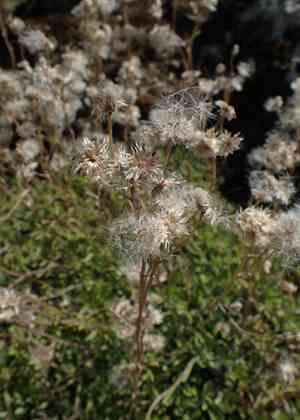
Howell's pussytoes (Antennaria howellii)
Also known as: Howell's Pussytoes, Howell's Catsfoot
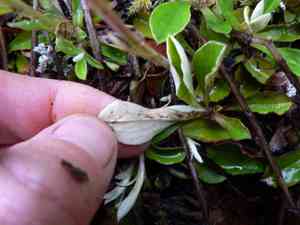
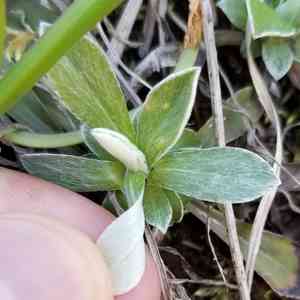
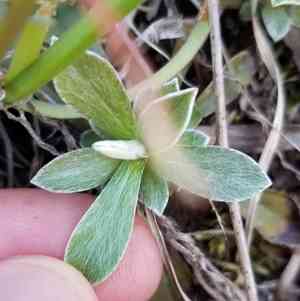
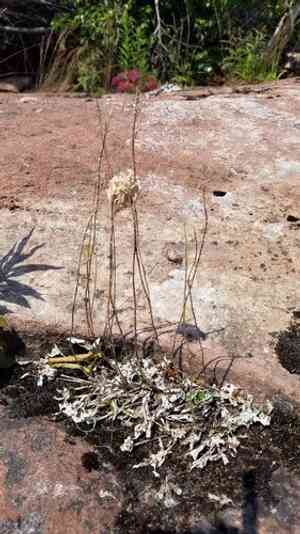
The plant in question is often identified by its basal rosette form, typically propagated clonally. The leaves in the basal rosette measure 2 to 4 cm in length and 6 to 12 mm in width, light green and spatulate with a narrow base and broader, pointed tip. These leaves have distinctive woolly white undersides. Flowerheads emerge in spring on stems that reach 15 to 35 cm in height, accompanied by smaller, slender leaves ranging from 1 to 4 cm long. This plant is frequently found thriving under pine stands.
In This Article
Attributes of Howell's pussytoes
Lifespan
Perennial
Plant Type
Herb
Plant Height
15 cm to 41 cm
Spread
N/A - typically forms mats or clumps
Leaf Color
Gray-green
Flower Size
0.6-1.2 cm
Flower Color
White Yellow Brown
Images of Howell's pussytoes
Quickly Identify Howell's pussytoes
1
To identify Antennaria howellii, look for its basal leaves that are oblong and covered with a woolly texture. The flowering stems are typically leafless and bear a cluster of small, fuzzy flower heads that can be white, pink, or red.
Scientific Classification of Howell's pussytoes
Phylum
Vascular plants
Class
Dicotyledons
Order
Asterales
Family
Daisy
Genus
Everlasting
Species
Howell's pussytoes
Planting and Growing of Howell's pussytoes
Care Difficulty
Easy
Watering Schedule
Every 2 days
Sunlight Requirements
Full sun
Sunshine Duration
4-8 hours
Ideal Temperature
60-75℉
Soil Type
Potting Mix, Peat Mix
Soil pH
6.5-7.5
Fertilizer Type
Balanced
Pruning Season
Spring, Summer
Pruning Area
Branches, Leaves
Pruning Frequency
Once a year
Repotting Season
Spring
Pot Type
Terracotta, Plastic
 How to Water Howell's pussytoes?
Antennaria howellii thrives with moderate watering. Ideally, you should aim to provide around 250 ml of water per session, ensuring that the soil is uniformly moist but never soggy. This maintains the perfect balance by allowing the roots to absorb necessary moisture without risking root rot.
What are the symptoms of an underwatered Howell's pussytoes?
›
What should I do if my Howell's pussytoes is not getting enough water?
›
What are the symptoms of an overwatered Howell's pussytoes?
›
How to save an overwatered Howell's pussytoes?
›
 What Are the Sunlight Requirements for Howell's pussytoes?
Antennaria howellii prefers full sun to partial sun exposure, which refers to receiving direct sunlight for 6 to 8 hours daily. This allows for vibrant growth and optimum photosynthesis, enhancing plant robustness and vitality.
Best Time for Sunlight
›
Maximizing Sunlight for Growth
›
Effects of Ideal Lighting
›
 What Is the Ideal Temperature Range for Howell's pussytoes?
For Antennaria howellii, the optimal temperature range for growth is between 60°F and 75°F. This moderate range supports healthy foliage development and successful blooming. Maintaining these temperatures ensures the plant remains stress-free and thrives.
 What Soil is Best for Howell's pussytoes?
Antennaria howellii thrives in substrates with excellent drainage. This prevents root rot and other moisture-related issues, ensuring healthy root systems. Ensuring the soil is well-draining is crucial for maintaining robust growth. This plant benefits from nutrient-rich soils that provide essential minerals. Such a composition supports the plant's growth and blooming cycles. A balanced nutrient profile in the soil results in vibrant foliage and flowers. Loamy soils, due to their texture, allow for better air circulation. This aeration aids root oxygenation, crucial for respiration and healthy development. An aerated soil structure contributes to active root growth and overall plant vigor.
 How to Fertilize Howell's pussytoes?
For Antennaria howellii, it is crucial to balance the amount of fertilizer to maintain healthy growth. Optimal fertilization involves using a diluted liquid fertilizer, at quarter-strength, ensuring nutrients are provided without overwhelming the plant's natural resilience.
 How to Prune Howell's pussytoes?
Start by removing any dead, diseased, or damaged stems. Use sharp scissors or pruning shears to make precise cuts just above a healthy leaf node. This step rejuvenates the plant by redirecting energy to healthy growth. Prune selectively to maintain the plant's shape and encourage air circulation. Remove over-crowded stems to prevent fungal growth and allow light to reach all parts. Aim for a neat, bushy shape.
More About Pruning Techniques→
 How to Propagate Howell's pussytoes plant?
1
Before sowing seeds, prepare a well-draining soil mix rich in organic matter. A light, sandy soil is ideal. Moisten the soil lightly but avoid making it soggy, as excess moisture can lead to mold issues.
2
For division propagation, gently remove the plant from the soil and shake off excess dirt. Carefully separate roots, ensuring each section has several shoots and roots. Replant divisions immediately at the same depth.
3
Once seeds are sown or divisions planted, water them gently but thoroughly. Consistent moisture is crucial, but avoid overwatering. Use a watering can with a fine nozzle to prevent disrupting seeds or compacting soil.
 How to Repot Howell's pussytoes plant?
1
Antennaria howellii, with its mat-forming tendency, should be repotted when you notice roots emerging from the drainage holes or if the soil seems to be breaking down beyond repair. These are clear signals indicating the need for repotting to provide more room for growth and refresh the soil nutrients.
2
Choose a pot that is just a size larger, about 1 inch in diameter, than the current one for Antennaria howellii. A pot that's too large can lead to water retention and root rot. Opt for one with good drainage holes to ensure excess water can escape, preventing potential waterlogging. Terra cotta pots are ideal as they allow some breathability.
3
A well-draining loamy mix is essential for Antennaria howellii as it mimics its natural habitat, preventing water from stagnating around the roots. A mix that combines peat moss, perlite, and a bit of coarse sand works perfectly. This blend provides necessary airflow to the roots and prevents potential fungal issues.



