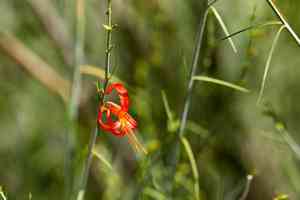
Narrowleaf desert honeysuckle (Anisacanthus linearis)
Also known as: Flame Acanthus, Wright's Desert Honeysuckle
The Ocotillo is a hardy shrub recognized for its slender, spiny branches and long, bright green leaves. Well-suited to arid regions, it exhibits excellent drought resistance. Its tubular red-orange flowers bloom profusely, attracting hummingbirds and adding vivid color to its dry native habitats.
In This Article
Attributes of Narrowleaf desert honeysuckle
Lifespan
Perennial
Plant Type
Shrub
Plant Height
91 cm to 3.5 m
Spread
1 to 3 feet (0.3 to 0.9 meters)
Leaf Color
Green
Flower Size
1 to 1.5 inches (2.5 to 3.8 cm)
Flower Color
Red, Orange
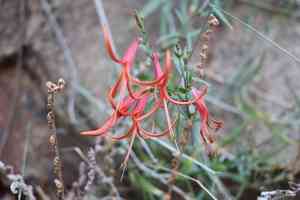
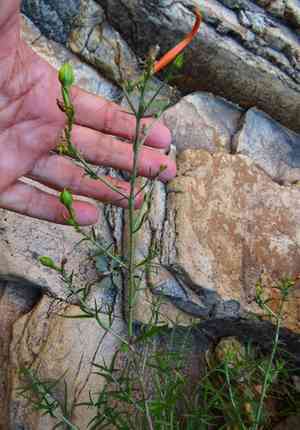
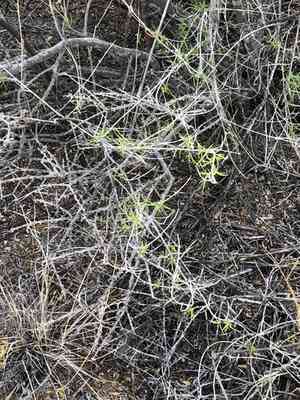
Images of Narrowleaf desert honeysuckle
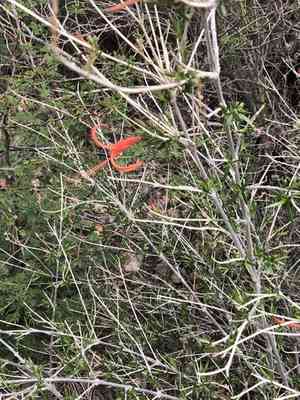
Quickly Identify Narrowleaf desert honeysuckle
1
Look for narrow, linear leaves and vibrant, tubular red or orange flowers. The plant often has a somewhat open, airy form.
Scientific Classification of Narrowleaf desert honeysuckle
Phylum
Vascular plants
Class
Dicotyledons
Order
Lamiales
Family
Acanthus
Genus
Desert honeysuckles
Species
Narrowleaf desert honeysuckle
Planting and Growing of Narrowleaf desert honeysuckle
Care Difficulty
Moderate
Watering Schedule
Every 3 days
Sunlight Requirements
Full sun
Sunshine Duration
4-8 hours
Ideal Temperature
68-86℉
Soil Type
Potting Mix, Peat Mix
Soil pH
6.5-7.5
Fertilizer Type
Balanced
Pruning Season
Spring, Summer
Pruning Area
Branches, Leaves
Pruning Frequency
2 times a year
Repotting Season
Spring
Pot Type
Plastic, Ceramic
 How to Water Narrowleaf desert honeysuckle?
Anisacanthus linearis thrives when watered deeply but infrequently. Aim for 500 milliliters per session so the water reaches the root zone. This allows the soil to absorb moisture down to the roots and ensures an appropriate level of moisture without saturating the soil surface.
What are the symptoms of an underwatered Narrowleaf desert honeysuckle?
›
What should I do if my Narrowleaf desert honeysuckle is not getting enough water?
›
What are the symptoms of an overwatered Narrowleaf desert honeysuckle?
›
How to save an overwatered Narrowleaf desert honeysuckle?
›
 What Are the Sunlight Requirements for Narrowleaf desert honeysuckle?
Anisacanthus linearis thrives in conditions ranging from partial to full sun. Ideal light facilitates optimal growth, robust health, and maximum bloom potential, ensuring the plant remains vigorous and lush.
What is its ideal sunlight exposure?
›
How to ensure ample sunlight indoors?
›
What benefits come from ideal light exposure?
›
 What Is the Ideal Temperature Range for Narrowleaf desert honeysuckle?
Anisacanthus linearis thrives best in temperatures ranging from 68°F to 86°F. This range supports optimal metabolic activities and promotes healthy growth and blooming. Keeping the plant within this temperature bracket ensures its physiological processes are not overly stressed, which is crucial for both growth and defense against pests.
 What Soil is Best for Narrowleaf desert honeysuckle?
Anisacanthus linearis thrives in well-draining sandy or loamy soils, which prevent waterlogging. This is crucial to prevent root rot and ensure the plant's long-term health, allowing it to absorb nutrients effectively. It benefits from a soil mix enriched with organic matter. This provides vital nutrients essential for the vibrant growth and lush foliage of Anisacanthus linearis, promoting healthy development and flowering. While it prefers neutral pH levels, Anisacanthus linearis can tolerate slightly alkaline conditions up to a pH of 7.5. This flexibility allows it to survive in various garden environments without adverse effects.
 How to Fertilize Narrowleaf desert honeysuckle?
Anisacanthus linearis typically requires moderate fertilization. Use a balanced 10-10-10 or 20-20-20 NPK fertilizer. For liquid fertilizers, dilute it to half strength (1 tablespoon per gallon) to prevent over-fertilization.
 How to Prune Narrowleaf desert honeysuckle?
Start with light pruning in early spring after the risk of frost has passed. This encourages new growth and prepares the plant for the blooming season. During the summer, focus on deadheading spent blooms to prolong the flowering period. Also, selectively trim to maintain shape without stressing the plant. After the blooming period, perform a tidy-up pruning to remove any outgrown sections and to shape the plant for better aesthetics and airflow.
More About Pruning Techniques→
 How to Propagate Narrowleaf desert honeysuckle plant?
1
Collect seeds from mature plants and clean them thoroughly. Allow them time to dry completely in a cool, shaded spot before you plant them in seed trays.
2
Select healthy, disease-free stems and cut them into 4-6 inches sections. Remove the lower leaves from each cutting to expose the nodes where roots will form.
3
Gently dig around the base of the plant to remove it from the ground, then use a clean, sharp knife to divide the root mass into smaller sections, ensuring each has a portion of roots attached.
 How to Repot Narrowleaf desert honeysuckle plant?
1
Anisacanthus linearis signals its need for repotting with roots emerging from the pot's drainage holes or when growth appears stunted. Look for a tight root ball or soil that dries quickly post-watering. The best time to repot is during spring, when the plant feels energetic after its winter rest.
2
When selecting a pot, prioritize one that is slightly larger than the current container, ideally 1 to 2 inches wider in diameter. This allows room for root growth without being overwhelming. Opt for pots with ample drainage holes to prevent waterlogging, which Anisacanthus linearis detests. Materials like clay or terracotta are preferable, as they promote better soil aeration.
3
Opt for a well-draining cactus mix to mimic Anisacanthus linearis's natural habitat. This type of soil typically contains a mix of sand, perlite, and organic material, ensuring that water doesn't stagnate around the roots, thus preventing rot. The quick drainage of cactus mix also encourages the plant's robust growth.
Learn More About Narrowleaf desert honeysuckle Diseases
Anthracnose
Bacterial Leaf Spot
Bacterial Soft Rot
Bacterial Wilt
Black Spot
Chemical Injury
Crown Gall
Cyst Nematode
Damping-off
Downy Mildew
Drought Stress
Fusarium Wilt
Gray Mold
Leaf Curl
Leaf Spot
Mosaic
Nutrient Deficiency
Nutrient Toxicity
Powdery Mildew
Root Rot
Root-knot Nematode
Rusts
Sooty Mold
Spider Mites
Temperature Stress
Thrips Damage
White Mold



