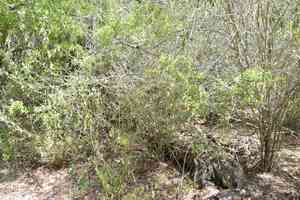
Texas torchwood (Amyris texana)
Also known as: Texas Torchwood, Hierba de Gentil
The Texas barberry (Mahonia swaseyi) is a hardy shrub native to Texas that excels in dry, rocky soils. This resilient plant features clusters of small, creamy-white flowers and maintains a robust form. Its leathery, evergreen leaves offer a constant touch of green throughout the year, even in arid conditions. The Texas barberry's adaptability to challenging environments showcases the enduring spirit of nature.
In This Article
Attributes of Texas torchwood
Lifespan
Perennial
Plant Type
Shrub
Plant Height
91 cm to 1.8 m
Spread
Up to 10 feet
Leaf Color
Dark green
Flower Size
Approximately 0.5 inches
Flower Color
White
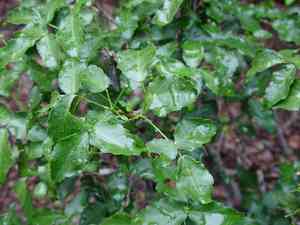
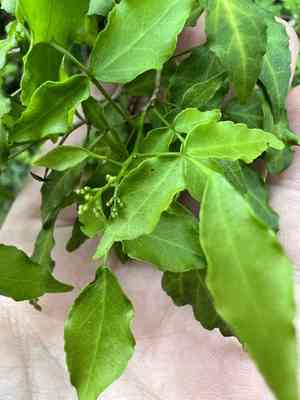
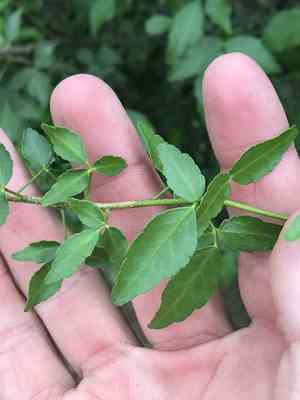
Images of Texas torchwood
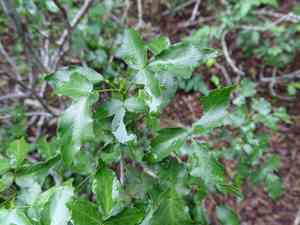
Quickly Identify Texas torchwood
1
Amyris texana can be identified by its smooth, gray bark and small, white flowers. The leaves are compound with 3 to 5 leaflets, and the plant produces small, black berries.
Scientific Classification of Texas torchwood
Phylum
Vascular plants
Class
Dicotyledons
Order
Sapindales
Family
Rue
Genus
Torchwood
Species
Texas torchwood
Planting and Growing of Texas torchwood
Care Difficulty
Easy
Watering Schedule
Every 2 days
Sunlight Requirements
Full sun
Sunshine Duration
6-10 hours
Ideal Temperature
65-75℉
Soil Type
Potting Mix, Peat Mix
Soil pH
6.5-7.5
Fertilizer Type
Balanced
Pruning Season
Spring, Summer
Pruning Area
Branches, Leaves
Pruning Frequency
2 times a year
Repotting Season
Spring
Pot Type
Plastic, Terracotta
 How to Water Texas torchwood?
The watering amount for Amyris texana should be approximately 500 milliliters per session. The aim is to ensure that the soil is moist but not waterlogged. Pour water until it starts to drain from the bottom of the pot. This indicates the roots have received ample moisture.
What are the symptoms of an underwatered Texas torchwood?
›
What should I do if my Texas torchwood is not getting enough water?
›
What are the symptoms of an overwatered Texas torchwood?
›
How to save an overwatered Texas torchwood?
›
 What Are the Sunlight Requirements for Texas torchwood?
Amyris texana thrives in full to partial sun environments, ensuring balanced growth. Ideal light exposure supports dense foliage, strong branches, and overall robust health, reducing susceptibility to pests and diseases.
How much direct sunlight does Amyris texana need?
›
What are the benefits of partial sun for Amyris texana?
›
What are the solutions to ensure ideal lighting?
›
 What Is the Ideal Temperature Range for Texas torchwood?
The ideal temperature range of 65 to 75°F for Amyris texana is crucial as it supports optimal growth and metabolic function. Within this range, the plant can effectively photosynthesize, absorb nutrients, and resist diseases, which are essential for healthy development.
 What Soil is Best for Texas torchwood?
Amyris texana thrives in soils that offer excellent drainage. Well-draining soil prevents waterlogging and root rot, ensuring the plant remains healthy and vigorous. This characteristic helps the plant adapt to various environmental conditions. The plant prefers soils with a moderate amount of nutrients. This means it doesn't require overly rich soil, which can lead to excessive growth at the expense of strength and health. Balanced nutrients support optimal growth and flowering. Amyris texana can endure slightly alkaline conditions, which means it can grow successfully in calcareous soils. This gives it an edge in areas where other plants might struggle, making it a versatile choice for diverse landscaping.
 How to Fertilize Texas torchwood?
For Amyris texana, the fertilizer amount should be moderate to cater to its growth requirements without overloading the soil nutrients. Specifically, when using a liquid fertilizer, a dilution of half the recommended strength of a balanced 10-10-10 fertilizer is adequate, particularly during the growing season. For slow-release fertilizers, typically one tablespoon per square foot of soil around the plant is sufficient. Ensuring the fertilizer is well distributed and doesn't directly touch the base will prevent any undue stress or fertilizer burn on the plant.
 How to Prune Texas torchwood?
Begin by inspecting the Amyris texana for any dead, damaged, or diseased branches. Remove these using clean, sharp pruning shears to prevent the spread of disease. Next, thin out any crowded areas to allow light and air to penetrate the interior of the plant. Focus on cutting back to a healthy set of leaves or a bud, promoting new growth. To maintain the desired shape, identify and trim any branches that extend beyond the natural form of the plant. Make clean cuts at a 45-degree angle slightly above a leaf node. Ensure that the overall symmetry of the plant is preserved, providing an aesthetically pleasing appearance.
More About Pruning Techniques→
 How to Propagate Texas torchwood plant?
1
Collect seeds from mature Amyris texana plants. Allow them to dry completely before storing them in a cool, dry place. This step is crucial to maintain seed viability until planting.
2
Sow the seeds in a seed tray or pots. Cover them with a thin layer of soil and ensure they are watered gently. Place the tray in a warm location with indirect sunlight to encourage germination.
3
Select healthy stems from the parent plant and use sanitized pruning shears to cut sections about 6 inches long. Remove the leaves from the lower half before planting the cuttings in a sterile rooting medium.
 How to Repot Texas torchwood plant?
1
For Amyris texana, look for signs such as roots coming out of the drainage holes or a noticeable reduction in growth rate. Ideally, repot during the active growing season—spring or summer—when the plant can recover swiftly.
2
Choose a pot that is 1-2 inches larger in diameter than the current one. This extra space encourages healthy root development without oversaturating the soil. Ensure it has proper drainage to prevent waterlogging, which is crucial for this plant’s health.
3
Select a well-draining cactus or succulent soil mix. This type of soil prevents root rot by allowing excess water to drain quickly. It also provides the necessary aeration that is beneficial for Amyris texana’s root system.
Learn More About Texas torchwood Diseases
Anthracnose
Bacterial Leaf Spot
Bacterial Soft Rot
Bacterial Wilt
Black Spot
Chemical Injury
Crown Gall
Damping-off
Downy Mildew
Drought Stress
Fusarium Wilt
Gray Mold
Leaf Curl
Leaf Spot
Mosaic
Nutrient Deficiency
Nutrient Toxicity
Powdery Mildew
Root Rot
Root-knot Nematode
Rusts
Sooty Mold
Spider Mites
Temperature Stress
Thrips Damage
White Mold



