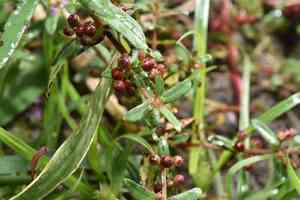
Jerry-jerry (Ammannia multiflora)
Also known as: Multi-flowered Ammannia
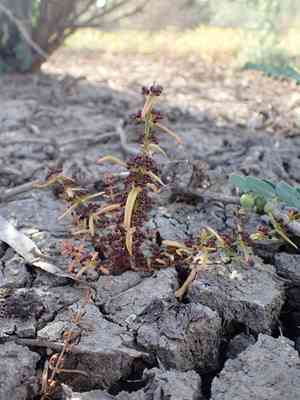
The jerry-jerry plant is a hardy herbaceous species that flourishes in marshy regions. It features clusters of bright pink to red blossoms and pairs of lance-shaped leaves symmetrically aligned on its stems. Optimal growth occurs in environments with plenty of sunlight and consistently moist soil, allowing the plant to display its vibrant, multi-floral beauty.
In This Article
Attributes of Jerry-jerry
Lifespan
Annual
Plant Type
Herb
Plant Height
60 cm
Spread
Not typically applicable for an aquatic plant of this nature
Leaf Color
Green
Flower Size
3 mm
Flower Color
Red
Images of Jerry-jerry
Quickly Identify Jerry-jerry
1
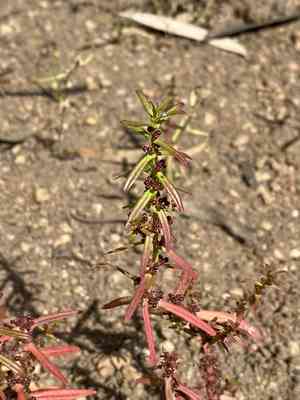
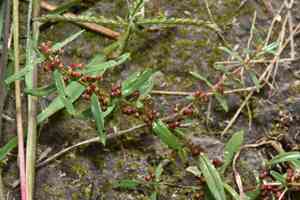
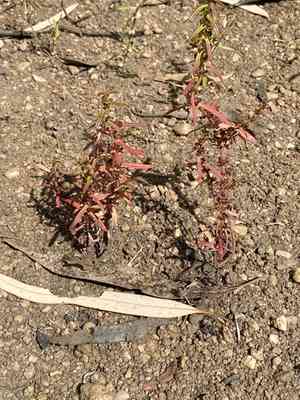
Identify Ammannia multiflora by its opposite leaves and clusters of small, vibrant flowers that are usually purple or pink. The plant also has a square stem.
Scientific Classification of Jerry-jerry
Phylum
Vascular plants
Class
Dicotyledons
Order
Myrtales
Family
Loosestrife
Genus
Redstems
Species
Jerry-jerry
Planting and Growing of Jerry-jerry
Care Difficulty
Easy
Watering Schedule
Every 4 days
Sunlight Requirements
Full sun
Sunshine Duration
6-8 hours
Ideal Temperature
75-85℉
Soil Type
Potting Mix, Peat Mix
Soil pH
6.5-7.5
Fertilizer Type
Balanced
Pruning Season
Spring, Summer
Pruning Area
Branches, Leaves
Pruning Frequency
2 times a year
Repotting Season
Spring
Pot Type
Plastic, Ceramic
 How to Water Jerry-jerry?
For Ammannia multiflora, it's important to ensure that the soil remains consistently moist but not waterlogged. About 300 ml of water per session is ideal. This amount will adequately saturate the soil without causing excess water to pool at the bottom of the pot.
What are the symptoms of an underwatered Jerry-jerry?
›
What should I do if my Jerry-jerry is not getting enough water?
›
What are the symptoms of an overwatered Jerry-jerry?
›
How to save an overwatered Jerry-jerry?
›
 What Are the Sunlight Requirements for Jerry-jerry?
Ammannia multiflora thrives in conditions ranging from full to partial sun. Optimal light encourages robust growth and vivid coloration of its foliage.
What is the ideal light for Ammannia multiflora?
›
How can I achieve the ideal lighting conditions for Ammannia multiflora?
›
What benefits do ideal lighting conditions offer Ammannia multiflora?
›
 What Is the Ideal Temperature Range for Jerry-jerry?
The ideal temperature range for Ammannia multiflora is between 75°F and 85°F. Maintaining this range ensures optimal growth and vitality.
 What Soil is Best for Jerry-jerry?
Ammannia multiflora thrives in nutrient-rich soil, which helps provide essential nutrients for vigorous growth and vibrant foliage. Adding organic compost to the soil can greatly enhance its fertility. The plant requires well-draining soil to prevent waterlogging, which can lead to root rot. Ensuring a good balance of aeration and moisture retention is crucial for healthy root development. Maintaining moderate soil moisture levels is beneficial for Ammannia multiflora as it ensures the plant does not experience drought stress, sustaining its lush, green appearance.
 How to Fertilize Jerry-jerry?
When fertilizing Ammannia multiflora, use a diluted liquid fertilizer mix, typically at one-fourth to half the recommended label strength. This ensures the plant receives a steady but gentle nutrient supply, promoting healthy growth without overwhelming its root system.
 How to Prune Jerry-jerry?
Examine the plant closely to identify stems and leaves that are damaged, dead, or excessively leggy. Target these areas as your primary focus for pruning. With your sharp tool, make clean cuts at a 45-degree angle just above a node. This encourages water runoff and subsequent healthy growth. Always cut above a node to stimulate new growth. After pruning, give your plant a good watering and check soil nutrients. Consider using a balanced fertilizer to aid recovery and support new growth following the stress of pruning.
More About Pruning Techniques→
 How to Propagate Jerry-jerry plant?
1
Begin by collecting mature seeds from an existing Ammannia multiflora plant. It is important to clean and dry them to prevent any fungal accumulation. Store the seeds in a cool, dry place if immediate sowing is not possible, as proper storage ensures higher germination viability.
2
For cutting propagation, identify healthy stems on the Ammannia multiflora plant. Use sharp pruners to cut a stem just below a node, ensuring the cutting is about 4-6 inches long. Remove any leaves from the bottom half to help promote root growth once planted.
3
Place the prepared cutting in moist potting soil or water. Keep the environment humid and well-lit, but not under direct sunlight. Within a few weeks, roots should begin to form, indicating successful propagation. Regularly check moisture levels to prevent drying.
 How to Repot Jerry-jerry plant?
1
Repotting is best done when you notice roots growing out of the drainage holes, or the growth rate has significantly slowed down. Early spring or summer is ideal, as the plant enters its growing phase and can recover swiftly.
2
Select a pot that is just one size larger than the current one. Ensure it has adequate drainage holes to prevent waterlogging, which can be detrimental to the roots. A slightly larger pot will promote growth by allowing roots to spread without overwhelming the plant.
3
Opt for a loamy, well-draining soil mix to avoid roots sitting in water, which leads to root rot. A blend enriched with organic matter can significantly enhance nutrient uptake, ensuring the plant thrives post-repotting.



