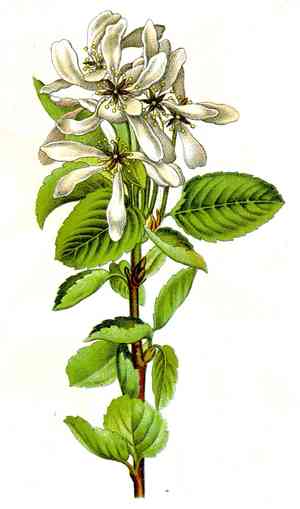
Asian serviceberry (Amelanchier asiatica)
Also known as: Asian serviceberry, Korean juneberry
It is a shrub or small tree that can grow up to approximately 12 meters in height.
In This Article
Attributes of Asian serviceberry
Lifespan
Perennial
Plant Type
Tree, Shrub
Plant Height
12 m
Spread
8 m to 12 m
Leaf Color
Green, turning red to orange in fall
Flower Size
1 to 1.5 cm
Flower Color
White
Images of Asian serviceberry
Quickly Identify Asian serviceberry
1
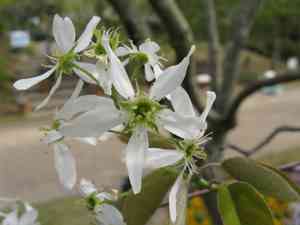
Amelanchier asiatica can be identified by its slender branches, ovate to elliptical leaves with finely serrated edges, and clusters of white to pale pink, star-shaped flowers. The berries change color from red to dark purple when ripe.
Scientific Classification of Asian serviceberry
Phylum
Vascular plants
Class
Dicotyledons
Order
Rosales
Family
Rose
Genus
Shadbushes
Species
Asian serviceberry
Planting and Growing of Asian serviceberry
Care Difficulty
Easy
Watering Schedule
Every 4 days
Sunlight Requirements
Full sun
Sunshine Duration
4-10 hours
Ideal Temperature
60-75℉
Soil Type
Potting Mix, Peat Mix
Soil pH
6.5-7.5
Fertilizer Type
Balanced
Pruning Season
Spring, Summer
Pruning Area
Branches, Leaves
Pruning Frequency
2 times a year
Repotting Season
Spring
Pot Type
Plastic, Ceramic
 How to Water Asian serviceberry?
Amelanchier asiatica prefers its soil to be consistently moist but never soggy. The key is to water it until the top 2 inches of soil are moist. It generally requires about 500 ml of water per watering session. Always check the soil moisture level before adding more water.
What are the symptoms of an underwatered Asian serviceberry?
›
What should I do if my Asian serviceberry is not getting enough water?
›
What are the symptoms of an overwatered Asian serviceberry?
›
How to save an overwatered Asian serviceberry?
›
 What Are the Sunlight Requirements for Asian serviceberry?
Amelanchier asiatica grows well in full to partial sun settings. Ideal light leads to robust flowering, vibrant foliage, and overall improved health due to efficient photosynthesis.
What is the ideal lighting exposure for Amelanchier asiatica?
›
How can I achieve ideal lighting conditions?
›
What are the benefits of ideal lighting?
›
 What Is the Ideal Temperature Range for Asian serviceberry?
The ideal temperature range for Amelanchier asiatica growth is between 60°F and 75°F. This temperature range promotes optimal photosynthesis, nutrient uptake, and growth rate, providing the plant with the warmth it requires without exposing it to potential stress factors of higher temperatures. Maintaining such conditions in a controlled environment or during its initial growth stages will help the plant establish a robust root system and healthy foliage.
 What Soil is Best for Asian serviceberry?
Amelanchier asiatica thrives in well-draining soil that prevents water logging, ensuring the roots do not rot. Such soil allows the plants to access necessary oxygen and nutrients, promoting healthy growth. This plant prefers soil with moderate fertility as overly rich soil can lead to excessive leaf growth at the expense of flowers and fruits. Balanced nutrients contribute to its robustness and productivity. While the plant can tolerate a range of pH, a neutral pH closer to 7 is ideal for optimal nutrient uptake, enhancing its overall health and resistance to diseases.
 How to Fertilize Asian serviceberry?
For Amelanchier asiatica, the fertilization amount varies with the plant's age and soil quality. Young plants benefit from lighter fertilization, approximately 50 grams of balanced fertilizer, applied twice a season. Mature plants require a more substantial amount, about 100 grams of slow-release fertilizer, to support their larger growth and fruit production.
 How to Prune Asian serviceberry?
Start by removing any dead or diseased branches. Cut these down to the ground level or just above a healthy bud to stimulate new growth. Removing these sections improves the overall health of the plant. Trim branches that disrupt the natural shape of the plant. Cut back to a slightly outward-facing bud to maintain an open structure. This enhances air circulation and light penetration, vital for plant health. Remove overcrowded or crossing branches from the plant's interior. This prevents rubbing wounds that can invite pests and diseases, ensuring that your plant grows robustly and beautifully.
More About Pruning Techniques→
 How to Propagate Asian serviceberry plant?
1
When propagating by seed, choose ripe fruits and extract seeds. For cuttings, select non-flowering shoots that are about 10-12 cm long with a few leaves.
2
Use a well-draining soil mix for seeds. For cuttings, a mixture of perlite and peat moss works well. Ensure the medium is sterile to prevent fungi and diseases.
3
Sow seeds about 1 cm deep or insert cuttings with the bottom node buried. Water lightly and maintain consistent humidity using a propagation dome or plastic cover.
 How to Repot Asian serviceberry plant?
1
Amelanchier asiatica should be repotted when it shows signs of reduced growth, roots protruding from the pot's drainage holes, or the soil drying out faster than usual. These indicate that the plant may be root-bound and could benefit from fresh soil and a larger pot.
2
Select a pot slightly larger than the current one, with good drainage holes. A pot that is too large can lead to overwatering issues, while good drainage is crucial for preventing root rot. A balanced size ensures adequate space for root growth without excessive soil moisture retention.
3
Use a loamy, well-draining soil mix. This type of soil ensures that water passes through easily without retaining too much moisture, which could cause root rot. It also supports healthy root development by providing necessary aeration and nutrient availability.



