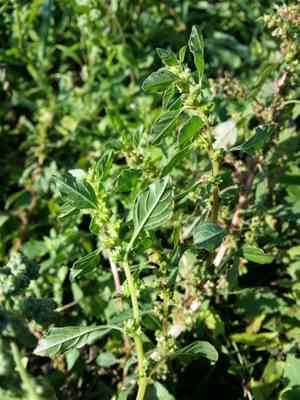
Short-tepalled pigweed (Amaranthus graecizans)
Also known as: Mat amaranth, Tumbling pigweed, Short-tepaled pigweed
Amaranthus graecizans, known as Mediterranean amaranth or short-tepalled pigweed, is an annual plant within the Amaranthaceae family. Its native range includes Africa, Southern Europe, East Asia, India, and Central Asia. It has also become naturalized in North America. Common names for this plant also include tumbleweed and pigweed.
In This Article
Attributes of Short-tepalled pigweed
Lifespan
Annual
Plant Type
Herb
Plant Height
10-30 cm
Spread
30-50 cm
Leaf Color
Green or reddish-green
Flower Size
Less than 1 cm
Flower Color
Green
Images of Short-tepalled pigweed
Quickly Identify Short-tepalled pigweed
1
Amaranthus graecizans can be identified by its prostrate growth habit, green or reddish stems, and small, ovate leaves. Its flowers are tiny and green, forming dense clusters.
Scientific Classification of Short-tepalled pigweed
Phylum
Vascular plants
Class
Dicotyledons
Order
Caryophyllales
Family
Amaranth
Genus
Amaranths
Species
Short-tepalled pigweed
Planting and Growing of Short-tepalled pigweed
Care Difficulty
Easy
Watering Schedule
Every 4 days
Sunlight Requirements
Full sun
Sunshine Duration
6-8 hours
Ideal Temperature
68-77℉
Soil Type
Potting Mix, Peat Mix
Soil pH
6.5-7.5
Fertilizer Type
Balanced
Pruning Season
Spring, Summer
Pruning Area
Branches, Leaves
Pruning Frequency
2 times a year
Repotting Season
Spring
Pot Type
Terracotta, Plastic
 How to Water Short-tepalled pigweed?
Water Amaranthus graecizans with approximately 250 ml each time. Ensure the soil is moist but not waterlogged. The goal is to maintain consistent moisture levels without drowning the roots. Proper drainage is key, as standing water can lead to root rot. Monitor the soil for dryness as a guide for when to water next.
What are the symptoms of an underwatered Short-tepalled pigweed?
›
What should I do if my Short-tepalled pigweed is not getting enough water?
›
What are the symptoms of an overwatered Short-tepalled pigweed?
›
How to save an overwatered Short-tepalled pigweed?
›
 What Are the Sunlight Requirements for Short-tepalled pigweed?
Preferring full sun to partial shade, Amaranthus graecizans thrives best with 6-8 hours of sunlight. This range ensures robust growth and brilliant foliage color development.
What are the ideal lighting conditions for Amaranthus graecizans?
›
How can I achieve ideal lighting for Amaranthus graecizans?
›
What are the benefits of proper lighting for Amaranthus graecizans?
›
 What Is the Ideal Temperature Range for Short-tepalled pigweed?
The ideal temperature range for growing Amaranthus graecizans is between 68°F and 77°F. Within this range, the plant can achieve optimal growth as both photosynthesis and transpiration processes are efficiently regulated. It helps ensure the plant develops healthy foliage and robust stems, promoting better flowering and seed production.
 What Soil is Best for Short-tepalled pigweed?
Amaranthus graecizans thrives in well-drained soils that prevent waterlogging, which otherwise could lead to root rot. Ensuring your soil drains well will help the plant maintain healthy growth and prevent diseases. This plant benefits from nutrient-rich soil that supports its rapid growth. Incorporating organic matter such as compost into the soil can enhance its fertility and provide essential nutrients for robust development. While well-drained soil is crucial, retaining some moisture is beneficial. A balanced loam that holds moisture while allowing excess water to escape provides the perfect environment for steady growth.
 How to Fertilize Short-tepalled pigweed?
For Amaranthus graecizans, use a balanced fertilizer with an N-P-K ratio of 10-10-10. Apply 15 to 20 grams per square meter for optimal growth. Too much can cause nutrient burn, so stick to these amounts.
 How to Prune Short-tepalled pigweed?
Start by inspecting your Amaranthus graecizans for any dead or diseased foliage; carefully remove these to prevent issues from spreading. Use clean, sharp pruning shears to snip away about one-third of the plant's height, focusing on lateral branches to promote full, bushy growth. Always make your cuts just above a leaf node to encourage new shoots. During the growing season, thin out crowded areas to allow better air circulation and sunlight penetration which enhances plant health and vibrancy.
 How to Propagate Short-tepalled pigweed plant?
1
Fill the seed tray with a quality seed-starting mix, ensuring it is loose and well-drained. Compress slightly to create a firm surface for sowing seeds evenly.
2
Distribute Amaranthus graecizans seeds across the surface of the seed tray and lightly cover with a thin layer of soil mix without burying them too deep.
3
Use a spray bottle to mist the soil lightly. Ensure it stays consistently moist but not waterlogged, as too much water can lead to rot.
 How to Repot Short-tepalled pigweed plant?
1
You should consider repotting Amaranthus graecizans when it becomes root-bound, i.e., roots start to circle the pot's perimeter. Other indicators might include slowed growth despite good conditions, or when the plant's roots begin to grow through the drainage holes.
2
Opt for a pot that is approximately 2 inches larger in diameter than the current one. A correctly sized pot will allow for adequate root growth without overwhelming the plant with too much soil, minimizing water-logging risks. Use a pot with good drainage holes to prevent water accumulation and root rot.
3
Choose a well-draining sandy loam soil mix. This ensures that excess water can quickly move away from the roots, preventing rot. Amaranthus graecizans thrives in sandy soil that mimics its natural habitat, allowing roots to access nutrients efficiently.
Toxicity
Ingestion
WARNING
The judgment on toxicity and danger is for reference only. We DO NOT GUARANTEE any accuracy of such judgment. Therefore, you SHALL NOT rely on such judgment. It is IMPORTANT TO SEEK PROFESSIONAL ADVICE in advance when necessary.
Learn More About Short-tepalled pigweed Diseases
Anthracnose
Bacterial Leaf Spot
Bacterial Soft Rot
Bacterial Wilt
Chemical Injury
Damping-off
Downy Mildew
Drought Stress
Fusarium Wilt
Gray Mold
Leaf Spot
Mosaic
Nutrient Deficiency
Nutrient Toxicity
Powdery Mildew
Root Rot
Root-knot Nematode
Rusts
Sooty Mold
Spider Mites
Temperature Stress
Thrips Damage
White Mold



