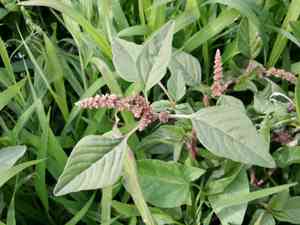
Large-fruit amaranth (Amaranthus deflexus)
Also known as: Low amaranth, Spreading amaranth
Large-fruit amaranth is a short-lived perennial that typically thrives in disturbed environments such as waste areas, rubbish tips, and industrial sites. It can turn toxic if it grows in nitrogen-rich soil.
In This Article
Attributes of Large-fruit amaranth
Lifespan
Annual
Plant Type
Herb
Plant Height
50 cm
Spread
Not applicable as the plant spreads rather than forming a crown
Leaf Color
Green
Flower Size
1 cm to 5 cm
Flower Color
Yellow Green
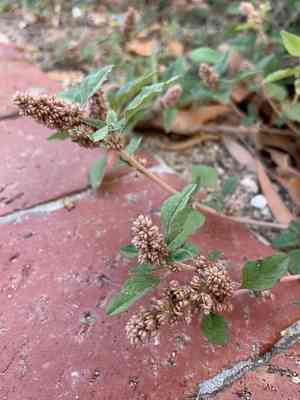
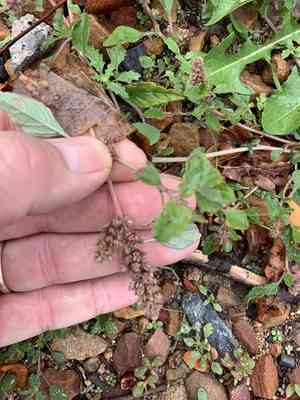
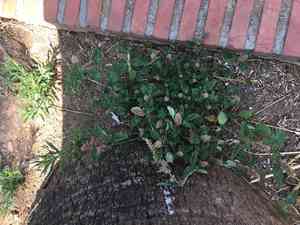
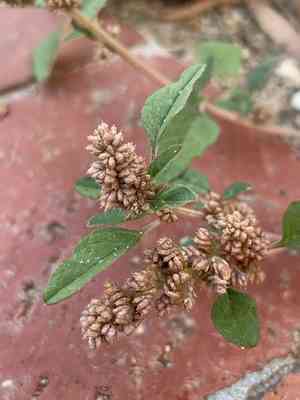
Images of Large-fruit amaranth
Quickly Identify Large-fruit amaranth
1
The plant can be identified by its prostrate or ascending habit, oval to elongated leaves, and small greenish flowers clustered in dense, terminal spikes. The leaves have a distinct midrib and can be slightly hairy.
Scientific Classification of Large-fruit amaranth
Phylum
Vascular plants
Class
Dicotyledons
Order
Caryophyllales
Family
Amaranth
Genus
Amaranths
Species
Large-fruit amaranth
Planting and Growing of Large-fruit amaranth
Care Difficulty
Easy
Watering Schedule
Every 2 days
Sunlight Requirements
Full sun
Sunshine Duration
6-10 hours
Ideal Temperature
65-75℉
Soil Type
Potting Mix, Peat Mix
Soil pH
6.5-7.5
Fertilizer Type
Balanced
Pruning Season
Spring, Summer
Pruning Area
Branches, Leaves
Pruning Frequency
2 times a year
Repotting Season
Spring
Pot Type
Plastic, Terracotta
 How to Water Large-fruit amaranth?
For Amaranthus deflexus, the watering should be thorough yet not excessive. This means the soil should be soaked enough to penetrate deeply into the root zone but water should not pool on the surface. Ensure that the top 1-2 inches of the soil are allowed to dry out between waterings, which generally requires around 250 ml per watering session.
What are the symptoms of an underwatered Large-fruit amaranth?
›
What should I do if my Large-fruit amaranth is not getting enough water?
›
What are the symptoms of an overwatered Large-fruit amaranth?
›
How to save an overwatered Large-fruit amaranth?
›
 What Are the Sunlight Requirements for Large-fruit amaranth?
Amaranthus deflexus thrives best in 'Full sun to Partial sun' environments. Ideal light exposure ensures healthy growth, maximizes photosynthesis, and supports the plant's blooming and seed productivity.
More About Sunlight Requirements Techniques→
Solution for Optimal Light
›
How to Implement the Solution
›
Benefits of Ideal Lighting
›
 What Is the Ideal Temperature Range for Large-fruit amaranth?
Amaranthus deflexus thrives best in environments where the temperature is consistently between 65°F and 75°F. This range ensures optimal growth by providing the right conditions for metabolic and physiological processes.
 What Soil is Best for Large-fruit amaranth?
Amaranthus deflexus thrives in well-drained soils, which prevent waterlogging and root rot. Proper drainage ensures that the roots receive the necessary oxygen and nutrients, contributing to healthier growth. This plant flourishes in nutrient-rich soils that provide essential minerals. A well-fertilized soil aids in faster growth, robust foliage, and vibrant flower production, enhancing the plant's overall health. While the soil should be well-drained, it should also retain some moisture to sustain the plant. Adequate water retention ensures that the Amaranthus deflexus gets consistent moisture, supporting steady growth without risk of dehydration.
 How to Fertilize Large-fruit amaranth?
The appropriate amount of fertilizer for Amaranthus deflexus should be moderate, ensuring a balanced supply of nutrients. Avoid excessive amounts to prevent root burn. Typically, a dilution rate of 1/2 to 1/4 strength is suitable for liquid fertilizers, while slow-release granules can be lightly sprinkled around the base of the plant.
 How to Prune Large-fruit amaranth?
Start by removing dead, damaged, or diseased foliage. This improves air circulation and exposure to sunlight, promoting healthy growth. It's crucial to identify and prune these parts first to prevent potential spread of diseases and encourage new growth. Trim back the plant to maintain a desired shape. Focus on cutting back overly long stems to keep a compact and bushy appearance. By doing so, you not only improve its aesthetic appeal but also encourage the plant to focus its energy on producing healthier, more vibrant leaves. Pinch off the tip of the stems to promote bushier growth. This process involves removing a small portion of the growing tip, which signals the plant to produce side shoots and become fuller.
More About Pruning Techniques→
 How to Propagate Large-fruit amaranth plant?
1
First, collect seeds from a mature Amaranthus deflexus plant. Dry them in a cool, dark place for a few days, then store them in a sealed bag until the planting season.
2
Fill a seed tray with a well-draining soil mix and scatter the seeds evenly on top. Lightly cover them with soil, as they need some light to germinate, and water gently.
3
Select healthy stems from the plant and cut 10-12 cm sections. Remove any lower leaves and dip the ends in rooting hormone before planting in a pot filled with a suitable substrate.
 How to Repot Large-fruit amaranth plant?
1
Repot Amaranthus deflexus when its roots start to protrude from the pot's drainage holes, indicating that it has outgrown its current home. Another sign is reduced growth or an overall unhealthy appearance. The best time to repot is during the growing seasons of spring or summer, when the plant is actively developing.
2
Select a pot that's one to two inches larger in diameter than the current one. A pot with adequate drainage holes is crucial to prevent waterlogging, which can lead to root rot. The size increase should be moderate to prevent excessive soil moisture, allowing the roots to establish themselves efficiently.
3
Opt for a well-draining, nutrient-rich soil mix to promote healthy root growth and facilitate optimal nutrient uptake. Incorporate perlite or sand to enhance drainage, thus preventing the risk of root rot. A well-balanced mix ensures that the plant receives adequate nutrients without water retention issues.
Toxicity
Ingestion
WARNING
The judgment on toxicity and danger is for reference only. We DO NOT GUARANTEE any accuracy of such judgment. Therefore, you SHALL NOT rely on such judgment. It is IMPORTANT TO SEEK PROFESSIONAL ADVICE in advance when necessary.
Learn More About Large-fruit amaranth Diseases
Anthracnose
Bacterial Leaf Spot
Bacterial Soft Rot
Bacterial Wilt
Chemical Injury
Damping-off
Downy Mildew
Drought Stress
Fusarium Wilt
Gray Mold
Leaf Spot
Mosaic
Nutrient Deficiency
Nutrient Toxicity
Powdery Mildew
Root Rot
Root-knot Nematode
Rusts
Sooty Mold
Spider Mites
Temperature Stress
Thrips Damage
White Mold



