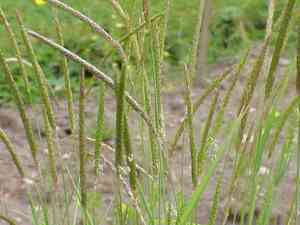
Slender meadow foxtail (Alopecurus myosuroides)
Also known as: Black-grass
**Black-grass** (Alopecurus myosuroides) is a problematic annual weed for grain crops such as barley and wheat. It tends to grow densely, outcompeting these crops for resources. Additionally, black-grass has developed resistance to various herbicides, complicating efforts to manage it in agricultural fields.
In This Article
Attributes of Slender meadow foxtail
Lifespan
Annual
Plant Type
Grass
Plant Height
80 cm
Spread
N/A
Leaf Color
Green
Flower Size
3 mm to 6 mm
Flower Color
Yellow Purple Brown
Images of Slender meadow foxtail
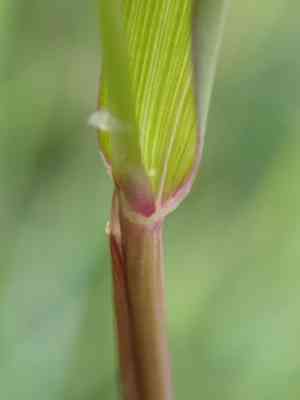
Quickly Identify Slender meadow foxtail
1
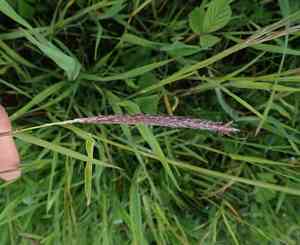
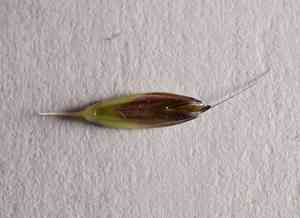
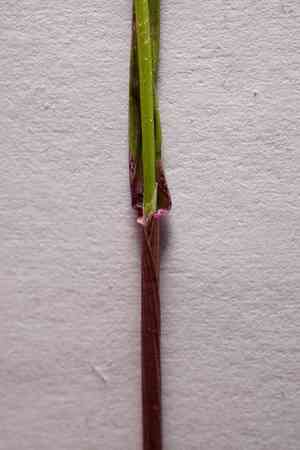
The plant can be identified by its narrow, linear leaves and cylindrical flower spikes. The mature spikelets have a characteristic awn (bristle) that protrudes from the tip of each floret.
Scientific Classification of Slender meadow foxtail
Phylum
Vascular plants
Class
Monocotyledons
Order
Poales
Family
Grass
Genus
foxtail grass
Species
Slender meadow foxtail
Planting and Growing of Slender meadow foxtail
Care Difficulty
Easy
Watering Schedule
Every 3 days
Sunlight Requirements
Partial sun
Sunshine Duration
4-8 hours
Ideal Temperature
60-75℉
Soil Type
Potting Mix, Peat Mix
Soil pH
6.5-7.5
Fertilizer Type
Balanced
Pruning Season
Spring, Summer
Pruning Area
Branches, Leaves
Pruning Frequency
2 times a year
Repotting Season
Spring
Pot Type
Plastic, Ceramic
 How to Water Slender meadow foxtail?
Alopecurus myosuroides, also known as black-grass, requires adequate watering. You should aim to provide approximately 250 milliliters each time you water it. This amount ensures that the soil is moist but not waterlogged. It's important to water thoroughly so that moisture reaches the deeper roots. Allowing the top layer of the soil to dry out slightly between waterings aids in preventing root rot.
What are the symptoms of an underwatered Slender meadow foxtail?
›
What should I do if my Slender meadow foxtail is not getting enough water?
›
What are the symptoms of an overwatered Slender meadow foxtail?
›
How to save an overwatered Slender meadow foxtail?
›
 What Are the Sunlight Requirements for Slender meadow foxtail?
Alopecurus myosuroides thrives best within a light range of partial sun, receiving 4-6 hours of sunlight. Ideal lighting facilitates optimal photosynthesis, fostering healthier, more robust growth and increasing the plant's resilience to environmental stressors.
What is the ideal lighting condition for Alopecurus myosuroides?
›
How can Alopecurus myosuroides achieve its ideal lighting?
›
What benefits does Alopecurus myosuroides gain from ideal lighting?
›
 What Is the Ideal Temperature Range for Slender meadow foxtail?
For optimal growth, Alopecurus myosuroides thrives in temperatures ranging from 60°F to 75°F. This range ensures that the plant can maintain its physiological processes without stress. Fluctuations within this range typically do not adversely affect its development, promoting healthy growth and reproduction.
 What Soil is Best for Slender meadow foxtail?
Alopecurus myosuroides thrives in well-draining soil which prevents waterlogging that can lead to root rot. This trait allows roots to access essential oxygen necessary for healthy plant growth. This plant benefits from a nutrient-rich soil, providing essential minerals that support its vigorous growth and robust seed production, essential traits for its competitive nature. Maintaining moderate moisture levels in the soil ensures that Alopecurus myosuroides can sustain its growth without experiencing drought stress, a crucial factor for its survival and reproductive success.
 How to Fertilize Slender meadow foxtail?
For Alopecurus myosuroides, it is crucial to apply fertilizer at the right amounts. Use a balanced nitrogen-phosphorus-potassium (NPK) formula. For liquid fertilizer, stick to 1 ounce per gallon of water, and for slow-release granules, opt for 2 pounds per 1000 square feet.
 How to Prune Slender meadow foxtail?
Begin by trimming the tops of any overgrown or undesirable sections using sharp shears. Ensure to cut across the top evenly to promote uniform growth. Focus particularly on areas that may overshadow others to maintain a balanced light distribution. Examine the stems and leaves for signs of damage or disease. Remove any brown, yellowed, or withering leaves as well as any stems that appear weak or broken. This clears space for new growth and helps prevent the spread of potential pathogens.
More About Pruning Techniques→
 How to Propagate Slender meadow foxtail plant?
1
Select a well-draining soil mix, enriched with organic matter. Ensure the soil is loose and free of debris to help young roots penetrate easily.
2
Sow the Alopecurus myosuroides seeds on the soil surface, pressing them gently to ensure good contact. Keep seeds spaced adequately to allow growth.
3
After sowing, water gently to moisten the soil without displacing the seeds. Maintain consistent moisture but avoid waterlogging, as this can rot seeds.
 How to Repot Slender meadow foxtail plant?
1
Alopecurus myosuroides signals its need for repotting by showing stunted growth and overgrown roots peeking out of drainage holes. Spring is ideal as new growth commences, providing optimal conditions for the roots to establish in fresh soil.
2
Choose a pot with drainage holes that is one size larger than the current one. A clay pot is preferable for its breathability, preventing water retention which could lead to root rot. The clay's porous structure promotes healthy airflow to the roots.
3
Opt for a loamy, well-draining soil mixture to replicate the plant's native habitat. This soil structure ensures excess water drains efficiently, while still retaining enough moisture and nutrients to support robust growth and root development.



