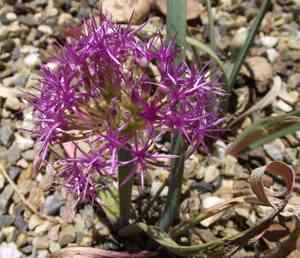
Broadstemmed onion (Allium platycaule)
Also known as: flatstem onion
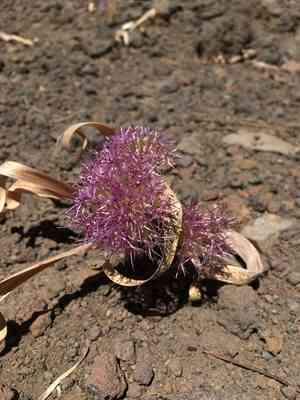
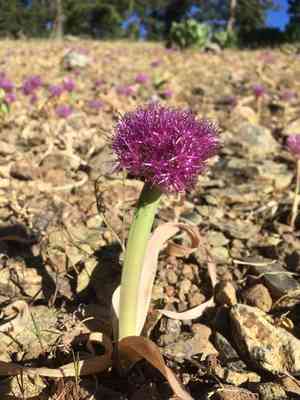
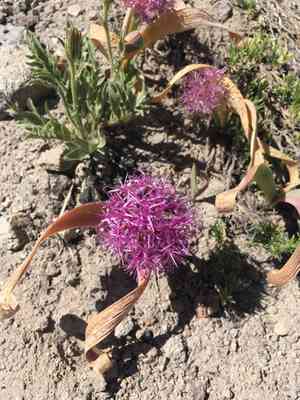
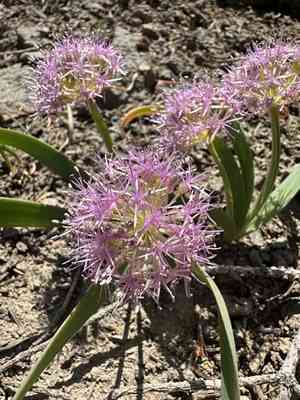
Allium platycaule features a gray bulb ranging from 1.9 to 3 cm in width. Its slender, distinctly flattened scape can reach lengths of up to 25 cm, though it is usually no more than 6 mm wide. The plant has long, flat, sickle-shaped leaves. At the top of the stem, there is a rounded umbel that can hold up to 90 flowers. Each flower measures up to 1.5 cm wide, with narrow, almost threadlike tepals. The flowers are typically bright pink to magenta in color, and they have yellow anthers.
In This Article
Attributes of Broadstemmed onion
Lifespan
Perennial
Plant Type
Herb
Plant Height
10 cm
Spread
N/A
Leaf Color
Green
Flower Size
8 mm to 1.5 cm
Flower Color
Red Purple Pink
Images of Broadstemmed onion
Quickly Identify Broadstemmed onion
1
It can be identified by its flat, narrowly linear leaves and its pink to purple flowers that cluster in umbels.
Scientific Classification of Broadstemmed onion
Phylum
Vascular plants
Class
Monocotyledons
Order
Asparagales
Family
Amaryllis
Genus
Onions
Species
Broadstemmed onion
Planting and Growing of Broadstemmed onion
Care Difficulty
Easy
Watering Schedule
Every 2 days
Sunlight Requirements
Full sun
Sunshine Duration
6-12 hours
Ideal Temperature
60-75℉
Soil Type
Potting Mix, Peat Mix
Soil pH
6.5-7.5
Fertilizer Type
Balanced
Pruning Season
Spring, Summer
Pruning Area
Branches, Leaves
Pruning Frequency
2 times a year
Repotting Season
Spring
Pot Type
Plastic, Ceramic
 How to Water Broadstemmed onion?
For Allium platycaule, proper hydration is key. The soil should be moist but not soggy. Ensure that the water reaches a depth of about 6 inches, which usually requires around 200 milliliters of water per session, depending on soil and environmental conditions.
What are the symptoms of an underwatered Broadstemmed onion?
›
What should I do if my Broadstemmed onion is not getting enough water?
›
What are the symptoms of an overwatered Broadstemmed onion?
›
How to save an overwatered Broadstemmed onion?
›
 What Are the Sunlight Requirements for Broadstemmed onion?
Ideally, Allium platycaule should enjoy full sun for 6-8 hours daily. Such conditions facilitate optimal photosynthesis, enhancing plant health, growth, and floral display, while preventing elongated or weak growth patterns that compromise structural integrity.
What type of light does Allium platycaule need?
›
How can I ensure my Allium platycaule gets ideal light?
›
What benefits arise from adequate lighting?
›
 What Is the Ideal Temperature Range for Broadstemmed onion?
Allium platycaule, like many alpine species, thrives in moderate temperatures. The ideal temperature range for this plant is between 60°F and 75°F. This range ensures optimal growth and energy for producing flowers. Temperatures within this range allow the plant cells to function effectively, promoting good metabolism and growth rates.
 What Soil is Best for Broadstemmed onion?
Allium platycaule thrives in well-drained soil, which prevents waterlogging and root rot. This type of soil ensures that the roots receive ample air, promoting healthy growth and vibrant blooms. To flourish, Allium platycaule demands a soil rich in organic matter. The nutrients in such soil help the plant develop sturdy stems and vibrant flowers, enhancing its ornamental appeal. Maintaining a soil pH between 6.5 and 7.5 allows for optimal nutrient absorption, contributing to the plant's vigor and its ability to produce striking inflorescences.
 How to Fertilize Broadstemmed onion?
Allium platycaule thrives on moderate amounts of fertilizer. Utilize a balanced 10-10-10 liquid fertilizer solution at a quarter strength, ensuring not to overwhelm the plant. This promotes healthy growth without risking toxicity.
 How to Prune Broadstemmed onion?
To preserve the beauty of the Allium platycaule's blooms, avoid pruning while it is flowering. Prune after the blooming period to allow the plant to focus on producing vibrant blooms without interruption. Allium species often have sensitive root systems. When pruning, be careful not to disturb the plant's roots, as this could cause damage and affect overall growth.
More About Pruning Techniques→
 How to Propagate Broadstemmed onion plant?
1
Collect seeds from mature Allium platycaule flowers in late spring or early summer. Allow the seed heads to dry on the plant before harvesting for optimal viability.
2
Prepare a well-draining soil mix for the seeds or divisions. A mix of peat moss, sand, and perlite is ideal for promoting good drainage and aeration.
3
When dividing Allium bulbs, ensure each division has at least one growing point. Plant the divisions at the same depth as the original plant to establish new growth.
 How to Repot Broadstemmed onion plant?
1
Observing the growth of Allium platycaule can tell you when it's time for repotting. Look for signs such as roots growing out of the bottom of the pot, reduced blooming, or soil that dries out too quickly. These are indicators that the plant's current pot is too small or the soil has depleted its nutrients.
2
Selecting a suitable pot for Allium platycaule is crucial for its growth. Choose a pot that is one size larger than the current one, with drainage holes at the bottom. This provides adequate space for growth and prevents waterlogging, reducing the risk of root rot. A clay pot is preferable as it allows breathability for the roots.
3
The right soil is key for Allium platycaule's nourishment. Opt for a well-draining sandy loam that allows excellent drainage and aeration. This ensures that the roots do not sit in water, promoting healthy growth and preventing fungal issues. A balanced potting mix with some added sand or perlite works wonders.
Learn More About Broadstemmed onion Diseases
Anthracnose
Bacterial Leaf Spot
Bacterial Soft Rot
Bacterial Wilt
Damping-off
Downy Mildew
Drought Stress
Fusarium Wilt
Gray Mold
Leaf Spot
Mosaic
Nutrient Deficiency
Nutrient Toxicity
Powdery Mildew
Root Rot
Root-knot Nematode
Rusts
Sooty Mold
Spider Mites
Temperature Stress
Thrips Damage
White Mold



