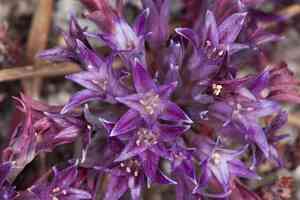
Abrams' allium (Allium abramsii)
Also known as: Abrams' onion
Abrams' allium (Allium abramsii) is a distinctive perennial herb known for its attractive pink to purple blooms that cluster in a round shape on a slender stalk, growing up to 40 centimeters tall. This rare onion species is well-suited to the rocky, serpentine soils typical of its native Californian open woodlands, thriving in full sunlight. The plant's onion-scented bulbs and foliage help deter herbivores, enhancing its chances of survival. Additionally, its growth cycle, which includes active spring growth and summer dormancy, allows it to efficiently manage water resources in its often dry habitat.
In This Article
Attributes of Abrams' allium
Lifespan
Perennial
Plant Type
Herb
Plant Height
15-30 cm
Spread
Not Applicable
Leaf Color
Green
Flower Size
1-2 cm
Flower Color
Pink to Purple
Images of Abrams' allium
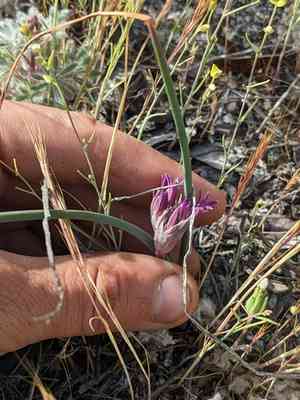
Quickly Identify Abrams' allium
1
This species can be identified by its small, cluster-like pink to purple flowers and its habitat in rocky granitic soils.
Scientific Classification of Abrams' allium
Phylum
Vascular plants
Class
Monocotyledons
Order
Asparagales
Family
Amaryllis
Genus
Onions
Species
Abrams' allium
Planting and Growing of Abrams' allium
Care Difficulty
Moderate
Watering Schedule
Every 2 days
Sunlight Requirements
Full sun
Sunshine Duration
6-10 hours
Ideal Temperature
60-75℉
Soil Type
Potting Mix, Peat Mix
Soil pH
6.5-7.5
Fertilizer Type
Balanced
Pruning Season
Spring, Summer
Pruning Area
Branches, Leaves
Pruning Frequency
2 times a year
Repotting Season
Spring
Pot Type
Plastic, Ceramic
 How to Water Abrams' allium?
For Allium abramsii, the watering amount should be approximately 250 ml per session. Ensure the soil is well-drained and water until moisture just starts to appear on the surface. It's best to water deeply to encourage the roots to grow deeper into the soil, but avoid waterlogging which could harm this plant.
What are the symptoms of an underwatered Abrams' allium?
›
What should I do if my Abrams' allium is not getting enough water?
›
What are the symptoms of an overwatered Abrams' allium?
›
How to save an overwatered Abrams' allium?
›
 What Are the Sunlight Requirements for Abrams' allium?
This plant thrives best with half to full day sunlight. Ideal light ensures vibrant foliage and robust flowering, crucial for its growth cycle.
What is the ideal lighting condition for Allium abramsii?
›
How can I achieve these conditions?
›
What are the benefits of ideal sunlight exposure?
›
 What Is the Ideal Temperature Range for Abrams' allium?
The ideal temperature range for growing Allium abramsii lies between 60°F and 75°F. This temperature zone supports optimal plant metabolism and photosynthesis, allowing the plant to maintain robust growth and health. Such conditions are typically found in temperate climates where temperatures are moderately warm, supporting both plant vigor and reproductive success.
 What Soil is Best for Abrams' allium?
Allium abramsii thrives in well-drained soil because it prevents waterlogging and root rot. Good drainage improves aeration, ensuring roots receive enough oxygen and nutrients. Loose-textured soil is vital as it allows roots to expand and access nutrients efficiently. This soil characteristic enhances growth by facilitating better root system development. A nutrient-rich soil is essential for this plant, providing it with necessary minerals and organic matter that boost growth and flowering. It's crucial for sustained health and vitality.
 How to Fertilize Abrams' allium?
For Allium abramsii, it's crucial to ensure the proper amount of fertilizer. Use a balanced liquid fertilizer diluted to half-strength, applying approximately 1 teaspoon per gallon. This judicious approach helps to prevent nutrient burn.
 How to Prune Abrams' allium?
Begin by sterilizing your pruning tools to prevent the spread of disease. Examine the plant for any dead or damaged foliage, and carefully remove these parts at the base. Next, trim any excessive or leggy growth to ensure the plant maintains a full, compact appearance. Always prune above a node or a set of leaves to encourage new growth from that point.
More About Pruning Techniques→
 How to Propagate Abrams' allium plant?
1
Begin by filling seed trays with a well-draining seed-starting mix. Sow the seeds over the surface and then cover lightly with more mix. Water gently to avoid dislodging the seeds and maintain consistent moisture until germination.
2
Dig up the parent Allium abramsii plant carefully to avoid damaging the bulbs. Use a sharp knife to divide the clumps into smaller sections, ensuring each section has healthy roots.
3
Once seedlings or divided bulbs have established roots, carefully transplant them into prepared soil in their permanent location. Ensure the new site has similar conditions to their original habitat for best results.
 How to Repot Abrams' allium plant?
1
Allium abramsii should be repotted when growth appears stunted due to overcrowded roots, when the soil does not drain well anymore, or when the plant has outgrown its pot, typically evident by roots emerging from the bottom of the pot. Repotting should be carried out during its dormancy or early growth period, predominantly in spring or autumn, to minimize stress.
2
Select a pot that is 1-2 inches larger in diameter than the current one, ensuring it has ample drainage holes. The increased size accommodates root expansion without excessive water retention, reducing the risk of rot. The material of the pot, whether clay or plastic, should suit the plant's moisture needs and your local environment to ensure optimal growth conditions.
3
Use well-draining soil, preferably a sandy mix to mimic its native environment and prevent waterlogging. A combination of potting soil with sand or perlite works well, providing nutrients while allowing excess water to escape swiftly, thereby safeguarding the roots from decay and promoting healthy plant development.



