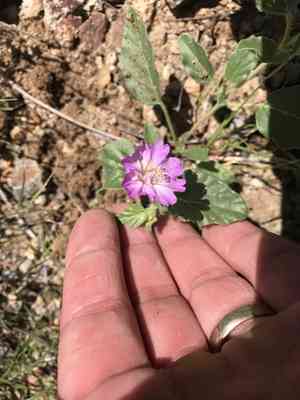
Trailing four o'clock (Allionia incarnata)
Also known as: Trailing allionia
Trailing four o'clock (Allionia incarnata) is a sprawling ground vine that thrives in arid, rocky, and sandy environments. It is often found on rocky slopes and open, sunlit areas. The plant features bright cerise blooms, which are actually clusters of three flowers that look like one. Contrary to its name, the flowers remain open for much of the day. Additionally, the plant has sticky stems and flowers.
In This Article
Attributes of Trailing four o'clock
Lifespan
Perennial, Annual
Plant Type
Herb
Plant Height
30 cm
Spread
90 cm
Leaf Color
Green
Flower Size
6 mm to 1.5 cm
Flower Color
Purple Red
Images of Trailing four o'clock

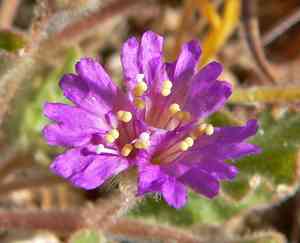

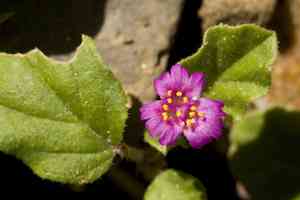
Quickly Identify Trailing four o'clock
1
Identify Allionia incarnata by its trailing growth habit, small opposite leaves, and clusters of pink to purple flowers that bloom typically in the late afternoon and evening.
Scientific Classification of Trailing four o'clock
Phylum
Vascular plants
Class
Dicotyledons
Order
Caryophyllales
Family
Four o'clock
Genus
Windmills
Species
Trailing four o'clock
Planting and Growing of Trailing four o'clock
Care Difficulty
Easy
Watering Schedule
Every 2 days
Sunlight Requirements
Full sun
Sunshine Duration
4-8 hours
Ideal Temperature
68-86℉
Soil Type
Potting Mix, Peat Mix
Soil pH
6.5-7.5
Fertilizer Type
Balanced
Pruning Season
Spring, Summer
Pruning Area
Branches, Leaves
Pruning Frequency
2 times a year
Repotting Season
Spring
Pot Type
Plastic, Ceramic
 How to Water Trailing four o'clock?
The watering amount for Allionia incarnata should be based on allowing the soil to dry out between waterings. Provide about 250 ml of water per session, ensuring that the soil is moistened but not waterlogged. Aim for a balance where the top 2-3 inches of soil are dry before the next watering.
What are the symptoms of an underwatered Trailing four o'clock?
›
What should I do if my Trailing four o'clock is not getting enough water?
›
What are the symptoms of an overwatered Trailing four o'clock?
›
How to save an overwatered Trailing four o'clock?
›
 What Are the Sunlight Requirements for Trailing four o'clock?
Allionia incarnata thrives in full sun, which means at least 6 to 8 hours of unfiltered sunlight daily, ensuring robust growth, energy-efficient photosynthesis, and full flowering potential.
What is the best way to provide ideal light conditions for Allionia incarnata?
›
How do you maximize sun exposure for Allionia incarnata?
›
What benefits does Allionia incarnata gain from ideal lighting?
›
 What Is the Ideal Temperature Range for Trailing four o'clock?
Allionia incarnata thrives best within a temperature range of 68 to 86 degrees Fahrenheit. This range provides the optimal conditions for growth and photosynthesis, ensuring that the plant can absorb nutrients effectively and maintain healthy physiological functions.
 What Soil is Best for Trailing four o'clock?
Allionia incarnata thrives in well-drained soil, which prevents waterlogging and root rot. Good drainage ensures that the roots receive adequate oxygen, enhancing the plant's overall health and growth. While this plant isn't particularly demanding in terms of nutrients, having a slight abundance of basic nutrients like nitrogen, phosphorus, and potassium can boost its growth. A fertile soil mix will facilitate vibrant blooming. Looser, sandy textures allow for proper aeration essential for root respiration. Such aerated soils permit gas exchange, supporting the plant's metabolism and vigor.
 How to Fertilize Trailing four o'clock?
For Allionia incarnata, the fertilizer amount should be carefully managed. Generally, use a half-strength liquid fertilizer solution, diluted to half the recommended strength, and apply it evenly to the roots to prevent over-fertilization. With solid slow-release fertilizer, use about 1-2 tablespoons around the base of the plant, making sure to distribute it evenly across the soil surface.
 How to Prune Trailing four o'clock?
Start by removing any dead or damaged stems to allow the plant to channel its energy into healthy growth. Trim back above a leaf node to promote new branch outgrowth. Maintain a natural, appealing shape by stepping back frequently to check your work. Use sharp, clean pruning shears to make precise cuts that reduce damage to the plant tissues. For thick stems, a pair of loppers may be more effective. Ensure your tools are well-maintained to enhance your pruning efforts.
More About Pruning Techniques→
 How to Propagate Trailing four o'clock plant?
1
Collect mature seeds from existing plants and sow them in a well-draining seed mix. Lightly cover the seeds with soil, water gently, and maintain humidity until germination.
2
Select healthy stems and cut them just below a node. Remove any lower leaves before dipping the cut end in rooting hormone to encourage rooting.
3
Place cuttings in pots filled with potting mix. Water thoroughly and cover with a plastic bag to maintain humidity while roots develop.
 How to Repot Trailing four o'clock plant?
1
Look for signs like roots growing out of drainage holes or water not being absorbed effectively. Allionia incarnata thrives when repotted in the spring and autumn, providing it with fresh nutrients and space to expand.
2
Select a pot that is only one size larger than the current one. Ensure it has sufficient drainage holes to prevent waterlogging, which could cause root rot or other issues detrimental to the plant's health.
3
Opt for a well-draining sandy mix, which mimics its natural habitat. This type of soil ensures proper aeration and prevents the roots from sitting in water, reducing the risk of rot and fungal diseases.
Learn More About Trailing four o'clock Diseases
Anthracnose
Bacterial Leaf Spot
Bacterial Soft Rot
Bacterial Wilt
Crown Gall
Cyst Nematode
Damping-off
Downy Mildew
Drought Stress
Fusarium Wilt
Gray Mold
Leaf Curl
Leaf Spot
Mosaic
Nutrient Deficiency
Nutrient Toxicity
Powdery Mildew
Root Rot
Root-knot Nematode
Rusts
Sooty Mold
Spider Mites
Temperature Stress
Thrips Damage
White Mold



