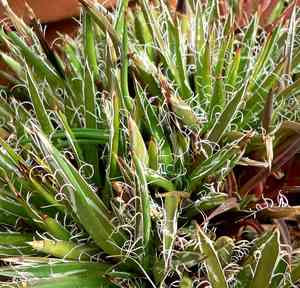
Small flower century plant (Agave parviflora)
Also known as: Santa cruz striped agave
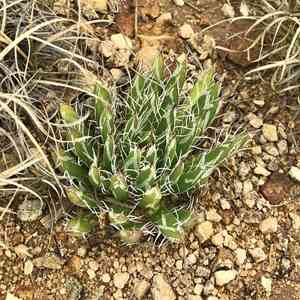
The small flower century plant, or Agave parviflora, is favored as a houseplant and in tropical rock gardens due to its minimal care requirements. Its distinctive rosette of leaves, adorned with long, shedding fibers, enhances garden aesthetics. Additionally, its tall summer flower spike, which may need extra support, adds a striking vertical element to any setting.
In This Article
Attributes of Small flower century plant
Lifespan
Perennial
Plant Type
Succulent
Plant Height
20 cm
Spread
20 cm
Leaf Color
White Green
Flower Size
Up to 2 cm
Flower Color
Yellow
Images of Small flower century plant
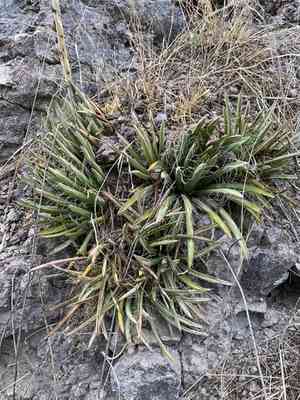
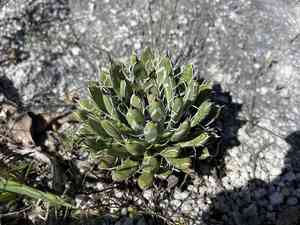
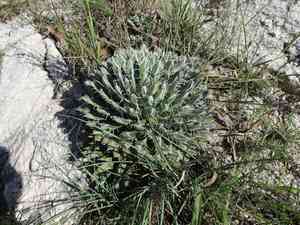
Quickly Identify Small flower century plant
1
To identify Agave parviflora, look for its small rosettes, typically less than 30 cm across, and the distinctive white filaments on the leaves. The leaves are narrow, about 15-20 cm long, and have distinct white markings.
Scientific Classification of Small flower century plant
Phylum
Vascular plants
Class
Monocotyledons
Order
Asparagales
Family
Asparagus
Genus
Agaves
Species
Small flower century plant
Planting and Growing of Small flower century plant
Care Difficulty
Moderate
Watering Schedule
Every 2 days
Sunlight Requirements
Full sun
Sunshine Duration
6-10 hours
Ideal Temperature
70-85℉
Soil Type
Potting Mix, Peat Mix
Soil pH
6.5-7.5
Fertilizer Type
Balanced
Pruning Season
Spring, Summer
Pruning Area
Branches, Leaves
Pruning Frequency
2 times a year
Repotting Season
Spring
Pot Type
Terracotta, Plastic
 How to Water Small flower century plant?
Agave parviflora requires moderate watering. Water the plant deeply but infrequently, allowing the soil to dry out completely between waterings. This ensures that the roots receive adequate moisture without being waterlogged. Aim for around 250 ml of water per session, adjusting based on the plant's environment and drainage.
What are the symptoms of an underwatered Small flower century plant?
›
What should I do if my Small flower century plant is not getting enough water?
›
What are the symptoms of an overwatered Small flower century plant?
›
How to save an overwatered Small flower century plant?
›
 What Are the Sunlight Requirements for Small flower century plant?
Agave parviflora requires full sun exposure, ideally receiving 6 to 8 hours of sunlight daily. Adequate light promotes healthy photosynthesis, resulting in vibrant foliage, tighter rosette formation, and a robust plant structure.
How much sunlight does it need?
›
What are the best locations for this plant?
›
How can you ensure ideal light conditions?
›
 What Is the Ideal Temperature Range for Small flower century plant?
The ideal temperature range for Agave parviflora is between 70°F and 85°F. This range provides a warm environment that mimics the plant's natural habitat, promoting healthy growth and optimal metabolic functions.
 What Soil is Best for Small flower century plant?
Agave parviflora thrives in soil with excellent drainage. Proper drainage prevents root rot and other moisture-related problems, ensuring the agave can grow robustly in arid climates. By allowing excess water to escape, the plant remains healthy and resistant to fungal infections. While agaves don't need highly fertile soil, a balanced presence of essential nutrients supports optimal growth. This enables the plant to develop firm, fleshy leaves and withstand challenging environmental conditions. Fertile but not nutrient-rich soil ensures that minerals are available without overwhelming the plant. Agave parviflora does well in soils with low organic matter. This minimizes the risk of water retention, aligning with the plant's natural desert habitat. It helps maintain the arid conditions the agave prefers, reducing instances of root suffocation due to excess moisture.
 How to Fertilize Small flower century plant?
Agave parviflora requires minimal fertilization due to its ability to thrive in nutrient-poor conditions. When fertilizing, use a diluted cactus or succulent fertilizer at half strength. Apply a light sprinkling, the equivalent of a half teaspoon mixed in one gallon of water, to maintain optimal growth without overstressing the plant.
 How to Prune Small flower century plant?
Always use clean, sharp pruning shears to avoid damaging the plant. Clean tools also prevent the spread of diseases. Sterilize the shears with alcohol between cuts to ensure any potential pathogens are eliminated. When removing dead or damaged leaves, make your cuts as close to the base of the leaf as possible without damaging the core of the plant. This minimizes unhealed stubs that can invite pests or rot.
 How to Propagate Small flower century plant plant?
1
Collect mature seeds from the parent plant. It's important to gather seeds when they are ripe, usually indicated by a change in pod color, ensuring they are viable and capable of germination.
2
Use a well-draining cactus mix for both seed and division propagation. Incorporating materials like perlite or sand improves drainage, preventing root rot and encouraging healthy root development.
3
Distribute seeds evenly on the surface of the tray filled with the potting mix. Lightly cover seeds with a thin layer of soil. Proper spacing and coverage are crucial to promote even growth and reduce competition among seedlings.
 How to Repot Small flower century plant plant?
1
Repot Agave parviflora when you notice its roots growing out of the drainage holes or the plant appearing root-bound. Spring and early summer are ideal due to the active growth period, allowing the plant to adapt better to the new pot.
2
Choose a pot with excellent drainage to prevent waterlogged soil. A terra cotta pot is ideal because it allows excess moisture to evaporate, reducing the risk of root rot. Ensure it's slightly larger than the current one to accommodate growth.
3
Select a well-draining cactus or succulent soil mix to repot Agave parviflora. This type of soil mixture mimics its natural arid habitat, providing the drainage it requires to thrive and preventing root rot by swiftly moving excess water away from the roots.
Toxicity
Ingestion, contact with sap
WARNING
The judgment on toxicity and danger is for reference only. We DO NOT GUARANTEE any accuracy of such judgment. Therefore, you SHALL NOT rely on such judgment. It is IMPORTANT TO SEEK PROFESSIONAL ADVICE in advance when necessary.
Learn More About Small flower century plant Diseases
Anthracnose
Bacterial Leaf Spot
Bacterial Soft Rot
Chemical Injury
Crown Gall
Cyst Nematode
Damping-off
Drought Stress
Fusarium Wilt
Gray Mold
Leaf Spot
Mosaic
Nutrient Deficiency
Nutrient Toxicity
Powdery Mildew
Root Rot
Root-knot Nematode
Sooty Mold
Spider Mites
Temperature Stress
Thrips Damage
White Mold



