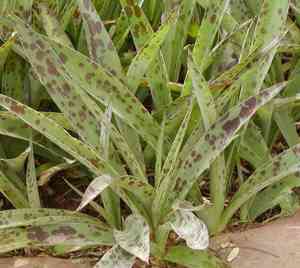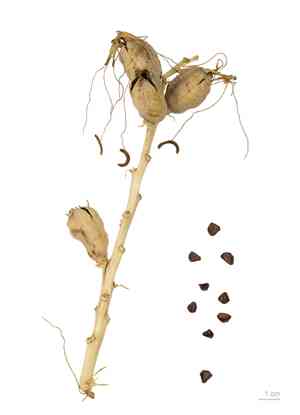
Spice lily(Agave maculata)

Spice lily (Agave maculata)

Also known as: Spotted Agave, Maculated Agave

The Texas tuberose, scientifically known as Polianthes tuberosa, is a perennial plant recognized for its fragrant, tubular white flowers. Here are its key characteristics and seasonal behaviors:

- **Appearance**: It features slender, grass-like leaves and tall flower spikes. The leaves are fleshy and silvery-green, often showing purple spots, especially noticeable in low light, where they may lay flat on the ground.
- **Fragrance**: The flowers are highly aromatic, particularly in the evening.
- **Blooming Season**: Blooms mainly from late summer to early fall.
- **Growth Conditions**: Prefers full sun and well-drained soil. It is drought-tolerant but thrives with regular watering during its growing season.
- **Hardiness**: Suitable for USDA hardiness zones 7-10. In colder regions, tubers should be lifted and stored over winter.

Seasonal behaviors:
- **Spring**: Tubers are planted after the last frost, initiating leaf growth.
- **Summer**: Active growth of foliage and flower spikes, with the potential for inflorescences to reach up to 60 cm tall given sufficient moisture.
- **Fall**: Peak blooming period, showcasing its characteristic aromatic flowers.
- **Winter**: Enters dormancy, with foliage dying back. Tubers may need protection from frost in colder climates.

Attributes of Spice lily

Lifespan
Perennial
Plant Type
Herb, Shrub
Plant Height
0 mm to 30 cm
Spread
1 to 2 meters
Leaf Color
Green Purple
Flower Size
1 to 2 centimeters
Flower Color
White Pink Cream Red

ForwardPlant - Identify plants with a snap

Identify and diagnose plants, get toxicity alerts, and explore safety guides for all types of fungi.

Try for Free

Images of Spice lily

Spice lily(Agave maculata)

Quickly Identify Spice lily

1
To identify Agave maculata, look for its rosette-forming leaves which have distinct dark spots. The leaves are fleshy, sword-shaped, and usually have sharp spines along the edges and at the tips. The flowering spike can reach considerable heights with tubular flowers.

Scientific Classification of Spice lily

Phylum
Vascular plants
Class
Monocotyledons
Order
Asparagales
Family
Asparagus
Genus
Agaves
Species
Spice lily

Planting and Growing of Spice lily

Care Difficulty
Easy
Watering Schedule
Every day
Sunlight Requirements
Full sun
Sunshine Duration
6-10 hours
Ideal Temperature
65-75℉
Soil Type
Potting Mix, Peat Mix
Soil pH
6.5-7.5
Fertilizer Type
Balanced
Pruning Season
Spring, Summer
Pruning Area
Branches, Leaves
Pruning Frequency
2 times a year
Repotting Season
Spring
Pot Type
Plastic, Ceramic

water icon How to Water Spice lily?

Agave maculata prefers to be lightly watered. The best approach is to water deeply but infrequently. Ensure that when you water, approximately 250 milliliters soaks into the soil, allowing it to penetrate the root zone. The soil should be completely dry before watering again, as agave is drought-tolerant and prefers well-drained conditions.
What are the symptoms of an underwatered Spice lily?
What should I do if my Spice lily is not getting enough water?
What are the symptoms of an overwatered Spice lily?
How to save an overwatered Spice lily?

sunlight icon What Are the Sunlight Requirements for Spice lily?

Sunlight Requirements: Full sun
Duration of light: 6-8 hours daily
Agave maculata prefers full sun to partial sun. Ideal sunlight enhances its growth, maximizes energy capture, and maintains its striking appearance, thus ensuring only the hardy, vibrant leaves typical for this species.
What type of sunlight is best for Agave maculata?
What are the benefits of ideal sunlight for Agave maculata?
How can I ensure my Agave maculata receives the right amount of sunlight?

temperature icon What Is the Ideal Temperature Range for Spice lily?

Ideal Temperature: 65 ~ 75℉
The ideal temperature range for Agave maculata is between 65°F and 75°F. This range facilitates optimal enzyme activity and photosynthesis processes, encouraging healthy growth and development while preventing stress due to extreme conditions.

soil icon What Soil is Best for Spice lily?

Soil type: Sandy soil, Loam
Soil PH: 6.5 ~ 7.5
Agave maculata thrives in well-draining soil because it prevents waterlogging, which can lead to root rot. Well-draining soil ensures that water moves through the soil quickly, maintaining appropriate airspace and providing the roots with adequate oxygen supplies. The surface dryness of the soil is key for Agave maculata as it mimics its native arid environment. Allowing the top layer to dry between waterings prevents overwatering and promotes a robust root system adapted to drier conditions. Surprisingly, a nutrient-poor environment suits Agave maculata. These conditions ensure the plant doesn’t grow too quickly, maintaining its structural integrity and avoiding common problems associated with rapid growth, such as weak tissues.

fertilize icon How to Fertilize Spice lily?

Fertilizer type: Balanced
For Agave maculata, the amount of fertilizer should be moderate to prevent root burn. Use half the recommended dose of liquid fertilizer to ensure the plant receives nutrients without overwhelming its system. During active growth, a diluted solution of 1/4 strength every two weeks will suffice.

prune icon How to Prune Spice lily?

Pruning Time: Spring, Summer
Begin pruning by removing the outermost leaves that are wilting, yellowing, or damaged. Cut them off close to the base of the plant using a clean, sharp knife or pruning shears, making sure not to leave stubs that could decay. If the Agave maculata is growing too large, selectively prune some of the healthy outer leaves to maintain a desirable shape and size. Focus on leaves that disrupt the symmetry of the plant.

propagate icon How to Propagate Spice lily plant?

Propagate Time: Spring, Early spring
1
For successful seed propagation, it's important to prepare a well-draining soil mix. This can be achieved by combining equal parts of sand, perlite, and potting soil to enhance drainage and aeration.
2
When propagating via cuttings, select a healthy plant and use a sharp, sterilized knife to cut a rosette. Let the cutting callous over for a few days to prevent rot before planting in soil.
3
Division involves separating offsets from the mother plant. Carefully dig around the base, gently remove the offset, and ensure it has sufficient roots before replanting it in a new pot.
More About Propagating Techniques

repot icon How to Repot Spice lily plant?

Repotting frequency: Every 2-3 years
1
Agave maculata should be repotted when you notice roots protruding from the drainage holes or when the plant outgrows its current container. Signs include slowed growth or a crowded base.
2
Select a pot that is only slightly larger than the current one, with excellent drainage to prevent waterlogging. A terracotta pot is ideal because it allows better aeration, helping in moisture regulation.
3
Opt for a well-draining cactus mix enriched with perlite or coarse sand to ensure proper drainage. This mix allows roots to breathe and reduces the risk of root rot by preventing excess moisture retention.

ForwardPlant - Identify plants with a snap

Find the best spots for them to optimize their health, simply using your phone.

Try for Free

Toxicity

Ingestion, Skin Contact

Identify toxic plants for your safety

Learn which plants are harmful to you and your pets, and make informed choices for a safer home!

Try for Free
WARNING
The judgment on toxicity and danger is for reference only. We DO NOT GUARANTEE any accuracy of such judgment. Therefore, you SHALL NOT rely on such judgment. It is IMPORTANT TO SEEK PROFESSIONAL ADVICE in advance when necessary.