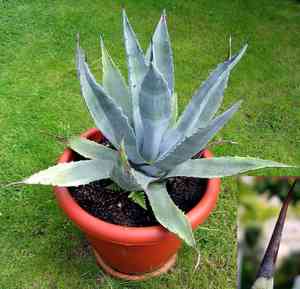
Simple desert agave (Agave deserti)
Also known as: Century plant, Mescal
The Agave, especially Agave americana, is a highly heat-tolerant succulent frequently utilized in horticulture and landscaping. Originating from desert regions in the United States, it has gained global popularity as an ornamental plant. This plant produces a tall inflorescence (ranging from 2 to 6 meters) before dying, but it generates offsets or "pups" prior to the end of its life cycle.
In This Article
Attributes of Simple desert agave
Lifespan
Perennial
Plant Type
Shrub
Plant Height
50 cm
Spread
1 m
Leaf Color
Green Gray Silver
Flower Size
1 to 2 inches (2.5 to 5 cm)
Flower Color
Yellow
Images of Simple desert agave
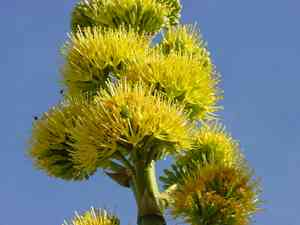
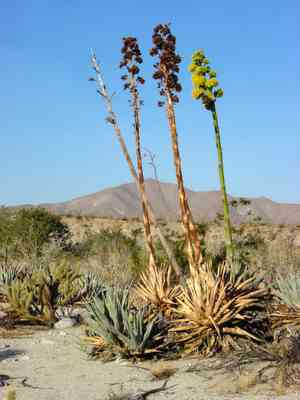
Quickly Identify Simple desert agave
1
Compact rosettes up to 2 feet (60 cm) in diameter
2
Sturdy gray leaves with pronounced central groove and small teeth along margins
3
Leaves spanning 2-3 inches (5-7.5 cm) in width and 8-16 inches (20-40 cm) in length
4
Produces a branched inflorescence reaching 8-13 feet (2.4-4 m) tall
5
Inflorescence crowned with clusters of bright yellow flowers in early to mid-summer
Scientific Classification of Simple desert agave
Phylum
Vascular plants
Class
Monocotyledons
Order
Asparagales
Family
Asparagus
Genus
Agaves
Species
Simple desert agave
Planting and Growing of Simple desert agave
Care Difficulty
Easy
Watering Schedule
Every 2 days
Sunlight Requirements
Full sun
Sunshine Duration
10-12 hours
Ideal Temperature
70-80℉
Soil Type
Potting Mix, Peat Mix
Soil pH
6.5-7.5
Fertilizer Type
Balanced
Pruning Season
Spring, Summer
Pruning Area
Branches, Leaves
Pruning Frequency
2 times a year
Repotting Season
Spring
Pot Type
Plastic, Ceramic
 How to Water Simple desert agave?
When watering Agave deserti, it is essential to mimic its natural arid environment. This means providing about 250 ml of water, which is enough to moisten the root zone without causing excessive moisture retention. Ensure the water seeps through the soil and drains completely, preventing any standing water at the base.
What are the symptoms of an underwatered Simple desert agave?
›
What should I do if my Simple desert agave is not getting enough water?
›
What are the symptoms of an overwatered Simple desert agave?
›
How to save an overwatered Simple desert agave?
›
 What Are the Sunlight Requirements for Simple desert agave?
Agave deserti thrives in full sun exposure, 6-8 hours daily, which supports its growth, enhances its foliage color, and ensures energy efficiency mimicking desert conditions.
More About Sunlight Requirements Techniques→
What is the preferred lighting condition for Agave deserti?
›
How can I ensure Agave deserti receives ideal lighting?
›
What benefits does Agave deserti gain from ideal lighting?
›
 What Is the Ideal Temperature Range for Simple desert agave?
Agave deserti prefers a warm environment, ideally between 70°F and 80°F. This range closely mimics its natural desert climate, promoting healthy growth and water retention efficiency. Temperatures within this range ensure that the plant remains stress-free and able to thrive.
 What Soil is Best for Simple desert agave?
Agave deserti thrives best in well-drained soil which prevents waterlogging and root rot. This type of soil emulates the desert floor, ensuring that the roots receive oxygen while excess water quickly drains away. This plant is adept at surviving in nutrient-poor soil, which mimics its natural desert habitat. Overly fertile soil would encourage unwanted growth, making the plant more susceptible to pests and diseases. A desert plant like Agave deserti does not require much organic matter in the soil. This helps to maintain an environment that is closer to its natural, sparse desert conditions, promoting hardiness and resilience.
 How to Fertilize Simple desert agave?
Agave deserti requires a cautious fertilization approach due to its adaptation to nutrient-poor environments. Use a balanced, low-nitrogen fertilizer and apply at half-strength. Over-fertilizing can lead to root burn and other issues.
 How to Prune Simple desert agave?
Begin by examining the Agave deserti for any leaves that appear brown, wilted, or damaged by pests. These leaves can impede the plant's ability to photosynthesize effectively and may attract insects, so it's crucial to remove them. Make sure to use sharp, clean pruning shears to avoid damaging the plant. This also helps prevent the spread of disease. Sterilize your tools with rubbing alcohol before starting to ensure they are free of pathogens. When trimming, cut as close to the base of the leaf as possible without damaging the stem or the central part of the rosette. Trim leaves at their base to ensure clean removal and to promote regrowth. Dispose of the trimmed leaves properly. Do not leave them around the plant as this can attract pests or cause fungal issues. Compost them if possible, or dispose of them in yard waste.
More About Pruning Techniques→
 How to Propagate Simple desert agave plant?
1
For seed propagation, collect seeds from a mature Agave deserti plant. For division, look for healthy offsets, or 'pups,' that can be separated from the main plant with minimal disturbance.
2
Mix a well-draining potting medium suitable for succulents. Sterilize the soil by baking it in an oven at low heat to eliminate pathogens and pests.
3
Sow seeds shallowly, covering them lightly with soil. If using offsets, plant them at the same depth they were growing beside the parent plant, ensuring roots are spread out in the soil.
4
Place the seeds or offsets in a warm, bright location but out of direct sunlight. Maintain consistent moisture levels by lightly misting or watering the soil when dry to the touch.
 How to Repot Simple desert agave plant?
1
Agave deserti needs repotting when you observe its roots overcrowding the pot or growing through the drainage holes. It's essential to give the agave more space to grow whenever it looks cramped, which ensures healthy development and prevents potential root diseases.
2
Select a pot that is one size larger than the current one with ample drainage holes. The material can be terracotta, which helps in moisture regulation. A larger pot allows root expansion without waterlogging, crucial for a desert plant like Agave deserti.
3
Opt for a gritty, well-draining soil like a cactus mix. This prevents water retention, which can lead to root rot, a common issue in agaves. The right soil ensures efficient drainage and aeration, mimicking the agave's natural arid environment.
Toxicity
Ingestion, Contact with sap
WARNING
The judgment on toxicity and danger is for reference only. We DO NOT GUARANTEE any accuracy of such judgment. Therefore, you SHALL NOT rely on such judgment. It is IMPORTANT TO SEEK PROFESSIONAL ADVICE in advance when necessary.
Learn More About Simple desert agave Diseases
Anthracnose
Bacterial Leaf Spot
Bacterial Soft Rot
Crown Gall
Cyst Nematode
Damping-off
Drought Stress
Fusarium Wilt
Gray Mold
Leaf Spot
Mosaic
Nutrient Deficiency
Nutrient Toxicity
Powdery Mildew
Root Rot
Root-knot Nematode
Sooty Mold
Spider Mites
Temperature Stress
Thrips Damage
White Mold
Chemical Injury



