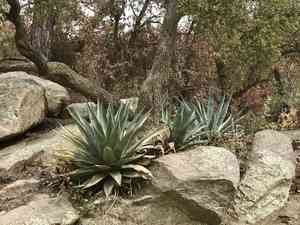
Tonto basin century plant (Agave delamateri)
The Tonto Basin Century Plant is a hardy succulent native to dry, arid areas. It has a rosette of thick, fleshy leaves that store water, helping it survive drought conditions. The blue-green leaves often feature toothed edges and end in sharp points. Well-adapted to hot climates, this plant blooms infrequently, producing tall spikes that draw pollinators when it flowers.
In This Article
Attributes of Tonto basin century plant
Lifespan
Perennial
Plant Height
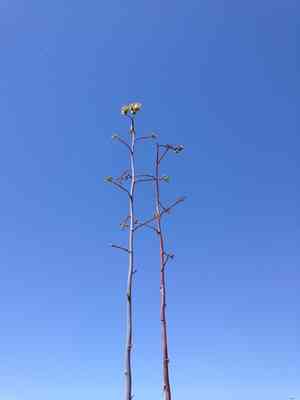
Up to 3 meters (10 feet) when flowering
Spread
1 to 1.5 meters (3 to 5 feet)
Leaf Color
Blue-green
Flower Size
Approx. 2 to 3 centimeters
Flower Color
Yellowish-green
Images of Tonto basin century plant
Quickly Identify Tonto basin century plant
1
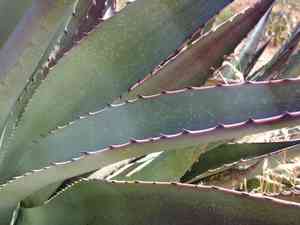
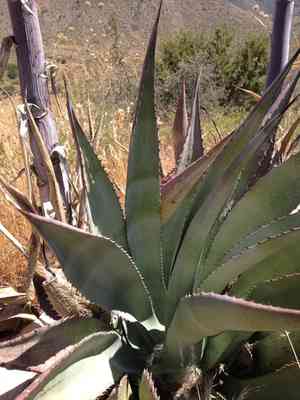
Agave delamateri can be identified by its blue-green succulent leaves arranged in a rosette pattern, each leaf tipped with a sharp spine. The plant produces a tall flower spike that can reach up to several meters in height, with yellowish-green flowers.
Scientific Classification of Tonto basin century plant
Phylum
Vascular plants
Class
Monocotyledons
Order
Asparagales
Family
Asparagus
Genus
Agaves
Species
Tonto basin century plant
Planting and Growing of Tonto basin century plant
Care Difficulty
Moderate
Watering Schedule
Every day
Sunlight Requirements
Full sun
Sunshine Duration
6-10 hours
Ideal Temperature
65-75℉
Soil Type
Potting Mix, Peat Mix
Soil pH
6.5-7.5
Fertilizer Type
Balanced
Pruning Season
Spring, Summer
Pruning Area
Branches, Leaves
Pruning Frequency
2 times a year
Repotting Season
Spring
Pot Type
Plastic, Ceramic
 How to Water Tonto basin century plant?
Agave delamateri should be watered with about 500 milliliters of water each time. The goal is to saturate the soil without leaving excess water. Ensure the soil is completely dry before the next watering to mimic its natural desert habitat.
What are the symptoms of an underwatered Tonto basin century plant?
›
What should I do if my Tonto basin century plant is not getting enough water?
›
What are the symptoms of an overwatered Tonto basin century plant?
›
How to save an overwatered Tonto basin century plant?
›
 What Are the Sunlight Requirements for Tonto basin century plant?
Agave delamateri thrives best in full sun conditions, ideally 6-8 hours of direct sunlight, which contributes to stronger growth and healthy foliage.
Solution
›
Action
›
Effect
›
 What Is the Ideal Temperature Range for Tonto basin century plant?
The ideal temperature range for Agave delamateri is between 65°F and 75°F. This range allows the plant to thrive by maintaining optimal metabolic processes, which are essential for growth and photosynthesis. Providing this temperature range ensures the plant remains vigorous and healthy.
 What Soil is Best for Tonto basin century plant?
Agave delamateri thrives in well-draining soil, allowing excess water to flow away quickly. This mimics its natural arid habitat and reduces root rot risk, fostering robust root health and vigorous growth. This plant does well in nutrient-poor soils, as its natural environment doesn't provide abundant nutrients. This encourages it to establish extensive, healthy root systems essential for water and nutrient absorption. Low levels of organic material reflect its desert origins and help maintain the soil structure, preventing overly compact conditions that could obstruct root growth and decrease oxygen availability.
 How to Fertilize Tonto basin century plant?
Agave delamateri requires careful management of fertilization. For liquid fertilizers, use half the recommended dosage on the package to avoid nutrient burn. For slow-release fertilizers, use about a spoonful around the base of the plant, ensuring it doesn't touch the leaves.
 How to Prune Tonto basin century plant?
Inspect the plant for any brown or brittle leaves and carefully cut them as close to the base as possible. This encourages new growth and helps keep the plant looking its best. Trim any excessively long leaves that detract from the desired shape of the Agave delamateri. Ensure that the plant maintains its natural rosette form by making cuts that follow the original growth pattern.
More About Pruning Techniques→
 How to Propagate Tonto basin century plant plant?
1
Use a well-draining soil mix, often composed of sand, perlite, and potting soil to enhance drainage and aeration. This ensures the cuttings or seedlings don't sit in water and roots develop healthily.
2
Scatter the Agave delamateri seeds over the surface of the soil in a seed tray. Lightly cover them with a thin layer of sand or soil. Keep the soil moist but not waterlogged to ensure successful germination.
3
Select a healthy mother plant and use a sharp knife to remove a leaf or a small section of the plant. Allow the cutting to dry for a few days to prevent rot before placing it in the soil mixture.
 How to Repot Tonto basin century plant plant?
1
Agave delamateri should be repotted when it outgrows its container, typically indicated by roots growing out of the drainage holes. Another sign is stunted growth despite proper care, suggesting root confinement. Best repotting times are during its active growing seasons, spring or summer, when the plant is less stressed and can recover more quickly.
2
Select a pot that is slightly larger than the current one to allow for root growth, ensuring it has adequate drainage holes. Terra cotta pots are ideal as they allow for air circulation and quick drying of the soil, preventing the root rot that can occur in pots without good drainage.
3
Opt for a well-draining cactus or succulent mix, typically consisting of a combination of sand, perlite, and potting soil. This mixture ensures minimal water retention, which is crucial for agave species prone to root rot in overly moist conditions. A gritty texture helps to mimic their natural arid environment.



