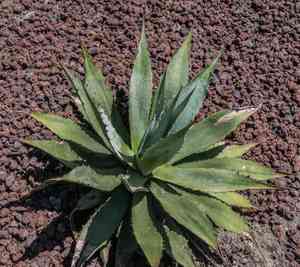
Goldenflower century plant (Agave chrysantha)
Also known as: Golden Flowered Agave
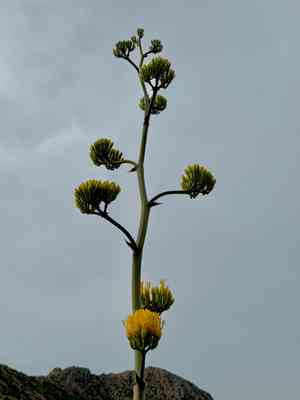
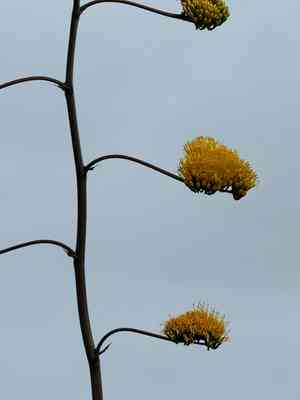
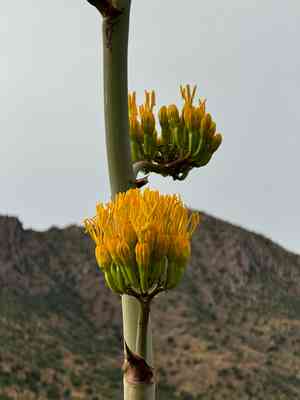
The Goldenflower century plant (Agave chrysantha) thrives in arid environments due to its drought-resistant adaptations. This succulent features a rosette of thick, fleshy leaves with fine teeth along the edges, which efficiently store water and minimize loss. Its deep roots help it tap into underground moisture reserves. The plant's crowning feature is its impressive flower stalk, adorned with clusters of vibrant yellow flowers that attract pollinators. Its waxy leaf coating and CAM photosynthesis further enhance its ability to conserve water, making it well-suited for desert landscapes.
In This Article
Attributes of Goldenflower century plant
Lifespan
Perennial
Plant Type
Succulent
Plant Height
90 cm
Spread
1.5 m
Leaf Color
Green
Flower Size
2-3 inches (5-7.5 cm)
Flower Color
Bright yellow
Images of Goldenflower century plant
Quickly Identify Goldenflower century plant
1
Agave chrysantha can be identified by its thick, fleshy leaves that form a rosette shape and its bright yellow flowers which appear on a tall stalk. The sharp spines at the leaf tips and edges are also distinctive.
Scientific Classification of Goldenflower century plant
Phylum
Vascular plants
Class
Monocotyledons
Order
Asparagales
Family
Asparagus
Genus
Agaves
Species
Goldenflower century plant
Planting and Growing of Goldenflower century plant
Care Difficulty
Easy
Watering Schedule
Every day
Sunlight Requirements
Full sun
Sunshine Duration
6-10 hours
Ideal Temperature
70-85℉
Soil Type
Potting Mix, Peat Mix
Soil pH
6.5-7.5
Fertilizer Type
Balanced
Pruning Season
Spring, Summer
Pruning Area
Branches, Leaves
Pruning Frequency
2 times a year
Repotting Season
Spring
Pot Type
Plastic, Ceramic
 How to Water Goldenflower century plant?
Agave chrysantha requires moderate watering, which means about 200 milliliters of water each time. Ensure the soil is completely dry before watering again. Overwatering may cause root rot, so always err on the side of caution.
What are the symptoms of an underwatered Goldenflower century plant?
›
What should I do if my Goldenflower century plant is not getting enough water?
›
What are the symptoms of an overwatered Goldenflower century plant?
›
How to save an overwatered Goldenflower century plant?
›
 What Are the Sunlight Requirements for Goldenflower century plant?
Agave chrysantha thrives in full sun, ideally with 6 to 8 hours of sunlight daily. This light range supports healthy photosynthesis, keeping the plant vigorous and attractive.
What is the perfect sun exposure for Agave chrysantha?
›
How to ensure Agave chrysantha receives ideal lighting?
›
What benefits does Agave chrysantha reap from ideal light conditions?
›
 What Is the Ideal Temperature Range for Goldenflower century plant?
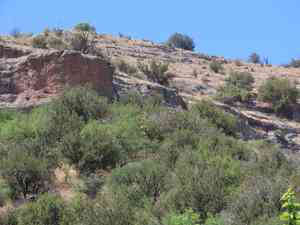
Agave chrysantha thrives best in temperatures ranging from 70°F to 85°F. This range allows the plant to grow optimally, ensuring photosynthesis occurs efficiently and that the plant maintains its structural integrity. Temperatures within this range simulate the plant's native habitat in the deserts and arid regions of the southwestern United States.
 What Soil is Best for Goldenflower century plant?
Agave chrysantha thrives in well-draining soils, which help prevent waterlogging and root rot, ensuring healthy growth and vibrant leaves. This plant doesn't need highly fertile soil. Low nutrient levels help maintain its natural resilience and prevent rapid growth that can lead to structural issues. A gravelly texture improves aeration and drainage, which mimics the plant's native arid habitats and promotes a strong, deep-rooted system.
 How to Fertilize Goldenflower century plant?
Agave chrysantha benefits from a balanced application of fertilizer. For liquid fertilizer, use a quarter-strength water-soluble 20-20-20 fertilizer at half a cup per application. For slow-release granules, apply as per package instructions, usually about 1 tablespoon per plant.
 How to Prune Goldenflower century plant?
Begin by sterilizing your pruning tools to prevent the spread of disease. Remove dead, damaged, or diseased leaves at their base using clean, sharp scissors or a pruning knife. Take care to make clean cuts, avoiding tearing the leaves. This helps in maintaining the plant's aesthetic as well as its overall health. Agave chrysantha produces a spectacular flower stalk which, once it blooms and dies, should be removed to prevent the plant from wasting energy. Cut the stalk as close to the base as possible. This allows the plant to channel its energy into producing new offshoots or pups.
More About Pruning Techniques→
 How to Propagate Goldenflower century plant plant?
1
Harvest seeds from mature Agave chrysantha plants after the flowering period has completed. Ensure seeds are thoroughly dried to prevent mold during storage.
2
Use well-draining cactus mix for both seed sowing and division. Incorporate perlite or sand to enhance drainage and aeration.
3
Disperse seeds evenly on the soil surface without covering them too deeply, as they require light for germination. Keep them moist but not waterlogged.
 How to Repot Goldenflower century plant plant?
1
Agave chrysantha signals that it's time for a repotting when roots begin to protrude from the drainage holes. This typically suggests that the plant has outgrown its current pot. Spring is an ideal time, as it aligns with the plant's growing season.
2
Select a pot that is one size larger and has adequate drainage holes. A slightly larger size prevents root bound issues while ensuring that the soil remains appropriately dry. This helps prevent root rot and encourages robust growth.
3
Opt for a well-draining cactus mix with added perlite or sand, ensuring swift drainage and minimal water retention. This type of soil emulates the agave's natural habitat, reducing the risk of overwatering and promoting healthy root development.
Learn More About Goldenflower century plant Diseases
Anthracnose
Bacterial Leaf Spot
Bacterial Soft Rot
Chemical Injury
Crown Gall
Cyst Nematode
Damping-off
Drought Stress
Fusarium Wilt
Gray Mold
Leaf Spot
Mosaic
Nutrient Deficiency
Nutrient Toxicity
Powdery Mildew
Root Rot
Root-knot Nematode
Rusts
Sooty Mold
Spider Mites
Temperature Stress
Thrips Damage
White Mold



