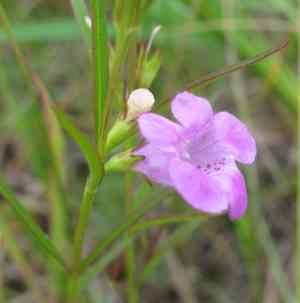
Small-flower false foxglove (Agalinis paupercula)
Also known as: Small-flowered Agalinis, Basal agalinis
The small-flower false foxglove (*Agalinis paupercula*) features pink blooms with purple spots, reminiscent of foxglove flowers, though it is a distinct species. This plant is a hemiparasite, deriving some nutrients by attaching to the roots of neighboring plants. While it is broadly distributed across North America, it is classified as endangered in Pennsylvania and threatened in Ohio.
In This Article
Attributes of Small-flower false foxglove
Lifespan
Annual
Plant Type
Herb
Plant Height
30 cm to 61 cm
Spread
Typically negligible in cluster formations
Leaf Color
Green
Flower Size
Less than 1 cm
Flower Color
Purple Red
Images of Small-flower false foxglove
Quickly Identify Small-flower false foxglove
1
To identify Agalinis paupercula, look for slender, erect stems with opposite leaves and small, tubular, pink to purple flowers that bloom late in the season. The plant often grows in clusters and requires detailed examination to distinguish from similar species.
Scientific Classification of Small-flower false foxglove
Phylum
Vascular plants
Class
Dicotyledons
Order
Lamiales
Family
Broomrape
Genus
False foxgloves
Species
Small-flower false foxglove
Planting and Growing of Small-flower false foxglove
Care Difficulty
Hard
Watering Schedule
Every 3 days
Sunlight Requirements
Full sun
Sunshine Duration
4-8 hours
Ideal Temperature
65-75℉
Soil Type
Potting Mix, Peat Mix
Soil pH
5-6.5
Fertilizer Type
Balanced
Pruning Season
Spring, Summer
Pruning Area
Branches, Leaves
Pruning Frequency
2 times a year
Repotting Season
Spring
Pot Type
Plastic, Ceramic
 How to Water Small-flower false foxglove?
Agalinis paupercula, commonly known as small-flowered false foxglove, requires about 200 milliliters of water per session. The key principle here is to ensure the soil maintains a consistently moist state without becoming waterlogged. This means watering just enough to slightly moisten the topsoil, allowing it to dry marginally between sessions.
What are the symptoms of an underwatered Small-flower false foxglove?
›
What should I do if my Small-flower false foxglove is not getting enough water?
›
What are the symptoms of an overwatered Small-flower false foxglove?
›
How to save an overwatered Small-flower false foxglove?
›
 What Are the Sunlight Requirements for Small-flower false foxglove?
Agalinis paupercula prefers full sun to partial sun, ideally positioned for morning sunlight exposure. Optimal lighting encourages healthy leaf formation, vibrant color, and prolonged blooming.
What is the best location for Agalinis paupercula?
›
How can I ensure consistent light conditions?
›
What benefits result from ideal lighting conditions?
›
 What Is the Ideal Temperature Range for Small-flower false foxglove?
The ideal temperature range for Agalinis paupercula is between 65°F and 75°F. This range supports optimal growth and development by providing a warm environment that resembles its natural habitat. Maintaining these temperatures helps ensure the plant's physiological processes function efficiently.
 What Soil is Best for Small-flower false foxglove?
Agalinis paupercula thrives in well-drained soil which prevents waterlogging, a condition that can lead to root rot. This ensures the roots have access to the oxygen they need to function properly and absorb essential nutrients. While drainage is important, the soil should retain some moisture to support the plant's growth. Sandy loam is ideal as it balances drainage and moisture retention, promoting healthy plant development. Agalinis paupercula benefits from a soil that has a good mix of nutrients. Incorporating organic matter or compost can provide the necessary nutrients for the plant's vigorous growth and flowering potential.
 How to Fertilize Small-flower false foxglove?
For Agalinis paupercula, the fertilizer amount should be modest. Use a diluted liquid fertilizer at half the strength recommended for general use. This ensures that the nutrients provided do not overwhelm the plant's needs, maintaining its natural balance.
 How to Prune Small-flower false foxglove?
Look for stems that appear brown, wilted, or damaged. These should be removed by cutting back to the base or to the healthy part of the plant, ensuring a clean cut. Trim back overgrown or long stems to just above a set of healthy leaves. This stimulates the plant to produce new shoots and promotes a bushier, fuller appearance. Pruning for shape is essential to maintain the desired aesthetics of Agalinis paupercula. Remove any wayward stems that disrupt the natural form, cutting just above a leaf node.
More About Pruning Techniques→
 How to Propagate Small-flower false foxglove plant?
1
Begin by filling seed trays with potting mix, lightly pressing down to remove air pockets. Sow the seeds evenly across the surface, then cover lightly with a thin layer of the mix. Water gently to ensure moisture reaches the seeds.
2
Place the seed trays in a warm, bright location, avoiding direct sunlight. Maintain a temperature range of 20-25°C (68-77°F). Ensure consistent moisture in the soil by misting regularly. Germination typically begins within two to four weeks.
3
Once seedlings have developed at least two sets of true leaves, they are ready to be transplanted into individual pots or directly into the garden. Handle with care to avoid damaging the delicate roots.
 How to Repot Small-flower false foxglove plant?
1
Repotting Agalinis paupercula is best done when you notice roots beginning to emerge from the bottom of the pot or when the plant seems to have outgrown its current container. Another signal is when the soil dries out too quickly after watering, suggesting the plant may need more space to thrive.
2
Select a pot that is 1-2 inches larger in diameter than the current one. Choosing a pot with drainage holes is crucial to prevent waterlogging, which can lead to root rot. A slightly larger pot provides enough space for root expansion while maintaining a balanced moisture level.
3
It's vital to choose a well-draining peat mix as the soil for Agalinis paupercula. This type of soil prevents water retention, which protects the roots from rot and allows the plant to acquire necessary water and nutrients efficiently. The airy composition aids in effective drainage and oxygen availability to roots.



