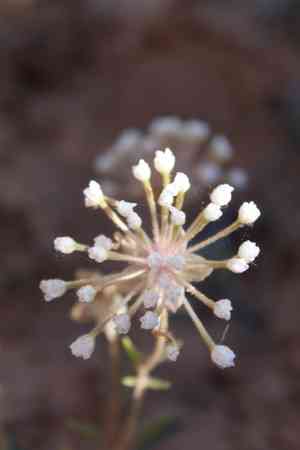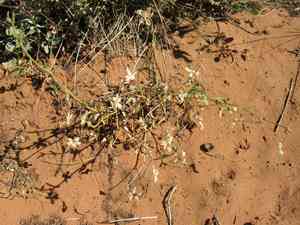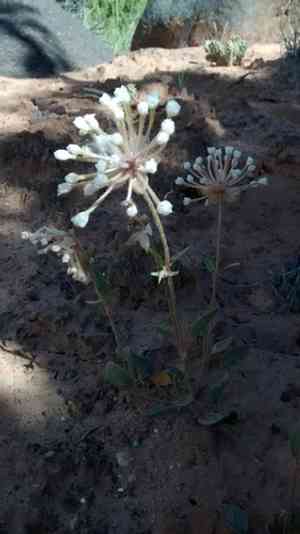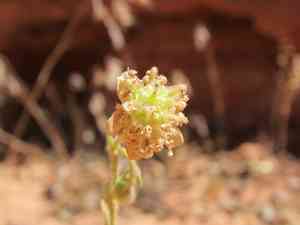
Fragrant white sand verbena(Abronia elliptica)

Fragrant white sand verbena (Abronia elliptica)

Also known as: White Sand-verbena

The fragrant white sand verbena (Abronia elliptica) is a hardy perennial herb notable for its distinctive adaptations that enable it to prosper in arid, open plains. It features deep, bulbous roots that delve into the soil to access water reserves, crucial for enduring dry conditions. The plant's elliptical leaves are covered in fine hairs, which help minimize water loss and reflect intense sunlight. Its flowers, typically pink or purplish, grow in clusters on slender stems, providing a striking visual against its sandy or rocky habitat. This species is well-adapted to its harsh environment, utilizing its morphological traits to conserve moisture and attract essential pollinators.

Attributes of Fragrant white sand verbena

Lifespan
Perennial
Plant Type
Succulent, Herb
Plant Height
30 cm to 91 cm
Spread
30-60 cm
Leaf Color
Green
Flower Size
Approximately 1 cm
Flower Color
White to pinkish

ForwardPlant - Identify plants with a snap

Identify and diagnose plants, get toxicity alerts, and explore safety guides for all types of fungi.

Try for Free

Images of Fragrant white sand verbena
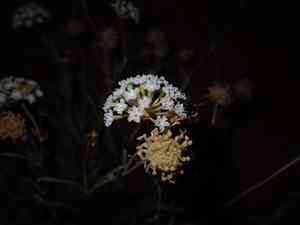
Fragrant white sand verbena(Abronia elliptica)

Quickly Identify Fragrant white sand verbena

1
The plant can be identified by its elliptic to ovate leaves, clustered in rosettes. The flowers are small, white to pinkish, and form spherical clusters. The stems are sprawling and often reddish in color.

Scientific Classification of Fragrant white sand verbena

Phylum
Vascular plants
Class
Dicotyledons
Order
Caryophyllales
Family
Four o'clock
Genus
Sand verbenas
Species
Fragrant white sand verbena

Planting and Growing of Fragrant white sand verbena

Care Difficulty
Moderate
Watering Schedule
Every 2 days
Sunlight Requirements
Full sun
Sunshine Duration
4-6 hours
Ideal Temperature
60-75℉
Soil Type
Potting Mix, Peat Mix
Soil pH
6.5-7.5
Fertilizer Type
Balanced
Pruning Season
Spring, Summer
Pruning Area
Branches, Leaves
Pruning Frequency
2 times a year
Repotting Season
Spring
Pot Type
Plastic, Ceramic

water icon How to Water Fragrant white sand verbena?

Abronia elliptica appreciates a measured approach to watering. Ideally, water deeply enough for the soil to be thoroughly moist, yet not saturated, using approximately 150 ml each session. This ensures the roots receive adequate moisture without causing root rot, adhering to the plant's natural semi-arid habitat preferences.
What are the symptoms of an underwatered Fragrant white sand verbena?
What should I do if my Fragrant white sand verbena is not getting enough water?
What are the symptoms of an overwatered Fragrant white sand verbena?
How to save an overwatered Fragrant white sand verbena?

sunlight icon What Are the Sunlight Requirements for Fragrant white sand verbena?

Sunlight Requirements: Full sun, Partial sun
Duration of light: 6 to 8 hours
Abronia elliptica ideally flourishes under partial to full sun, ensuring a balance that supports its growth. Proper sunlight enables the plant to photosynthesize effectively, maintaining its health and vitality.
How much light does Abronia elliptica require?
What solutions can provide optimal lighting?
What are the benefits of optimal light exposure?

temperature icon What Is the Ideal Temperature Range for Fragrant white sand verbena?

Ideal Temperature: 60 ~ 75℉
The ideal temperature range for nurturing Abronia elliptica is between 60°F and 75°F. This range encourages optimal growth and vitality as it closely mimics the natural conditions in its native habitat. Maintaining this temperature range ensures the plant's metabolic functions operate efficiently, promoting healthy foliage and blooming.

soil icon What Soil is Best for Fragrant white sand verbena?

Soil type: Sandy soil, Sandy loam, Loam
Soil PH: 6.5 ~ 7.5
Abronia elliptica thrives in well-drained soils, as they ensure that roots do not sit in water, which can lead to rot. These soil conditions support healthy root growth and optimal nutrient uptake, leading to a more robust and resilient plant. While this plant is adapted to survive in less fertile soils, a nutrient-rich substrate can boost its growth. This implies occasionally amending the soil with organic matter like compost to enhance its fertility, encouraging lush foliage and abundant flowering. Low salinity is crucial for Abronia elliptica, as high salt levels can inhibit water uptake and cause leaf burn. Selecting soils with low salinity or improving drainage can prevent salt buildup, keeping the plant healthy and vigorous.

fertilize icon How to Fertilize Fragrant white sand verbena?

Fertilizer type: Balanced
Abronia elliptica prefers a light hand when it comes to fertilization. Use half-strength liquid fertilizers twice a month. For slow-release granules, a small application—often just a handful spread evenly—is sufficient to maintain healthy growth throughout the year.

prune icon How to Prune Fragrant white sand verbena?

Pruning Time: Spring, Summer
Begin by identifying any dead, diseased, or damaged branches of Abronia elliptica. Gently snip these parts away to prevent disease spread and maintain plant vitality. Focus on shaping the plant to enhance its natural form. Remove excessive growth, especially any crossing or competing branches, to maintain balance and allow sunlight to penetrate the interior. More About Pruning Techniques

propagate icon How to Propagate Fragrant white sand verbena plant?

Propagate Time: Spring, Early summer
1
To prepare Abronia elliptica seeds for planting, soak them in warm water overnight. This helps to soften the seed coat and improve germination rates. Ensure the seeds are viable and not damaged.
2
Sow Abronia elliptica seeds on the surface of the potting mix in seed trays. Lightly press them into the soil but do not cover them completely, as they require light to germinate.
3
Place the seed trays in a location with good sunlight or under artificial light if natural light is insufficient. Maintain a consistent temperature of around 70°F for optimal germination.
More About Propagating Techniques

repot icon How to Repot Fragrant white sand verbena plant?

Repotting frequency: Every 2-3 years
1
Typically, Abronia elliptica needs repotting when its roots start coming out from the drainage holes. Another sign is when growth seems stunted despite appropriate care. Repotting in spring or summer ensures the plant has ample growing season to establish itself in the new pot.
2
Select a pot that is slightly larger than the current one, with ample drainage holes. A terracotta pot is a good choice as it wicks away excess moisture, preventing root rot. The size should allow some room for root growth but not so large that the plant sits in excess soil, which can retain too much moisture.
3
A well-draining, sandy soil mix is imperative for Abronia elliptica. This soil replicates its natural arid environment and prevents water from sitting around the roots. The mix should also be slightly nutrient-rich to support its growth post-repotting. Sand or perlite additions help to keep the soil aerated.

ForwardPlant - Identify plants with a snap

Find the best spots for them to optimize their health, simply using your phone.

Try for Free