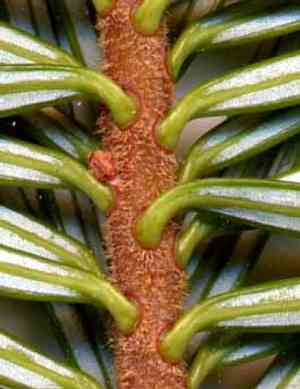
Pacific silver fir (Abies amabilis)
Also known as: Pacific Silver Fir, Cascades Fir
Abies amabilis, commonly known as the Pacific Silver Fir, is a large evergreen conifer native to the Pacific Northwest region of North America. It thrives in cool, moist environments and can grow to substantial heights, making it a prominent feature in its natural habitat.
In This Article
Attributes of Pacific silver fir
Lifespan
Perennial
Plant Type
Tree
Plant Height
40 to 70 meters
Spread
10 to 15 meters
Leaf Color
Green (top), Silvery-white (beneath)
Flower Size
Not applicable (conifer)
Flower Color
Not applicable (conifer)
Images of Pacific silver fir
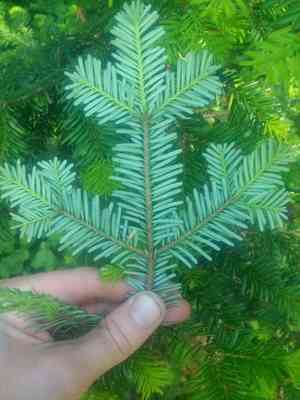
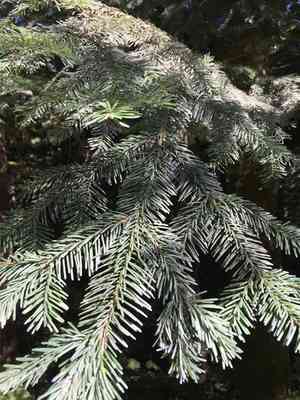
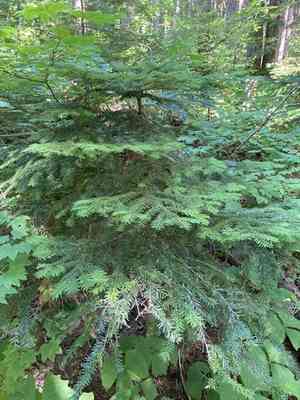
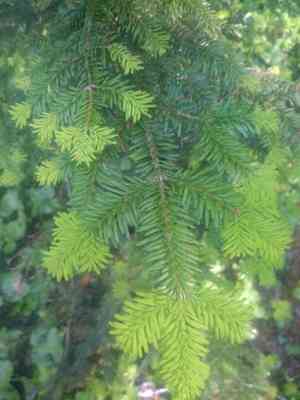
Quickly Identify Pacific silver fir
1
Identification of Abies amabilis can be done by observing its needle-like leaves that are green on top and silvery beneath, arranged spirally on the branches. The bark is smooth and gray on young trees, becoming rough and fissured with age. The cones are cylindrical and purple when immature, turning brown upon maturity.
Scientific Classification of Pacific silver fir
Phylum
Coniferophyta
Class
Pinopsida
Order
Pinales
Family
Pinaceae
Genus
Abies
Species
Pacific silver fir
Planting and Growing of Pacific silver fir
Care Difficulty
Moderate
Watering Schedule
Every 2 days
Sunlight Requirements
Partial sun
Sunshine Duration
6-10 hours
Ideal Temperature
50-70℉
Soil Type
Potting Mix, Peat Mix
Soil pH
4-6
Fertilizer Type
Balanced
Pruning Season
Spring, Summer
Pruning Area
Branches, Leaves
Pruning Frequency
2 times a year
Repotting Season
Spring
Pot Type
Ceramic, Plastic
 How to Water Pacific silver fir?
For Abies amabilis, the watering should be generous yet controlled. Ensure the soil is thoroughly soaked but not overly saturated. This translates to about 1000 milliliters of water, which will allow the roots to reach deep moisture, fostering healthy growth. Always check that water penetrates deeply rather than merely wetting the surface.
What are the symptoms of an underwatered Pacific silver fir?
›
What should I do if my Pacific silver fir is not getting enough water?
›
What are the symptoms of an overwatered Pacific silver fir?
›
How to save an overwatered Pacific silver fir?
›
 What Are the Sunlight Requirements for Pacific silver fir?
Abies amabilis prefers partial to full sunlight conditions, with optimal exposure ranging from 4 to 6 hours daily. This ensures efficient photosynthesis and healthy growth while preventing stress from overexposure.
Optimal Sun Exposure
›
Balanced Shade
›
Seasonal Light Adjustment
›
 What Is the Ideal Temperature Range for Pacific silver fir?
The ideal temperature range for Abies amabilis, commonly known as the Pacific Silver Fir, is between 50°F and 70°F. This conifer prefers cool and moist environments, often found in higher elevations or coastal regions. Maintaining this range ensures optimal growth and health, as it mimics the natural conditions of its native habitat. Consistent temperatures within this range support healthy photosynthesis and overall plant vitality.
 What Soil is Best for Pacific silver fir?
Abies amabilis thrives in acidic soil conditions with pH levels as low as 4.0. The acidity helps in nutrient availability and uptake. Maintaining acidic soil conditions ensures optimal growth and resilience against certain soil-borne diseases. This plant prefers well-draining soil such as loam or sandy loam. Good drainage prevents root rot and helps the plant absorb nutrients efficiently, promoting healthy root development and vigorous growth. Abies amabilis benefits from soil rich in organic matter. Organic material enhances soil structure, retains moisture without being waterlogged, and provides essential nutrients for plant health and vitality.
 How to Fertilize Pacific silver fir?
For Abies amabilis, apply liquid fertilizer at half-strength to avoid burning the roots. Ensure fertilizer is evenly spread over the entire root zone. Use approximately 1 gallon of diluted solution per young tree, adjusting the amount for larger trees.
 How to Prune Pacific silver fir?
Start by identifying any dead, diseased, or damaged branches on your Abies amabilis. These should be removed first to maintain plant health and prevent disease spread. Carefully evaluate the overall shape of the tree. Remove any branches that disrupt the desired shape and encourage an even and balanced growth throughout the tree. When cutting branches, make sure to cut just above the branch collar. This helps in quicker healing and reduces the chance of disease entering the main trunk. Ensure your pruning efforts maintain a strong central leader, which is important for the tree’s overall structure and resistance to harsh weather conditions.
More About Pruning Techniques→
 How to Propagate Pacific silver fir plant?
1
Collect mature cones from the Abies amabilis tree in late summer. Allow them to dry so the seeds can be easily extracted. This step is crucial to ensure that viable seeds are used, greatly affecting the success rate of germination.
2
Choose healthy, non-flowering stems from the mature plant, and use pruning shears to cut 6-8 inch sections. Remove lower leaves and dip the cut end in rooting hormone to stimulate root growth, which is vital for successful propagation.
3
Fill seed trays with suitable soil mix and place the seeds or cuttings in them. The soil should be well-draining and moist. Ensure that the temperature is consistently around 65-75°F for optimal seed germination and root development.
 How to Repot Pacific silver fir plant?
1
Abies amabilis signals it's time for repotting when its roots begin to encircle the pot's perimeter or start growing out of the drainage holes. Another sign is if the plant's growth has slowed despite having proper light and watering conditions. Ideally, repot in the spring or summer when the plant is naturally growing. This timing allows it to recover more quickly and establish itself firmly in the new soil environment.
2
When selecting a pot for Abies amabilis, opt for one that is slightly larger than the current pot, ideally 1-2 inches wider in diameter. Ensure the pot has adequate drainage holes to prevent waterlogging, which can harm the plant's roots. Utilizing a pot made from breathable materials like terracotta can help in promoting good air circulation around the roots, encouraging healthy growth.
3
Choosing the right soil for Abies amabilis is crucial for its successful growth and health. Use a well-draining, acidic soil that mimics its natural habitat. You can mix regular potting soil with peat moss or pine bark to create an ideal environment. This composition ensures that the plant's roots receive adequate moisture without becoming waterlogged, supporting robust health.



