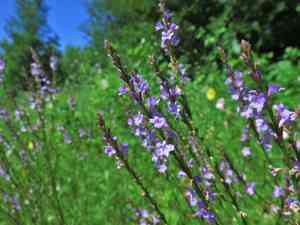
Texas vervain (Verbena halei)
Also known as: Texas Verbena
Mealycup sage (Salvia farinacea) is a perennial herb that reaches up to 61 cm in height. Native to Mexico and the southern United States, it is a popular addition to flower gardens. It complements prairie plants such as blackfoot daisy, Wright’s skullcap, and buffalo grass.
In This Article
Attributes of Texas vervain
Lifespan
Perennial
Plant Type
Herb, Shrub
Plant Height
46 cm to 61 cm
Spread
Approximately 1 to 2 feet (30 to 60 cm)
Leaf Color
Green Blue
Flower Size
2.5 cm
Flower Color
Purple Pink Lavender Violet
Images of Texas vervain
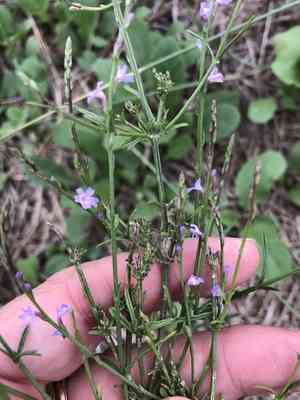
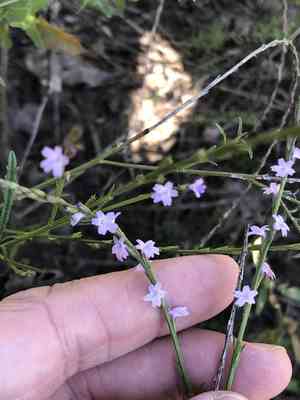
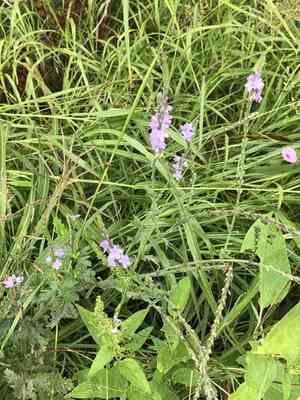
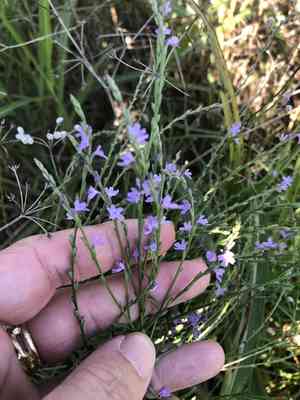
Quickly Identify Texas vervain
1
Identifying Verbena halei involves looking for its characteristic tall, slender stems, which can reach up to 3 feet in height. The plant has narrow, lance-shaped leaves and small, purple flowers arranged in tight, cylindrical spikes.
Scientific Classification of Texas vervain
Phylum
Vascular plants
Class
Dicotyledons
Order
Lamiales
Family
Verbena
Genus
Vervains
Species
Texas vervain
Planting and Growing of Texas vervain
Care Difficulty
Easy
Watering Schedule
Every 2 days
Sunlight Requirements
Full sun
Sunshine Duration
6-10 hours
Ideal Temperature
68-77℉
Soil Type
Potting Mix, Peat Mix
Soil pH
6.5-7.5
Fertilizer Type
Balanced
Pruning Season
Spring, Summer
Pruning Area
Branches, Leaves
Pruning Frequency
2 times a year
Repotting Season
Spring
Pot Type
Plastic, Ceramic
 How to Water Texas vervain?
For Verbena halei, provide around 500 ml of water per session. Ensure the soil is moist but not waterlogged. The surface should be saturated with no excess water pooling. This amount keeps the roots hydrated without drowning them.
What are the symptoms of an underwatered Texas vervain?
›
What should I do if my Texas vervain is not getting enough water?
›
What are the symptoms of an overwatered Texas vervain?
›
How to save an overwatered Texas vervain?
›
 What Are the Sunlight Requirements for Texas vervain?
Verbena halei thrives best in full sun conditions. This ideal light exposure is necessary for robust growth, colorful blooms, and healthy foliage, enhancing the plant's ornamental value and ecological benefits.
More About Sunlight Requirements Techniques→
What is the ideal sun exposure?
›
How can I achieve ideal lighting for Verbena halei?
›
What benefits does ideal lighting offer?
›
 What Is the Ideal Temperature Range for Texas vervain?
For optimal growth, Verbena halei thrives in temperatures between 68°F and 77°F. This range ensures that the plant can maintain its metabolic processes efficiently, leading to robust growth and blooming. Staying within this ideal range helps prevent stress that could affect the plant's vigour and flowering potential.
 What Soil is Best for Texas vervain?
Verbena halei thrives in soil that drains well, preventing water from pooling around its roots, which could lead to root rot. This characteristic encourages vigorous root development and overall plant health. Ensure the soil has sufficient nutrients to support Verbena halei's growth, particularly during its flowering phase. Incorporating organic compost can boost nutrient levels, promoting vibrant blooms. While good drainage is crucial, the soil should also be capable of retaining enough moisture to keep the plant from drying out too quickly, balancing hydration needs effectively.
 How to Fertilize Texas vervain?
For Verbena halei, the appropriate fertilizer amount depends largely on their growth stage. Generally, during the growing season, a quarter to half-strength liquid fertilizer should suffice. Avoid over-fertilizing, as this may cause intolerable salt buildup.
 How to Prune Texas vervain?
Begin with deadheading, the process of removing spent blooms meticulously. This ensures energy is directed towards new growth and keeps your Verbena halei blooming prodigiously throughout the season. Use sharp scissors or pruners for precise cuts, avoiding any damage to the surrounding foliage. Carefully trim back the lengthy stems to maintain a desired shape, about a third of the plant's height. This not only enhances its appearance but also supports robust and compact growth. Pay close attention to cut above the leaf nodes to ignite new shoots. This step ensures a bushy plant with abundant blooming.
More About Pruning Techniques→
 How to Propagate Texas vervain plant?
1
Start by filling a seed tray with a quality seed-starting mix. Sow the Verbena halei seeds on the surface and lightly cover them with a thin layer of soil. Keep the soil moist but not waterlogged, and place the tray in a warm, bright location.
2
Select a healthy parent plant and use a sharp knife to take 4-6 inch cuttings from non-flowering shoots. Remove the lower leaves, leaving only a few at the top. Dip the cut end in rooting hormone to improve success rates.
3
Insert the prepared cuttings into a pot filled with a mix of sand and peat. Ensure at least half of the cutting is buried. Water the cuttings gently and cover them with a plastic bag to maintain humidity, placing them in indirect sunlight.
 How to Repot Texas vervain plant?
1
Look for signs such as roots protruding through drainage holes, slowed growth, or poor water absorption. These indicate your Verbena halei needs more space and fresh soil to thrive. Repot early spring or autumn to minimize stress.
2
Choose a pot that is just 2-3 inches larger in diameter than the current one. This fosters balanced root development and prevents waterlogging. Ensure it has ample drainage holes to keep the roots healthy and prevent disease.
3
Opt for a well-draining loam mix that retains some moisture yet allows excess water to drain. This ensures the roots receive adequate nutrition and prevents root rot, maintaining optimal plant health.
Learn More About Texas vervain Diseases
Anthracnose
Bacterial Leaf Spot
Bacterial Wilt
Chemical Injury
Crown Gall
Cyst Nematode
Damping-off
Downy Mildew
Drought Stress
Fusarium Wilt
Gray Mold
Leaf Spot
Mosaic
Nutrient Deficiency
Nutrient Toxicity
Powdery Mildew
Root Rot
Root-knot Nematode
Rusts
Sooty Mold
Spider Mites
Temperature Stress
Thrips Damage
White Mold



