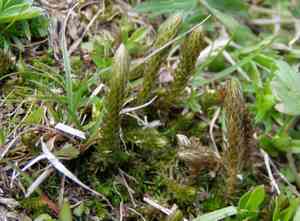
Club spikemoss (Selaginella selaginoides)
Also known as: Northern spikemoss
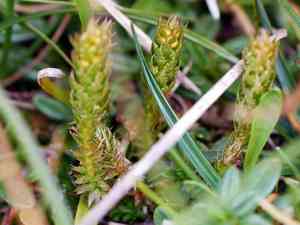
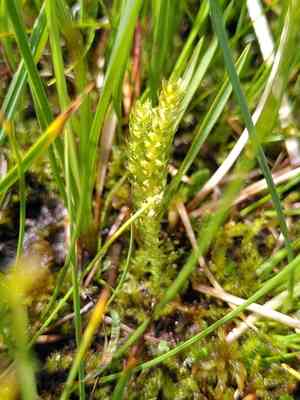
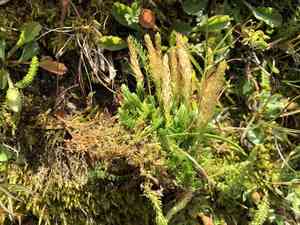
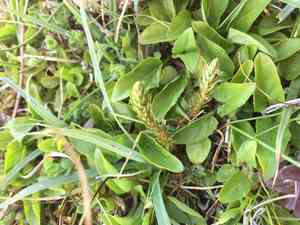
The plant is a small, delicate species that grows close to the ground. Its perennial, non-reproductive stems are thin, short, and irregularly branched, extending up to 15 cm. These stems typically crawl along the ground but often bend upwards at their tips. The plant features tiny, pointed, triangular leaves, each measuring about 1 to 2 mm and equipped with a ligule near the base on the upper surface.
In This Article
Attributes of Club spikemoss
Lifespan
Perennial
Plant Type
Herb
Plant Height
2 to 5 cm
Spread
Typically does not form a crown
Leaf Color
Green to yellow-green
Flower Size
Does not produce flowers
Flower Color
Does not produce flowers
Images of Club spikemoss
Quickly Identify Club spikemoss
1
This plant can be identified by its small, dense, moss-like appearance with dichotomously branching stems. It has small, scale-like leaves arranged in four rows along the stems.
Scientific Classification of Club spikemoss
Phylum
Vascular plants
Class
Club mosses
Order
Selaginellales
Family
Spike-moss
Genus
Spikemosses
Species
Club spikemoss
Planting and Growing of Club spikemoss
Care Difficulty
Easy
Watering Schedule
Every 3 days
Sunlight Requirements
Partial sun
Sunshine Duration
6-10 hours
Ideal Temperature
60-75℉
Soil Type
Potting Mix, Peat Mix
Soil pH
5.5-7
Fertilizer Type
Balanced
Pruning Season
Spring, Summer
Pruning Area
Branches, Leaves
Pruning Frequency
2 times a year
Repotting Season
Spring
Pot Type
Plastic, Ceramic
 How to Water Club spikemoss?
For Selaginella selaginoides, watering should be thorough but not excessive. The goal is to keep the soil evenly moist, similar to its natural habitat of moist forests and rocky crevices. Water until you see a little draining from the bottom of the pot, indicating that the water has reached the roots.
What are the symptoms of an underwatered Club spikemoss?
›
What should I do if my Club spikemoss is not getting enough water?
›
What are the symptoms of an overwatered Club spikemoss?
›
How to save an overwatered Club spikemoss?
›
 What Are the Sunlight Requirements for Club spikemoss?
Partial shade accommodates the needs of Selaginella selaginoides perfectly. Ideal lighting promotes healthy foliage and supports its natural lifecycle, encouraging dense and vibrant growth.
What is the best lighting condition for Selaginella selaginoides?
›
How can I achieve optimal lighting for this plant?
›
Why is proper lighting important for Selaginella selaginoides?
›
 What Is the Ideal Temperature Range for Club spikemoss?
Selaginella selaginoides thrives best within a temperature range of 60°F to 75°F. Maintaining this temperature range ensures optimal growth and health of the plant, promoting vigorous development and lush foliage.
 What Soil is Best for Club spikemoss?
Selaginella selaginoides thrives in soils that have a good moisture retention capacity. These conditions provide the plant with consistent moisture levels, vital for its overall health and growth. Adequate water availability ensures that the plant maintains its lush, green appearance. This plant prefers soils rich in organic matter. Organic material helps improve soil structure, enhance nutrient content, and facilitate better water retention. By enriching the soil with organic matter, the plant receives essential nutrients that aid in its vigorous growth. While Selaginella selaginoides likes moisture, it also needs well-draining soil to prevent waterlogging. Good drainage prevents root rot, a common issue in waterlogged conditions, allowing the plant's roots to access both water and oxygen effectively.
 How to Fertilize Club spikemoss?
For Selaginella selaginoides, the fertilizer should be used sparingly. Use a balanced liquid fertilizer diluted to half strength. Avoid over-fertilization, which can stunt growth and damage delicate roots.
 How to Prune Club spikemoss?
Begin by identifying any dead or overgrown parts of the Selaginella selaginoides. Remove these parts carefully to encourage vigorous growth and maintain the plant’s aesthetics. Look for brown or withered stems and cut them at the base. Trim the plant to maintain its shape by cutting any excessively long or unruly stems. This not only keeps the Selaginella selaginoides looking tidy but also promotes better airflow, reducing the risk of disease.
More About Pruning Techniques→
 How to Propagate Club spikemoss plant?
1
Before starting the division process, prune any damaged leaves and water the plant a day prior to ensure it's hydrated and easier to divide.
2
Carefully dig around the base of the Selaginella plant. Once enough roots are exposed, gently lift the plant to mitigate damage to the root system.
3
Using a clean, sharp knife or spade, cut through the root system to create divisions, ensuring each section has ample roots and some shoots for new growth.
 How to Repot Club spikemoss plant?
1
Selaginella selaginoides reveals its need for repotting through slow growth, visible roots at the soil surface, or a compact, hardened soil mass. The ideal time for repotting this delicate plant is during its active growth seasons, which are spring and summer. Repotting during these times minimizes stress and allows the plant to quickly reestablish itself in the new pot.
2
When selecting a pot for Selaginella selaginoides, opt for a size slightly larger than its current container—preferably with drainage holes to prevent waterlogging. The material can be terracotta to allow for breathability or plastic for lightweight convenience, providing the ideal home for its unique growth habits and ensuring healthy root development.
3
Choose a soil mix that is rich and well-draining, combining organic matter such as coco coir or peat moss, with perlite or sand. This mixture retains moisture but prevents water stagnation, crucial for Selaginella’s fern-like fronds to stay lush without the risk of root rot.



