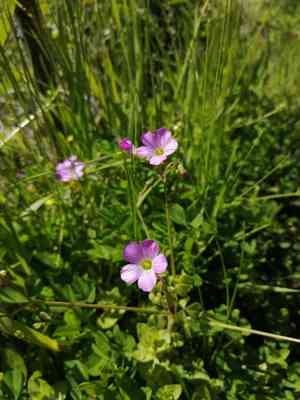
Annual pink sorrel (Oxalis rosea)
Also known as: Pink-sorrel, Rose oxalis
The annual pink sorrel is a resilient herbaceous plant recognized for its distinctive trifoliate leaves and delicate pink flowers that bloom in sunlight. Its leaves exhibit nyctinasty, folding downward in response to the onset of evening, guided by the plant's circadian rhythm. Adaptable to a range of environments, the plant's bulbils and tuberous roots not only store nutrients but also provide significant drought resistance. These features collectively enable the annual pink sorrel to thrive and blossom across diverse habitats.
In This Article
Attributes of Annual pink sorrel
Lifespan
Perennial
Plant Type
Herb
Plant Height
10-20 cm
Spread
15-30 cm
Leaf Color
Green
Flower Size
1-2 cm
Flower Color
Pink
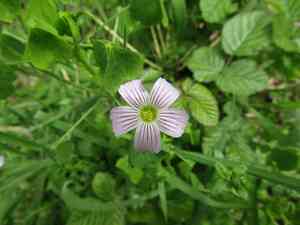
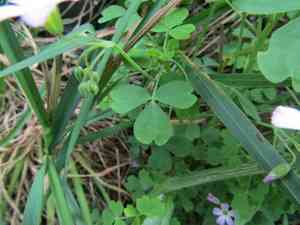
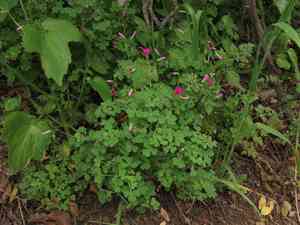
Images of Annual pink sorrel

Quickly Identify Annual pink sorrel
1
Identification can be made by observing the plant\'s trifoliate leaves which resemble clover, with each leaflet having a heart shape. The flowers are pink, often with five petals, and grow in clusters. The plant typically has a low-growing habit.
Scientific Classification of Annual pink sorrel
Phylum
Vascular plants
Class
Dicotyledons
Order
Oxalidales
Family
Wood sorrel
Genus
Wood sorrels
Species
Annual pink sorrel
Planting and Growing of Annual pink sorrel
Care Difficulty
Easy
Watering Schedule
Every 3 days
Sunlight Requirements
Full sun
Sunshine Duration
6-10 hours
Ideal Temperature
65-75℉
Soil Type
Potting Mix, Peat Mix
Soil pH
6.5-7.5
Fertilizer Type
Balanced
Pruning Season
Spring, Summer
Pruning Area
Branches, Leaves
Pruning Frequency
2 times a year
Repotting Season
Spring
Pot Type
Plastic, Terracotta
 How to Water Annual pink sorrel?
When watering Oxalis rosea, aim for soaking the soil evenly until it is saturated, but avoid leaving standing water. This plant prefers to have its entire root system moistened, ensuring each area receives equal hydration without causing waterlogged conditions.
What are the symptoms of an underwatered Annual pink sorrel?
›
What should I do if my Annual pink sorrel is not getting enough water?
›
What are the symptoms of an overwatered Annual pink sorrel?
›
How to save an overwatered Annual pink sorrel?
›
 What Are the Sunlight Requirements for Annual pink sorrel?
Oxalis rosea prefers being in an environment with full to partial sun exposure. Ideal lighting fosters healthy growth patterns, vibrant leaf colors, and a consistent flowering schedule, leading to a more resilient and attractive plant.
What is the optimal light condition for Oxalis rosea?
›
How can I achieve the ideal lighting for Oxalis rosea?
›
What benefits does Oxalis rosea gain from ideal lighting?
›
 What Is the Ideal Temperature Range for Annual pink sorrel?
The ideal temperature range for Oxalis rosea to thrive is between 65°F and 75°F. Within this range, the plant experiences optimal growth and flowering, as it mimics its natural habitat in subtropical regions. Temperatures below 65°F can slow down growth, while above 75°F, water evaporation from leaves may increase, stressing the plant.
 What Soil is Best for Annual pink sorrel?
Oxalis rosea thrives in well-drained soils that prevent waterlogging. Proper drainage is crucial as it helps in preventing root rot, thereby promoting healthier plant growth. The plant benefits from soils enriched with organic matter, which provides essential nutrients. This supports vibrant foliage and flowering, enhancing the beauty of your garden. A balance of moisture retention is key, ensuring the plant receives adequate water without soggy conditions. This consistency aids in steady growth and robust leaf formation.
 How to Fertilize Annual pink sorrel?
For Oxalis rosea, the fertilization quantity should be moderate. A liquid fertilizer should be diluted to half strength to avoid nutrition overload. When using slow-release fertilizers, opt for a balanced granule as per the manufacturer’s instructions, typically around one tablespoon per plant.
 How to Prune Annual pink sorrel?
Use sharp scissors or pruning shears to ensure clean cuts. This minimizes damage to the plant and reduces the risk of disease entering through jagged or torn edges. Look for dead or yellowing leaves and stems that should be removed. Additionally, keep an eye out for excessively long or leggy stems that could be pruned down to encourage fuller growth. When trimming, make clean, precise cuts at a 45-degree angle just above a node or leaf joint. This encourages new growth and healthier branches. After completing your pruning session, ensure all tools used are properly disinfected. This prevents any potential disease transfer to other plants you may work on later.
More About Pruning Techniques→
 How to Propagate Annual pink sorrel plant?
1
Use a well-draining potting mix to prevent waterlogging. When propagating Oxalis rosea, ensure the soil is loose and slightly acidic to mimic its natural environment and facilitate root growth.
2
Select healthy stems and cut at a 45-degree angle to increase rooting surface area. Cuttings should ideally be 3-4 inches long, and all but the top leaves should be removed to reduce water loss.
3
For seed propagation, plant Oxalis rosea seeds in seedling trays or directly in the ground, maintaining a depth of about 1/8 inch. Keep the soil consistently moist but not soggy to ensure successful germination.
 How to Repot Annual pink sorrel plant?
1
Oxalis rosea needs repotting when its roots start growing out of the drainage holes or when the plant appears stunted. Early spring is an optimal time, allowing it to regenerate in a growing period. Be vigilant for overcrowded roots as they hinder nutrient absorption.
2
A well-chosen pot for Oxalis rosea should have ample drainage holes to prevent waterlogging and avoid root rot. Opt for a pot slightly larger than the current one to accommodate root expansion. Terracotta pots are ideal, providing breathability and promoting healthy root systems.
3
Oxalis rosea thrives in a mix that ensures excellent drainage. A sandy loam mix enriched with organic matter is ideal. This not only drains excess moisture but also retains necessary nutrients, encouraging vigorous growth and flowering.
Toxicity
Ingestion
WARNING
The judgment on toxicity and danger is for reference only. We DO NOT GUARANTEE any accuracy of such judgment. Therefore, you SHALL NOT rely on such judgment. It is IMPORTANT TO SEEK PROFESSIONAL ADVICE in advance when necessary.
Learn More About Annual pink sorrel Diseases
Anthracnose
Bacterial Leaf Spot
Bacterial Soft Rot
Crown Gall
Cyst Nematode
Damping-off
Downy Mildew
Drought Stress
Fusarium Wilt
Gray Mold
Leaf Spot
Mosaic
Nutrient Deficiency
Nutrient Toxicity
Powdery Mildew
Root Rot
Root-knot Nematode
Rusts
Sooty Mold
Spider Mites
Temperature Stress
Thrips Damage
White Mold



