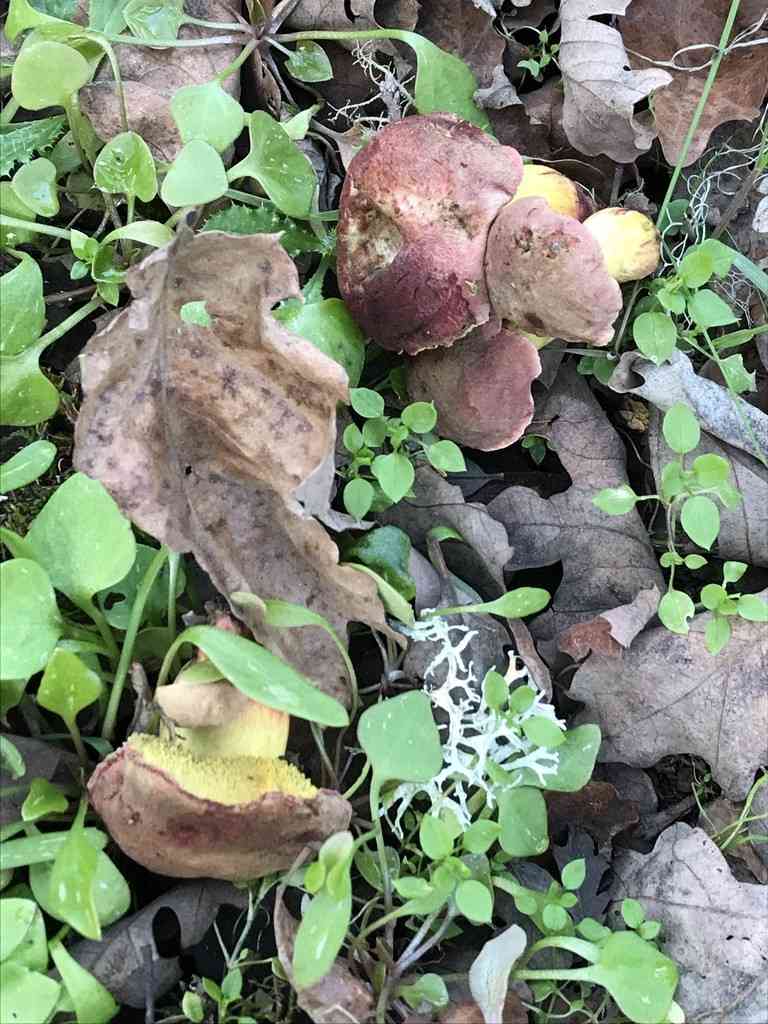
Oak-loving bolete
Xerocomellus dryophilus
A species of Xerocomellus.
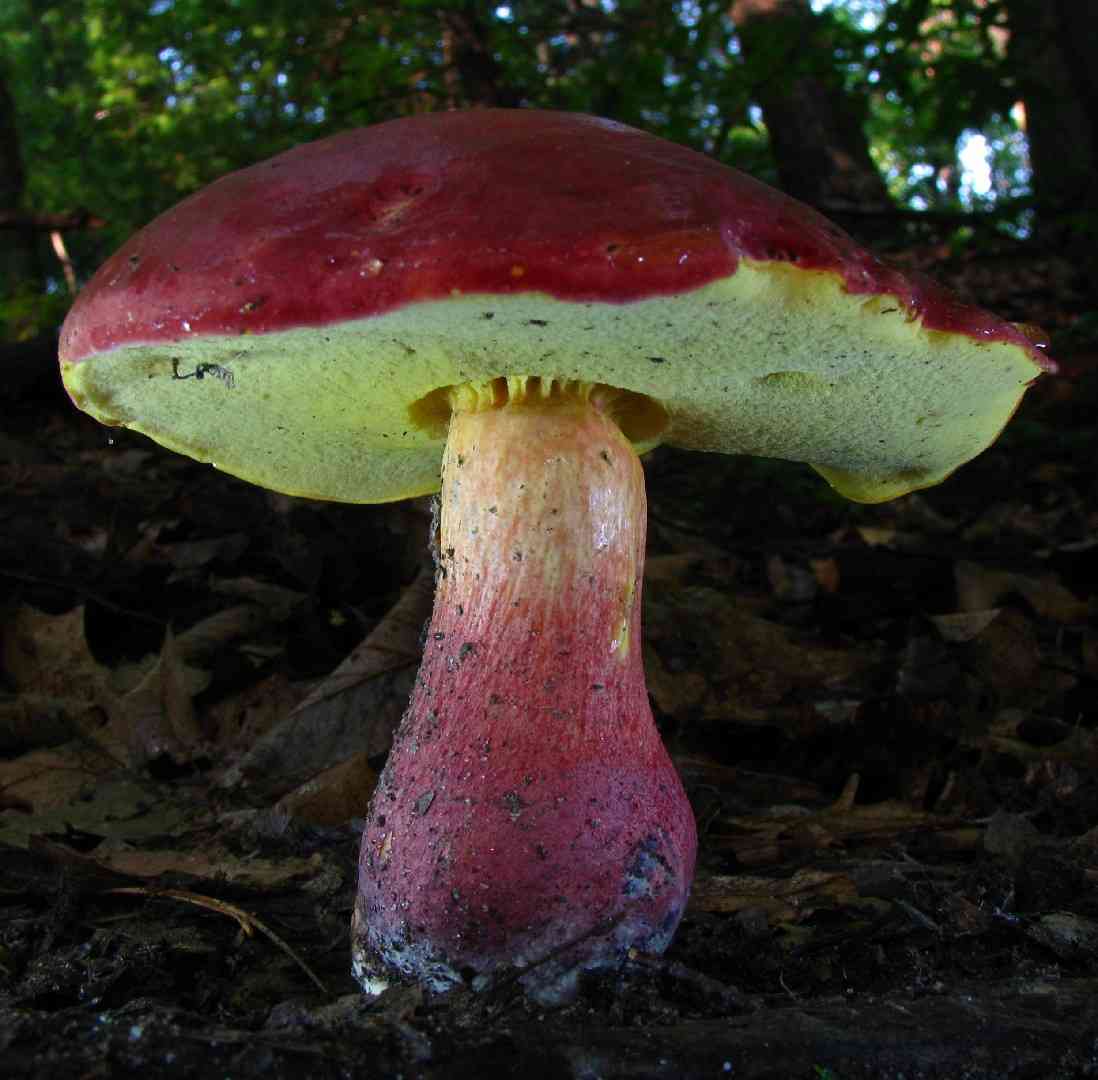
Xerocomellus dryophilus, also known as the cracked-cap bolete, is a striking, substantial mushroom native to western North America. Its cap coloration varies, appearing in shades from pink to brick to a deep wine-red. While not considered poisonous, this species, unlike some well-regarded boletes, is not typically consumed.
In This Article
Attributes of Oak-loving bolete
Cap Diameter
4 - 12 cm
Height
4 - 10 cm
Cap
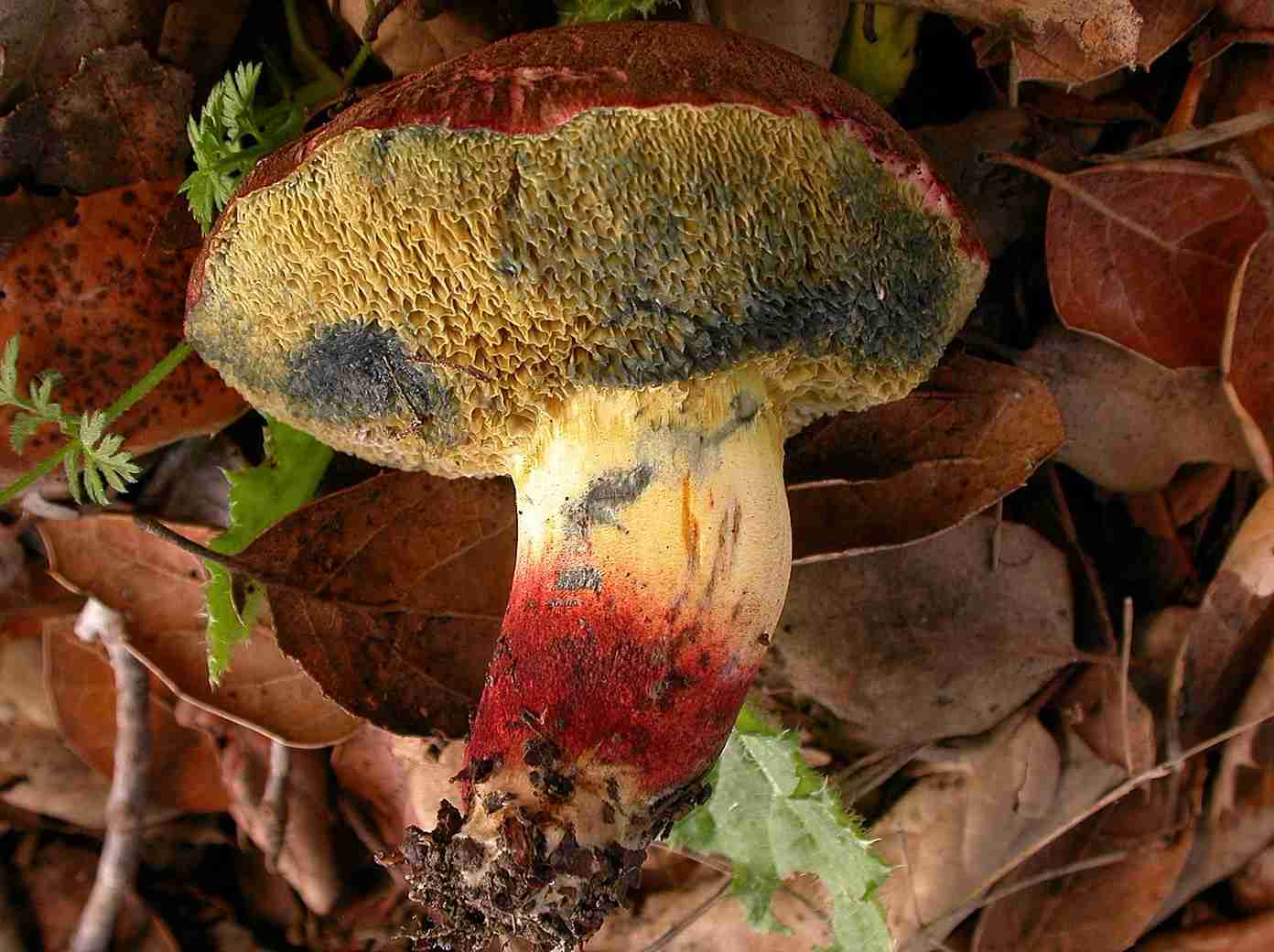
Cap 4 - 12 cm across; plano-convex; reddish-brown; pale yellow, display blue when cut or injuered
Cap Shape
Convex, Depressed
Cap Surfaces
Fibrillose-scaly, Velvety
Stem
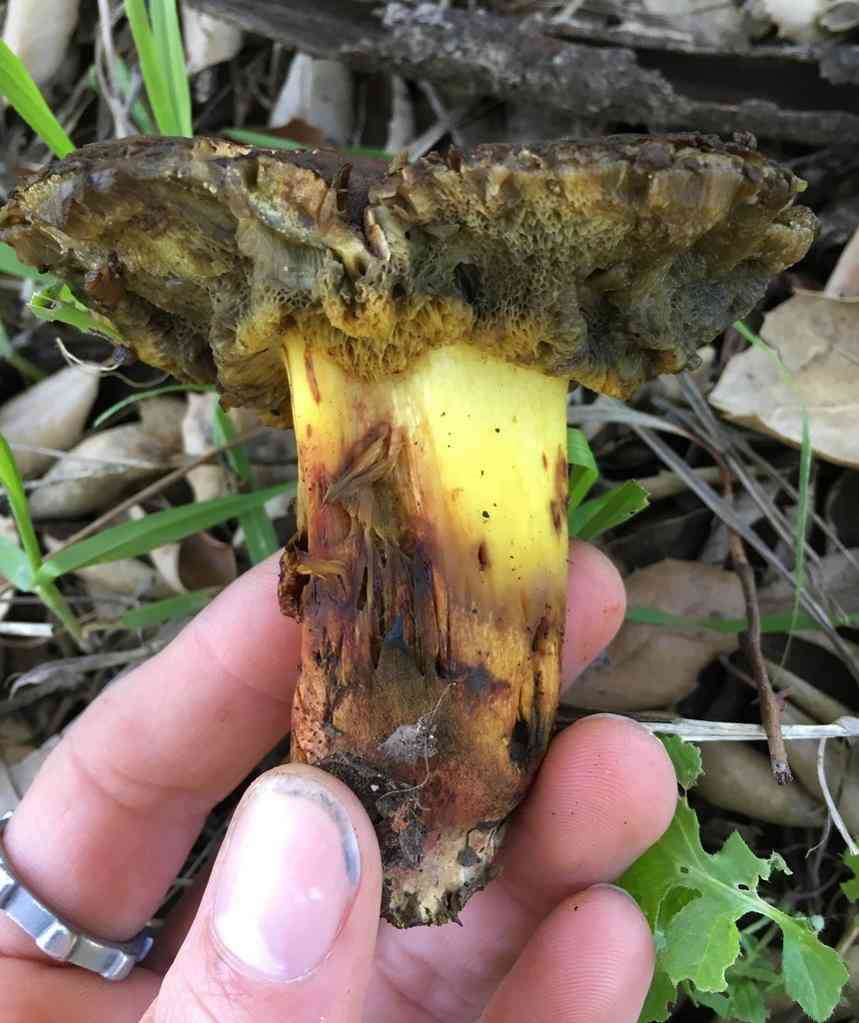
Stem 4 - 8 cm long, 1 - 2.5 cm thick; straight; yellowish, reddish-brown
Stem Shapes
Cylindrical
Stem Surfaces
Smooth to slightly fibrous
Flesh
Slowly blue
Ring
Ringless
Spore Print Color
Brownish
Odor
Mild, non-distinctive earthy scent.
Body Color
BrownRed
Flesh Bruises
Discolor to blue
Growth Form
Solitary, Scattered, Gregarious
Nutrient Gathering
Mycorrhizal
Substrate
On soil
You can find Oak-loving bolete by these plants
Oaks, Pines, Douglas firs
Occurence Habitats
Deciduous Woodland
Species Status
Very common, widespread
Endangered Species
No
Scientific Classification of Oak-loving bolete
Phylum
Club fungi
Class
Mushroom-forming fungi
Order
Boletes and allies
Family
Boletes
Genus
Xerocomellus
Toxicity and Edibility of Oak-loving bolete
Is Oak-loving bolete Toxic?
Toxicity information is not available for this mushroom. Always consult with an expert before consuming any wild mushrooms.