Two-colored bolete
Baorangia bicolor
A species of Baorangia.
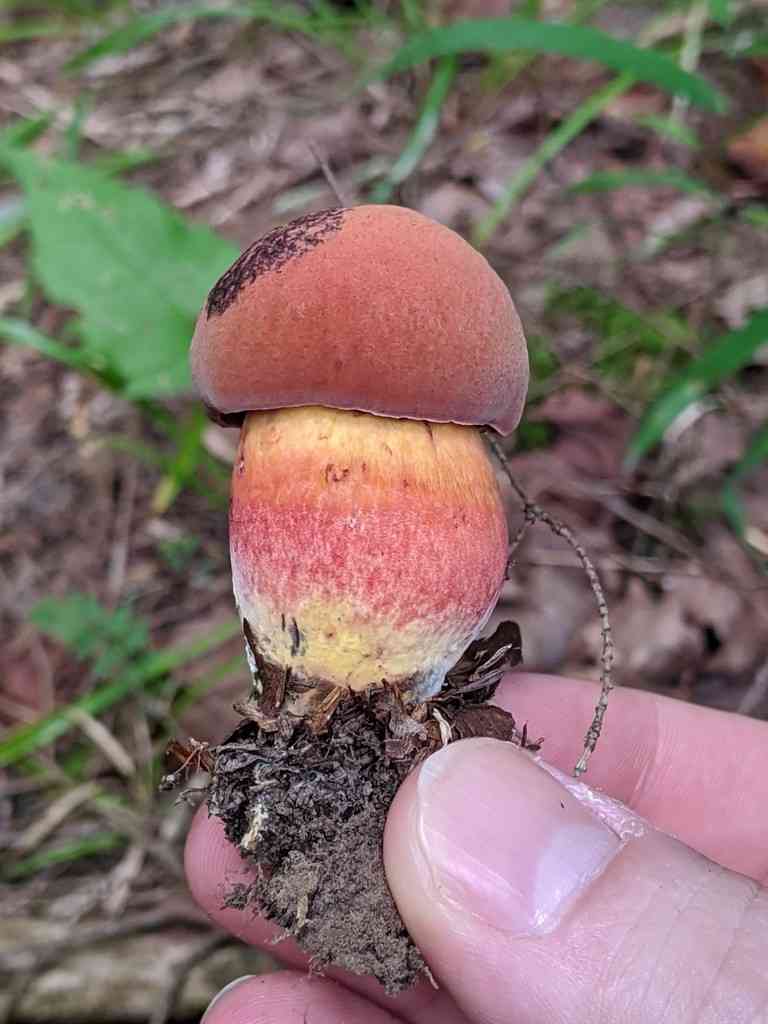
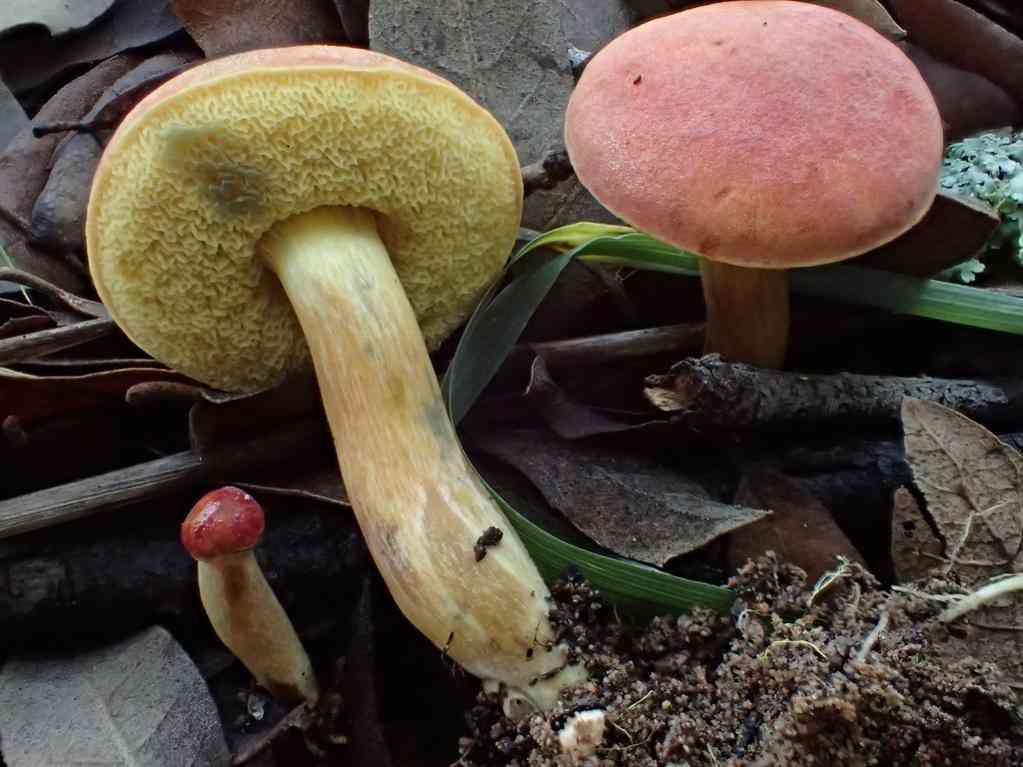
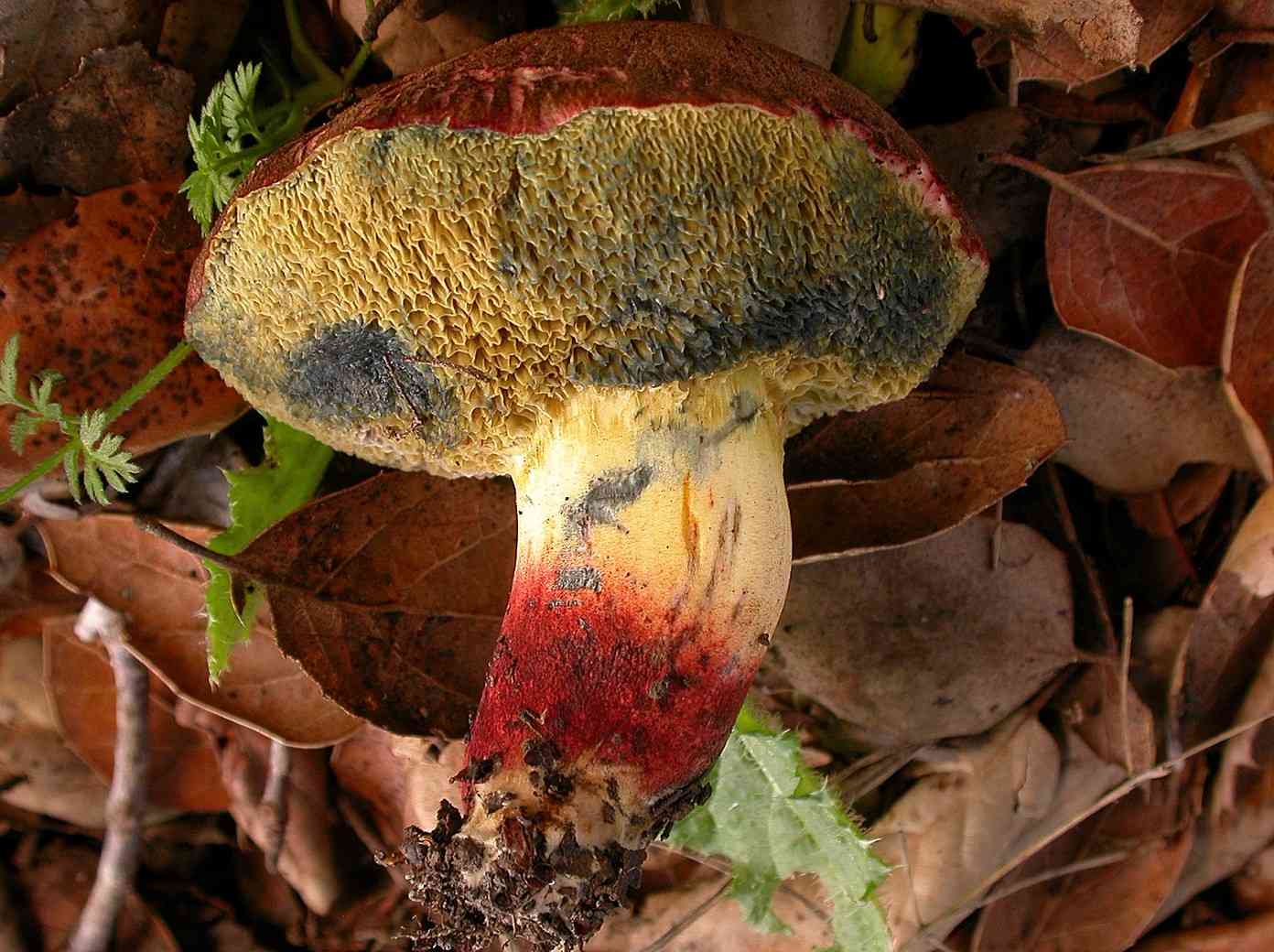
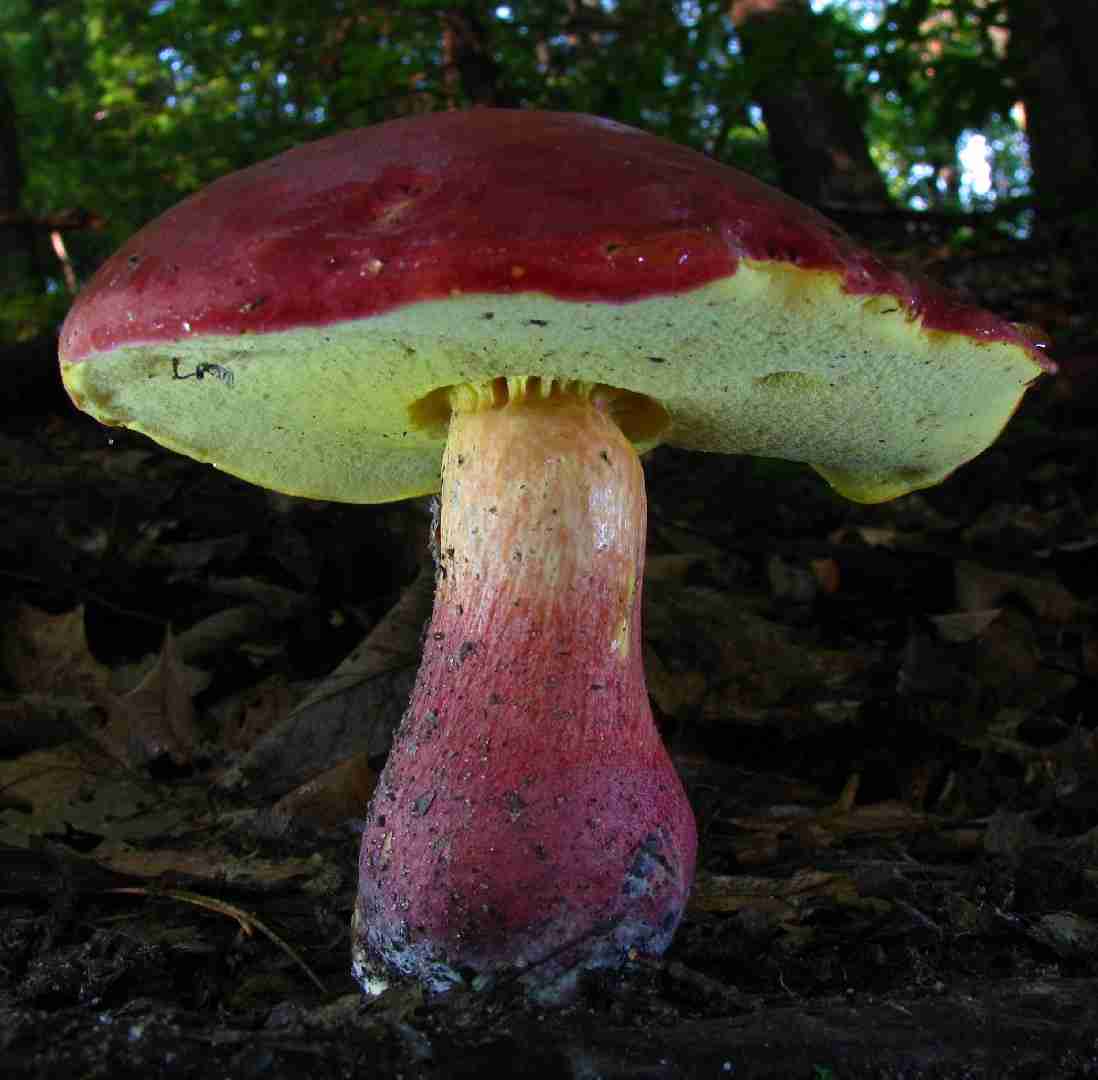
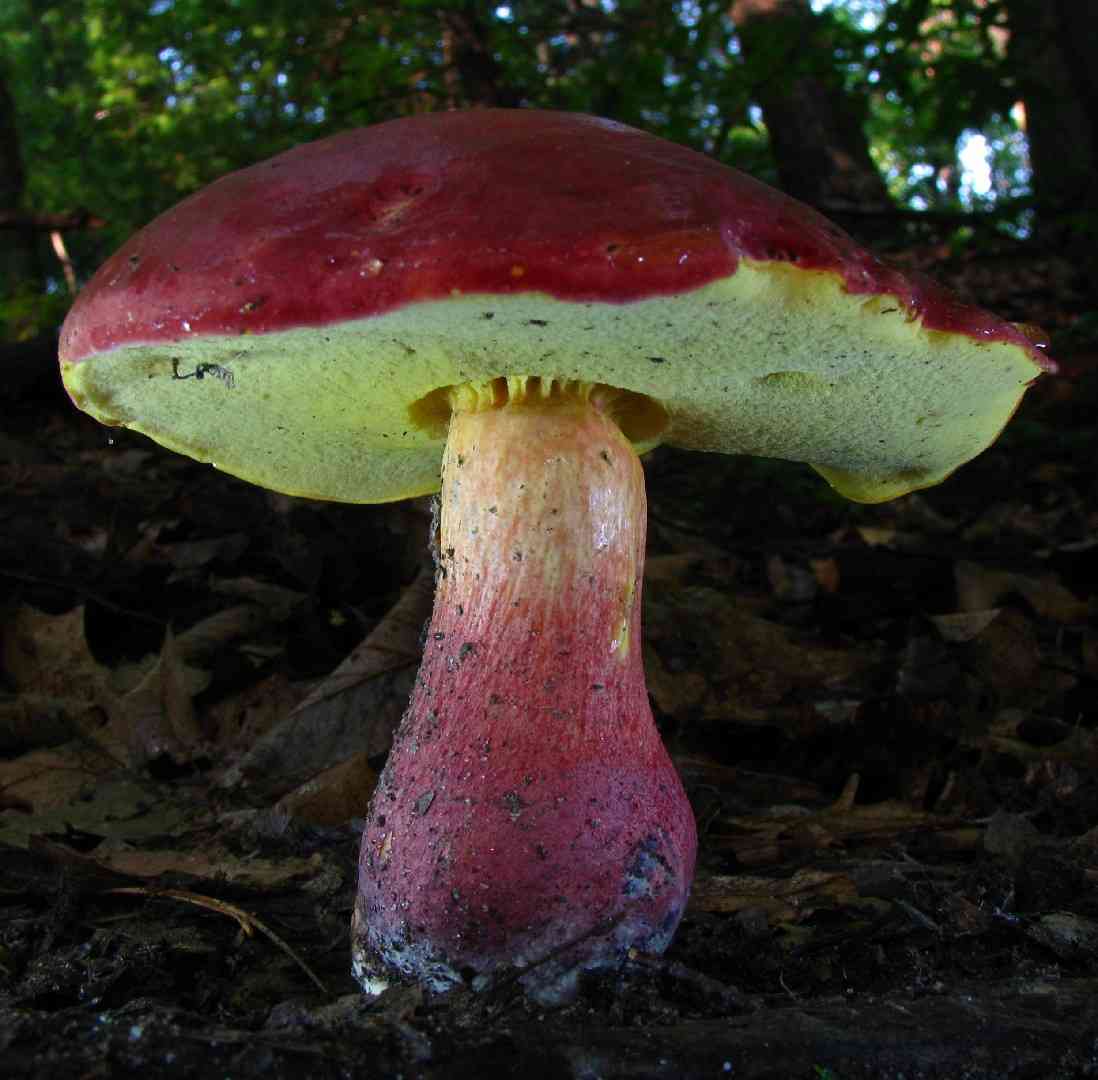
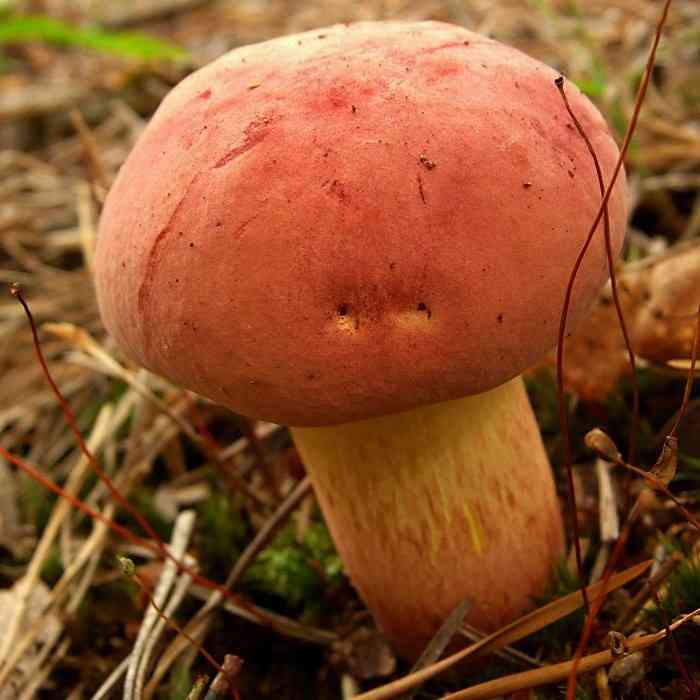
The Bicolor Bolete earns its name from its striking appearance: a rich, brick-red cap and stalk contrasted by a vibrant canary yellow underside. However, a case could be made for calling it the three-colored bolete, given that any damage to its pore surface rapidly develops into an intense blue discoloration within moments.
In This Article
Attributes of Two-colored bolete
Cap Diameter
4 - 16 cm
Cap
Cap 4 - 16 cm; convex, nearly flat; red; textured like soft leather at maturity
Stem
Stem 5 - 15 cm long, 1.5 - 3 cm thick; equal, above a tapered base, solid; bright yellow at the apex, red below
Flesh
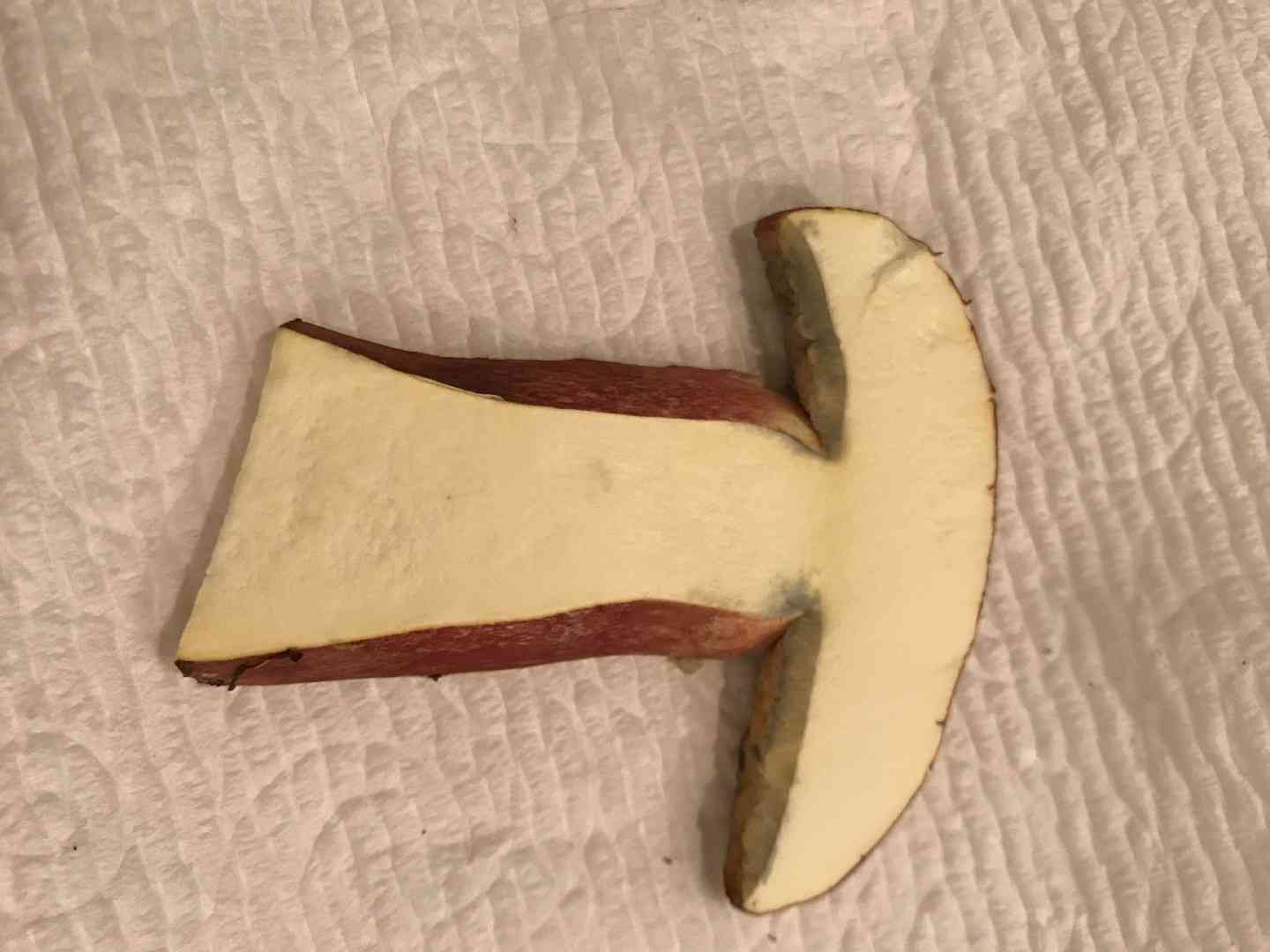
Pale yellow in cap, deep yellow in the stem; turn pale blue when sliced
Spore Print Color
Olive
Odor
Mildly mushroomy but not distinctive.
Body Color
YellowRedPurplePink
Flesh Bruises
Discolor to blue
Growth Form
Solitary, Scattered, Gregarious
Nutrient Gathering
Mycorrhizal
Substrate
On soil
You can find Two-colored bolete by these plants
Oaks, Pines
Species Status
Widely distributed east of the Rocky Mountains
Endangered Species
No
Scientific Classification of Two-colored bolete
Phylum
Club fungi
Class
Mushroom-forming fungi
Order
Boletes and allies
Family
Boletes
Genus
Baorangia
Toxicity and Edibility of Two-colored bolete
Is Two-colored bolete Toxic?
Toxicity information is not available for this mushroom. Always consult with an expert before consuming any wild mushrooms.