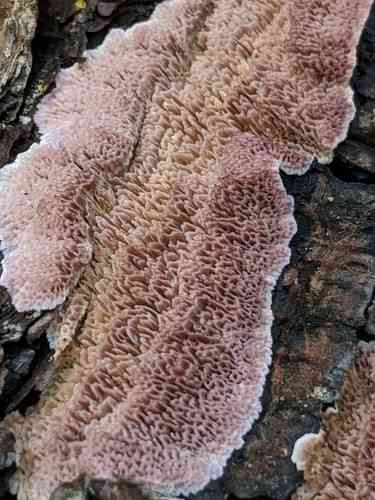
Purplepore bracket
Trichaptum abietinum
A species of Trichaptum.
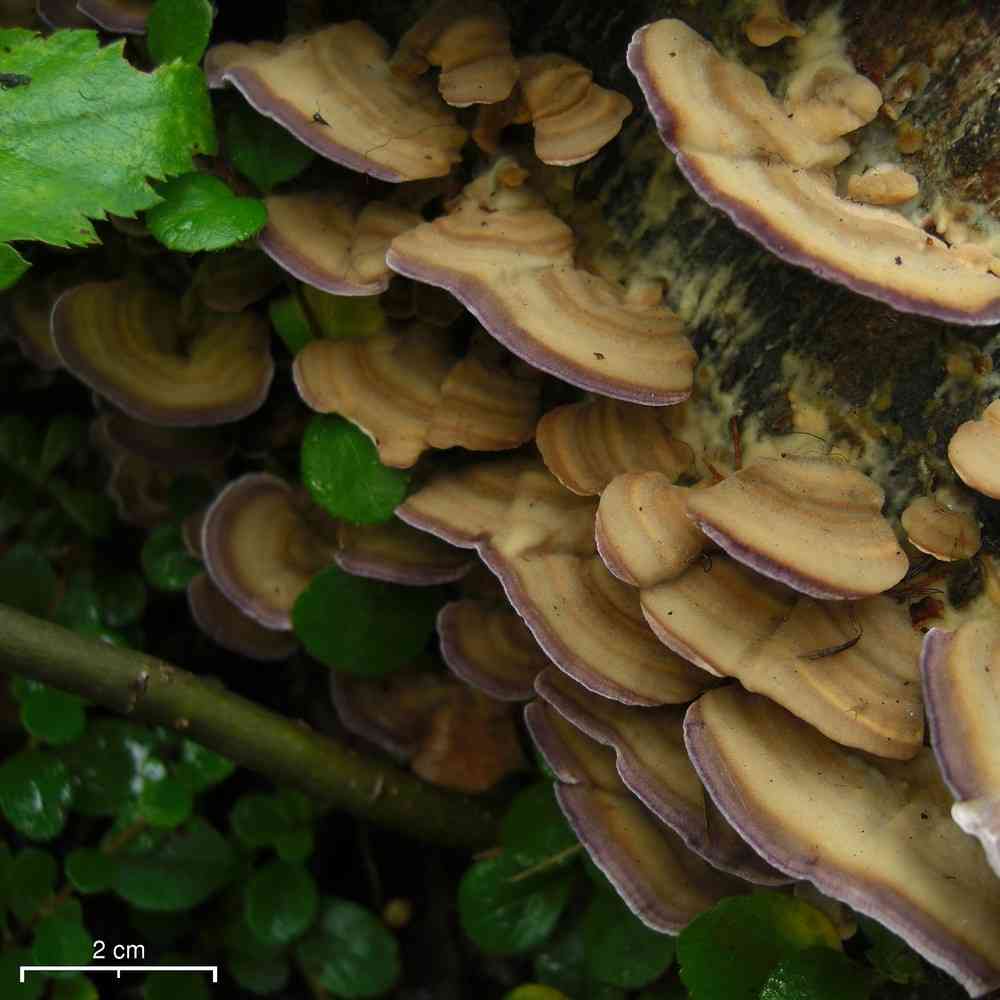
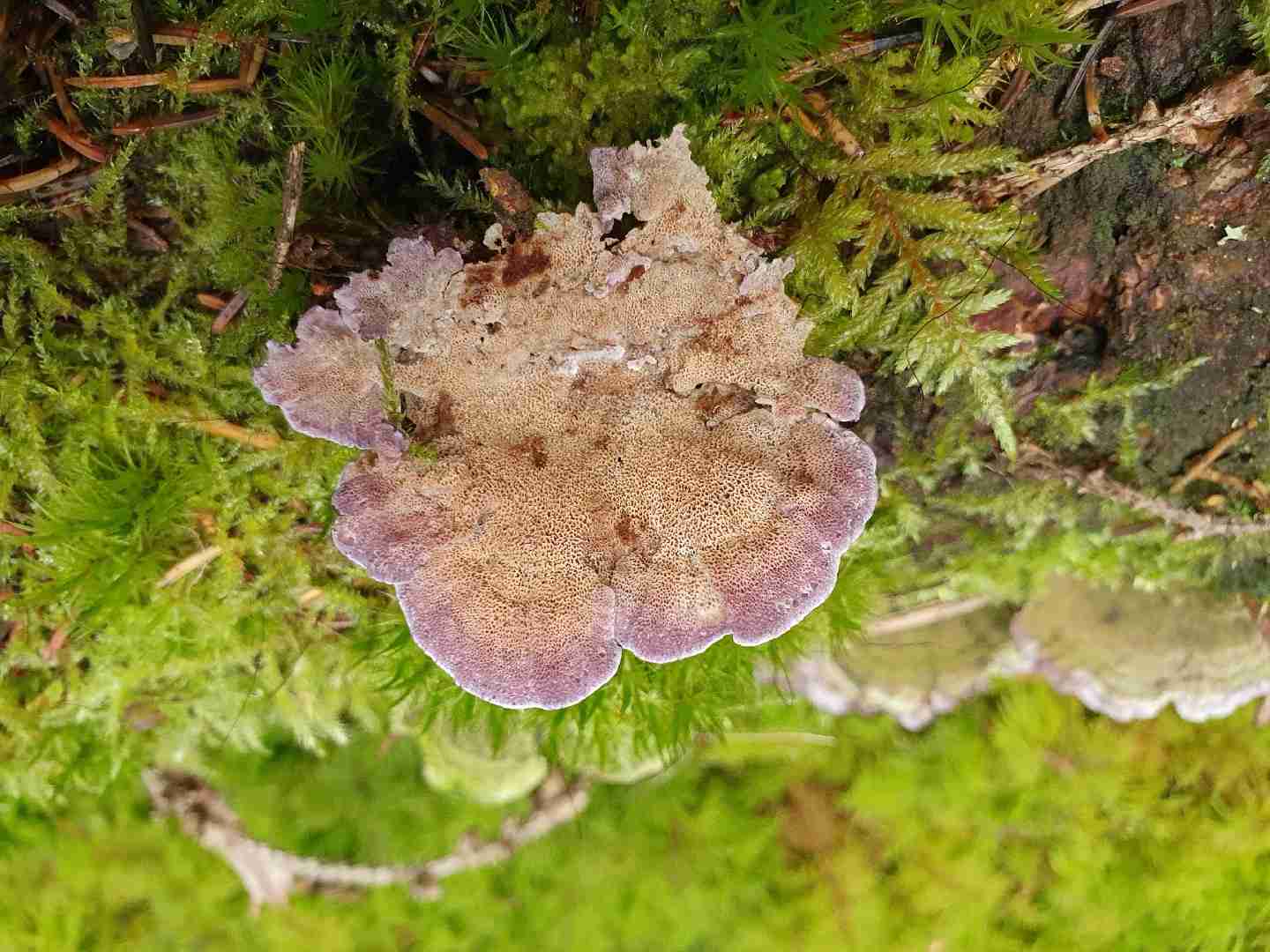
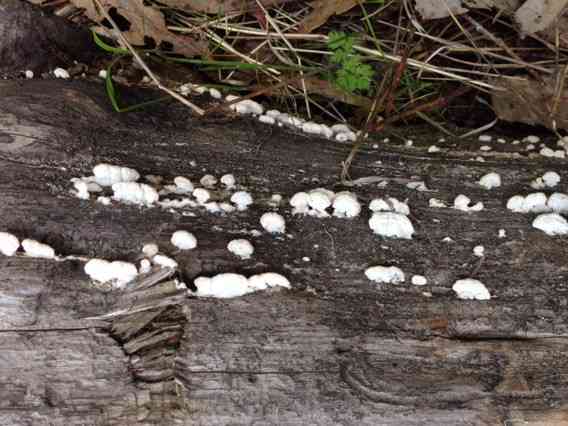
The Purplepore bracket, also known as Trichaptum abietinum, is easily recognized by its vibrant violet hue in its early stages, which gradually transitions to a pale cream as it ages. (Should it be hosting algae, an initial observation might even reveal a green tint.) This species is an exceptionally potent white rot fungus, which notably avoids deciduous trees, primarily preferring to grow on deceased coniferous wood. It is deemed unsuitable for consumption.
In This Article
Attributes of Purplepore bracket
Cap Diameter
1 - 5 cm
Height
1 - 3.5 cm
Cap
Cap 1 - 4 cm wide, up to 3 cm deep; semicircular, fan-shaped, thin; gray to gray-brown
Cap Surfaces
Fibrillose-scaly
Stem
Absent
Flesh
Tough and leathery; whitish
Spore Print Color
White
Odor
Mild, indistinct, typically not strong.
Body Color
GreenGrayPurple
Flesh Bruises
The flesh or milk does not discolor when bruised or cut.
Growth Form
Gregarious
Nutrient Gathering
Saprophytic
Substrate
Dead Woods
You can find Purplepore bracket by these plants
Spruces, Pines, Firs
Occurence Habitats
Coniferous Woodland
Species Status
Widely distributed
Scientific Classification of Purplepore bracket
Phylum
Club fungi
Class
Mushroom-forming fungi
Order
Hymenochaetales
Genus
Trichaptum
Toxicity and Edibility of Purplepore bracket
Is Purplepore bracket Toxic?
Toxicity information is not available for this mushroom. Always consult with an expert before consuming any wild mushrooms.