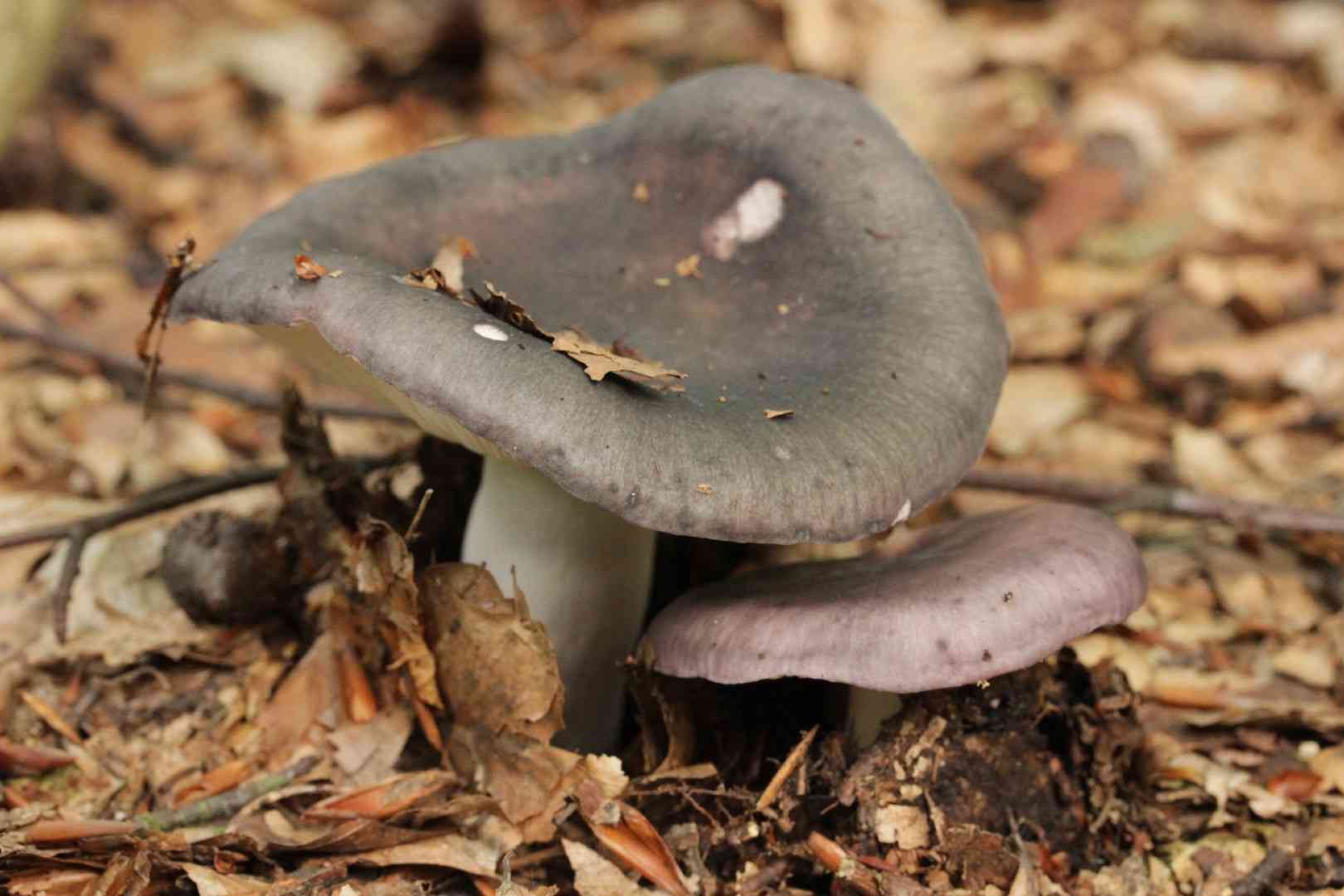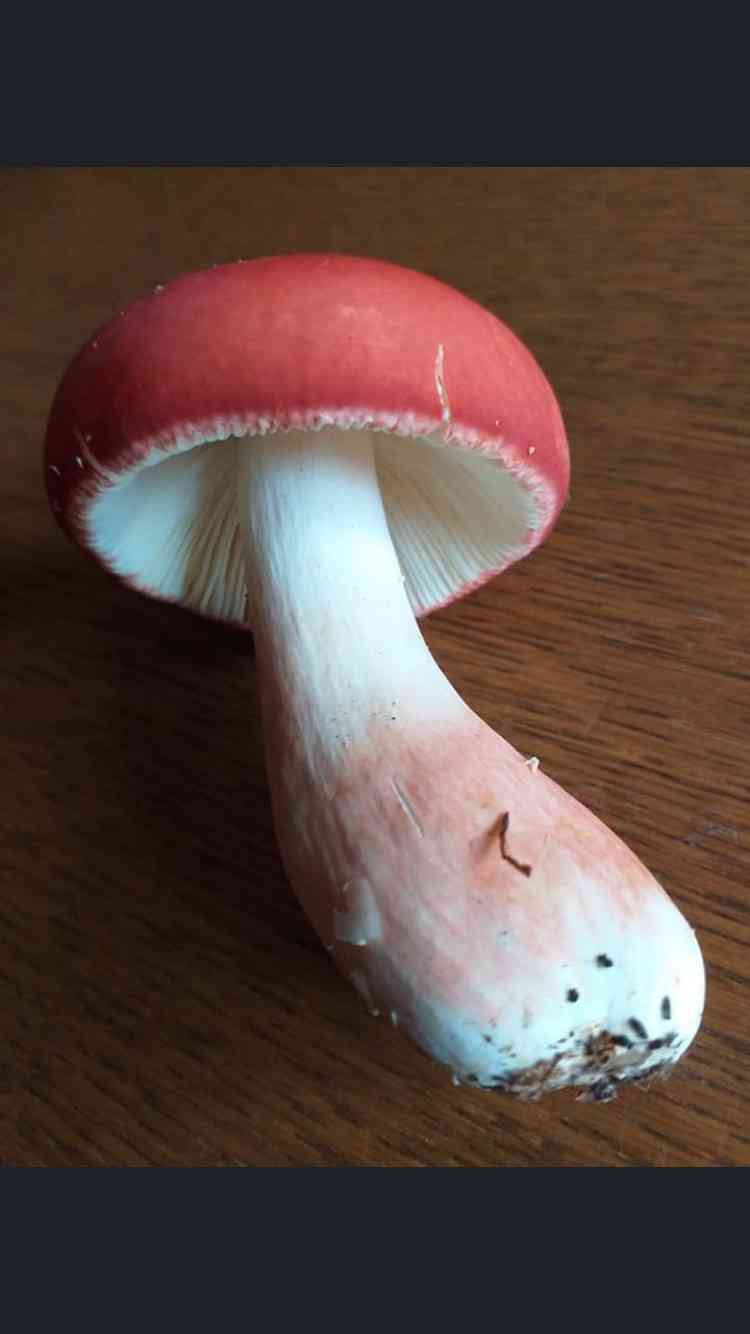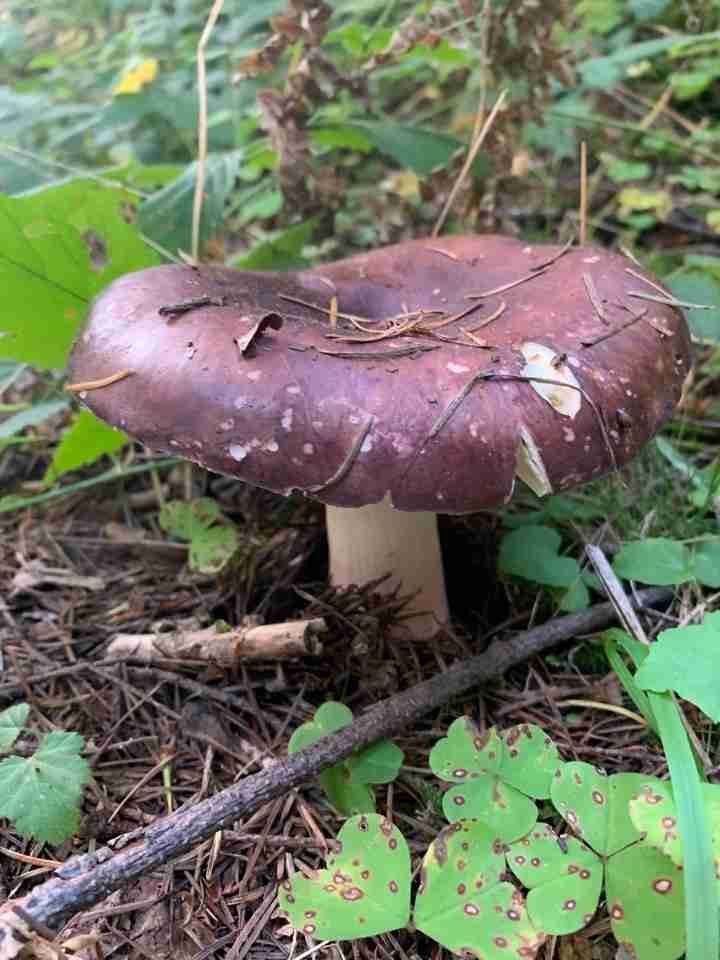
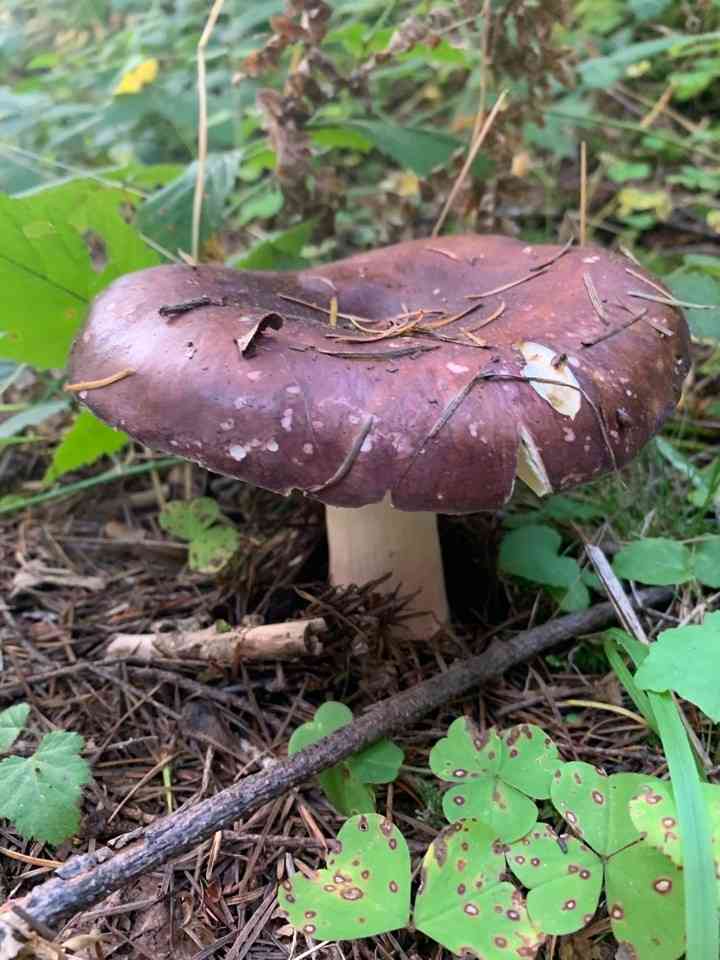
Crab brittlegill
Russula xerampelina
A species of Russulas. Also known as Shrimp mushroom.
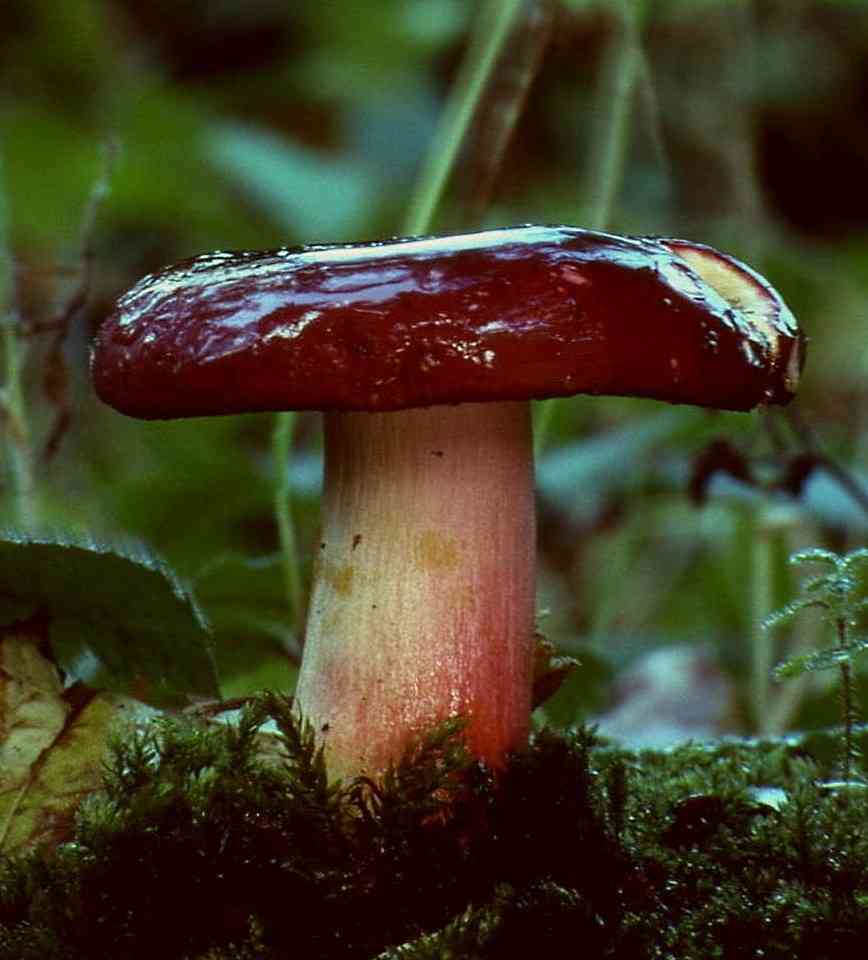
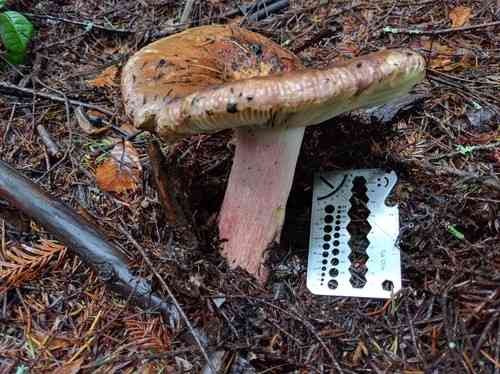
In coniferous forests, one might observe the emergence of the crab brittlegill, characterized by its substantial, deep red caps. The mushroom's colloquial name alludes to its distinct shellfish-like odor, which intensifies as the specimens mature.
In This Article
Attributes of Crab brittlegill
Cap Diameter
7 - 15 cm
Height
4 - 15 cm
Cap
4 - 30 cm; convex, flat; red to purplish red; sticky when fresh
Cap Shape
Convex, Depressed
Cap Surfaces
Visible lines or stripes
Gills
Decurrent; crowded, close, or nearly distant; white to creamy, yellowish or orangish yellow
Gill Attachment
Attached
Stem
3 - 12 cm long, 1 - 4 cm thick; equal; white; dry, fairly smooth
Stem Shapes
Cylindrical
Stem Surfaces
Smooth
Flesh
White; discoloring slowly yellowish brown to brownish or brown when sliced
Ring
Ringless
Spore Print Color
Creamy, yellowish, orangish yellow, ochre
Odor
Boiled shellfish scent, intensifies with age.
Body Color
RedPurplePink
Flesh Bruises
Discolor to brown
Growth Form
Solitary, Scattered
Nutrient Gathering
Mycorrhizal
Substrate
On soil, Leaf or Needle Litter
You can find Crab brittlegill by these plants
Common douglas-fir, Blue spruce, Pines, Spruces, Norway spruce
Occurence Habitats
Coniferous Woodland, Mixed Woodland
Species Status
Widely distributed in North America
Endangered Species
No
Scientific Classification of Crab brittlegill
Phylum
Club fungi
Class
Mushroom-forming fungi
Order
Russulales
Family
Russulaceae
Genus
Russulas
Toxicity and Edibility of Crab brittlegill
Is Crab brittlegill Toxic?
Toxicity information is not available for this mushroom. Always consult with an expert before consuming any wild mushrooms.