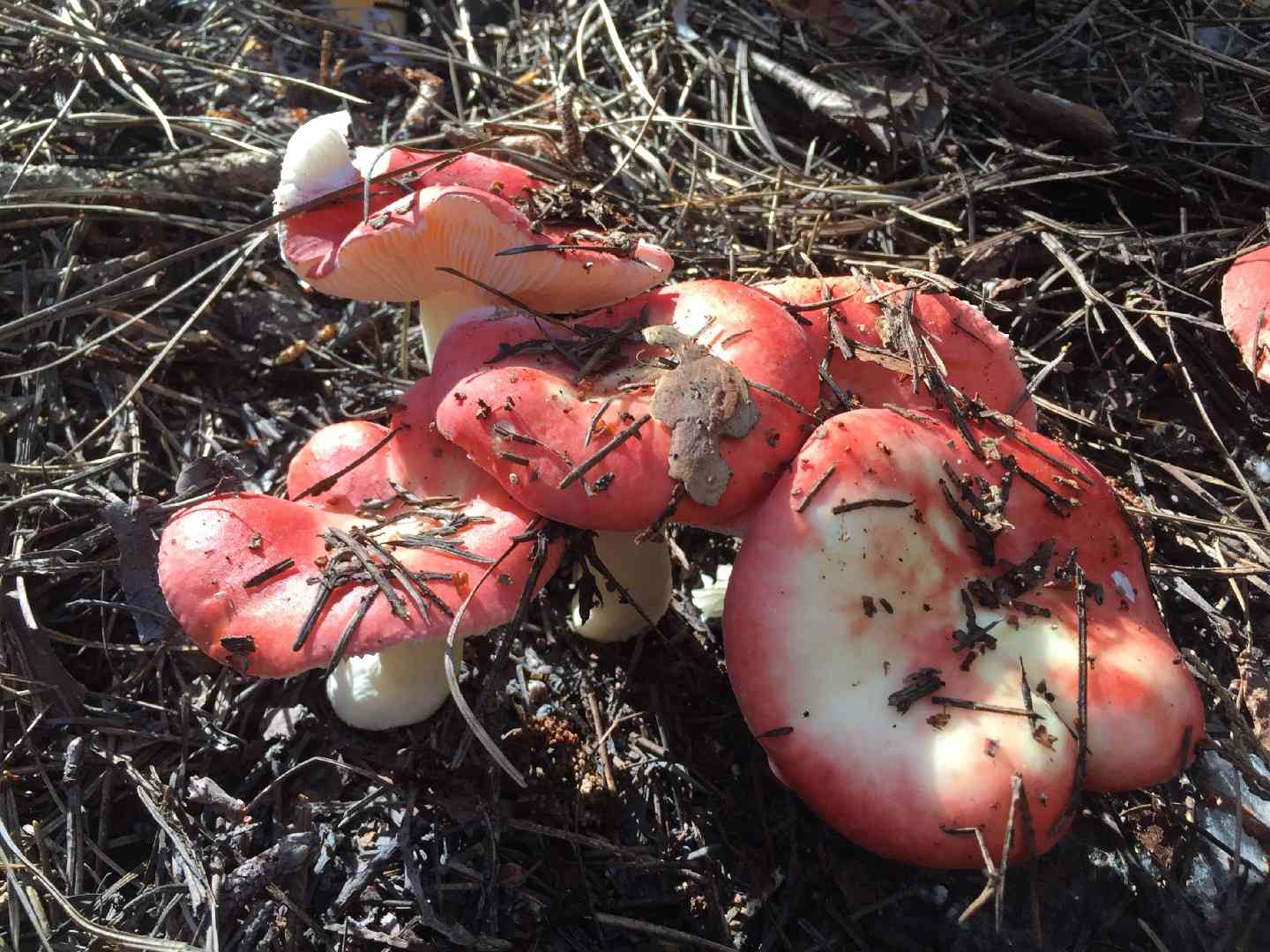
Creamy russula
Russula cremoricolor
A species of Russulas.
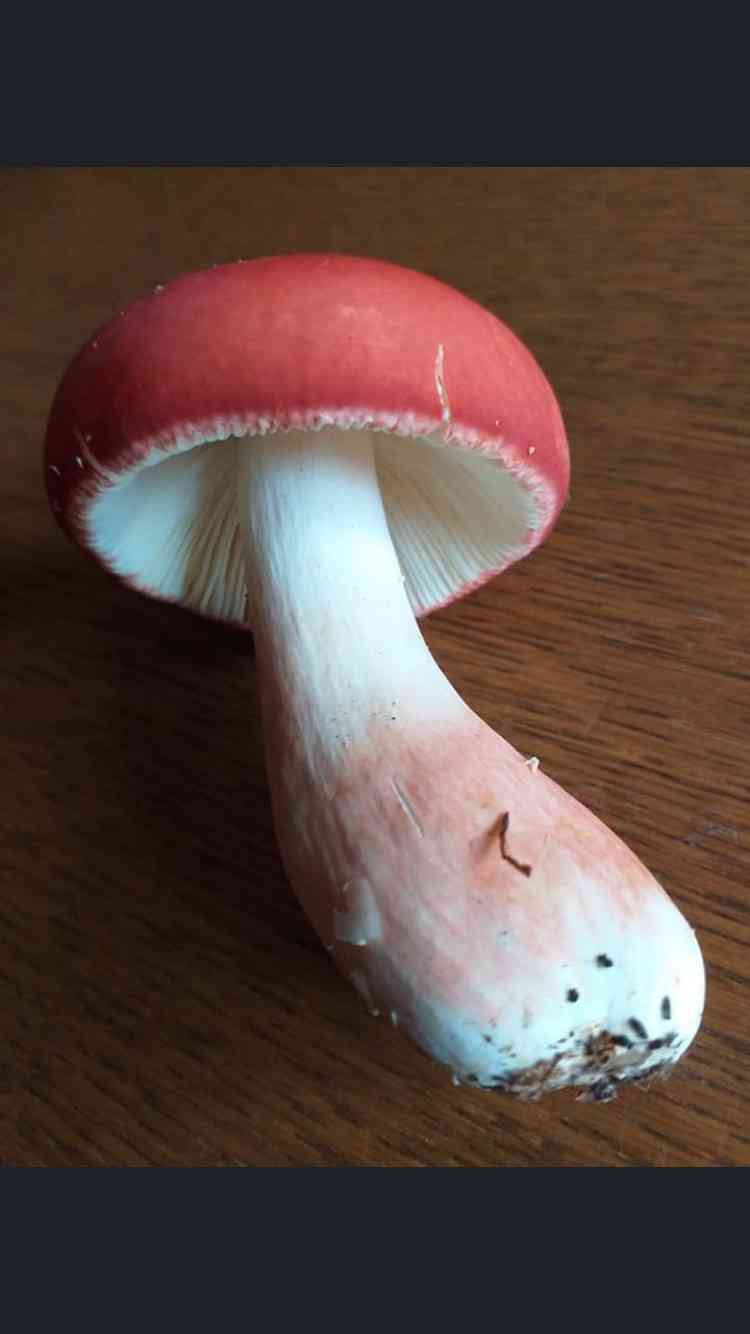
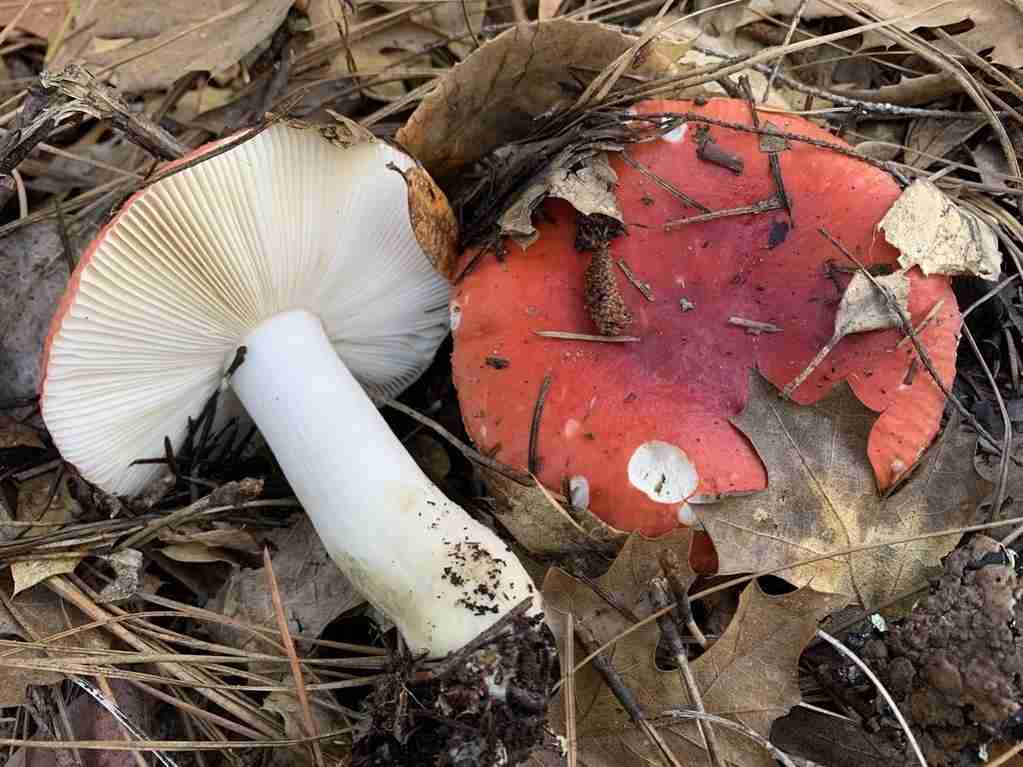
The creamy russula earns its name from its unusual fruiting period, occurring in winter. Its habitat, the moist northwestern United States coast, remains cool but seldom freezes during this season. Visually, creamy russulas, with their red caps and white gills, closely resemble numerous other russula varieties; while this particular species is merely bitter, some of its look-alikes are poisonous.
In This Article
Attributes of Creamy russula
Cap Diameter
3 - 10 cm
Height
3 - 12 cm
Cap
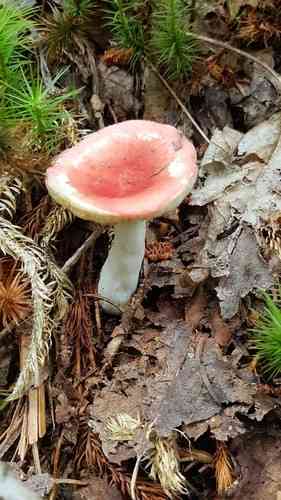
3 - 10 cm; convex to flat; bright red or creamy yellowish to nearly white; fairly smooth
Cap Shape
Convex, Flat, Depressed
Cap Surfaces
Smooth, Slimy or slightly sticky, Visible lines or stripes
Gills
Adnexed; close or nearly distant; white, creamy
Gill Attachment
Attached
Stem
2 - 10 cm long, 1 - 2.5 cm thick; white; dry, fairly smooth
Stem Shapes
Cylindrical
Stem Surfaces
Smooth
Flesh
White; unchanging when sliced
Ring
Ringless
Spore Print Color
White
Odor
Mildly mushroomy but not distinctive.
Body Color
YellowRedWhiteCream
Flesh Bruises
The flesh or milk does not discolor when bruised or cut.
Growth Form
Solitary, Scattered, Gregarious
Nutrient Gathering
Mycorrhizal
Substrate
On soil
You can find Creamy russula by these plants
Spruces, Firs, Pines, Oaks
Occurence Habitats
Mixed Woodland
Species Status
Common to forests in the west coast states.
Endangered Species
No
Scientific Classification of Creamy russula
Phylum
Club fungi
Class
Mushroom-forming fungi
Order
Russulales
Family
Russulaceae
Genus
Russulas
Toxicity and Edibility of Creamy russula
Is Creamy russula Toxic?
The creamy russula harbors dangerous compounds. Ingesting these substances can lead to various ailments, from minor digestive upset to grave organ damage, contingent on the specific mushroom and quantity ingested. It's advisable to avoid this particular fungus.