Satan's bolete
Rubroboletus satanas
A species of Rubroboletus.
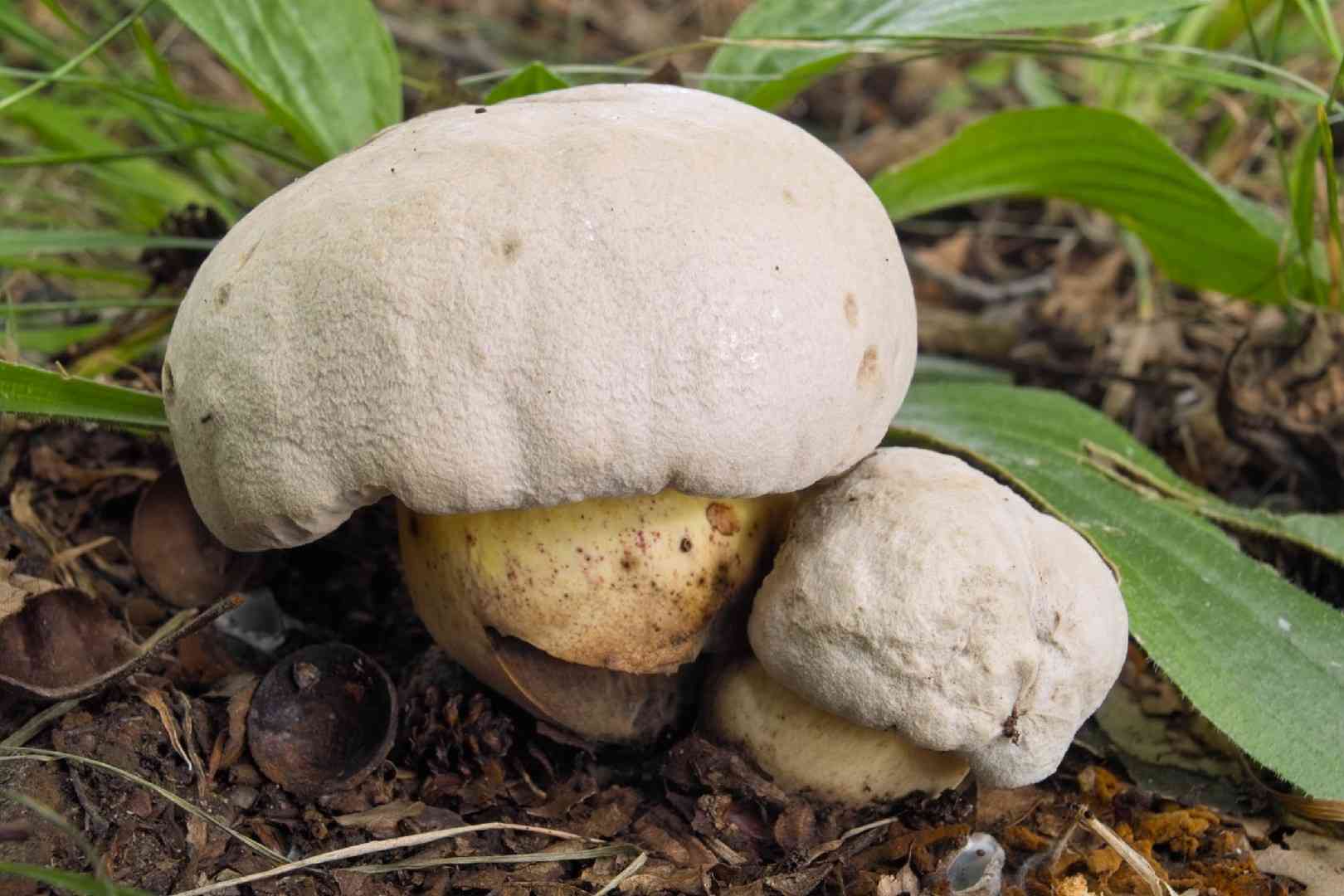
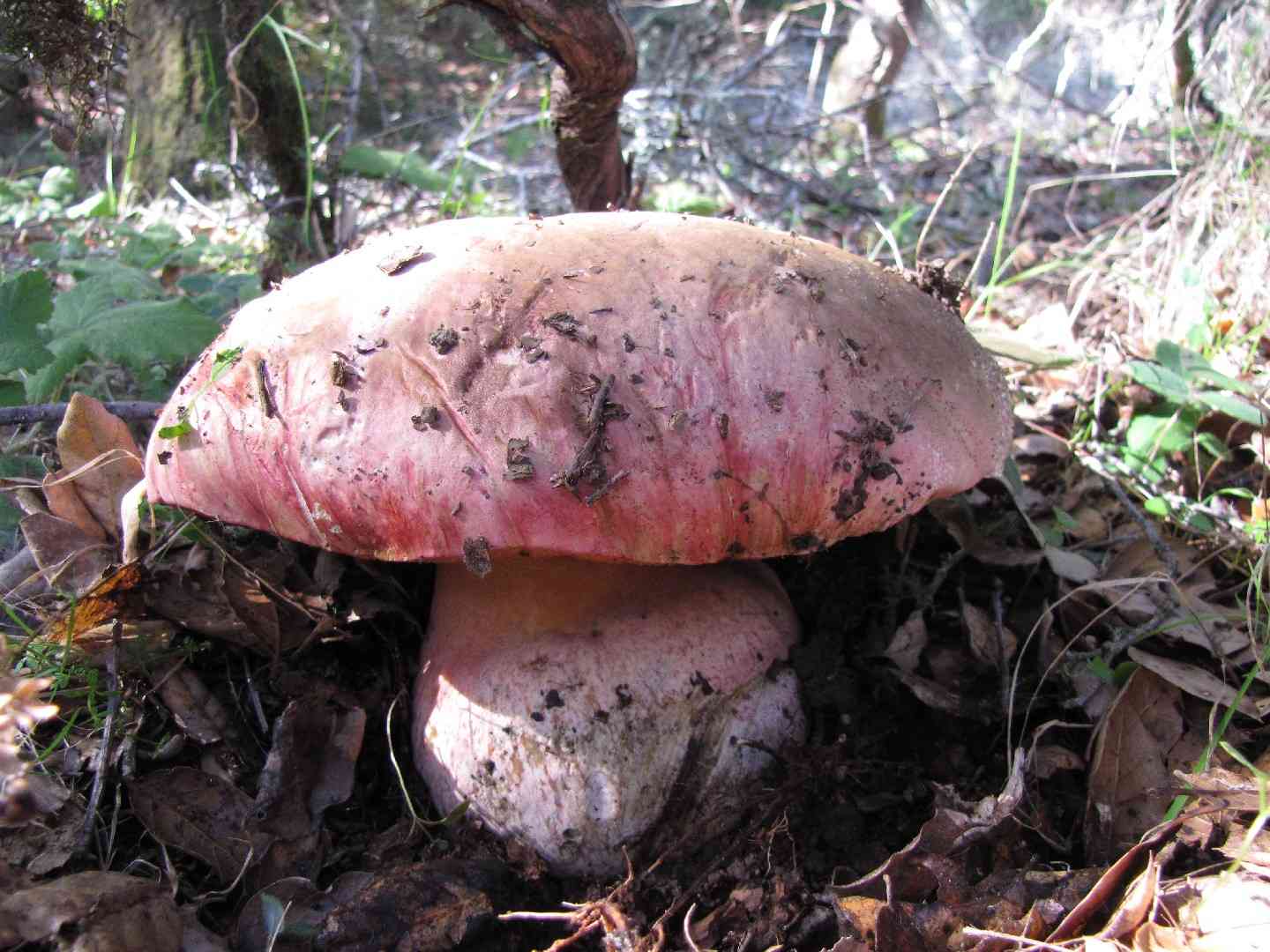
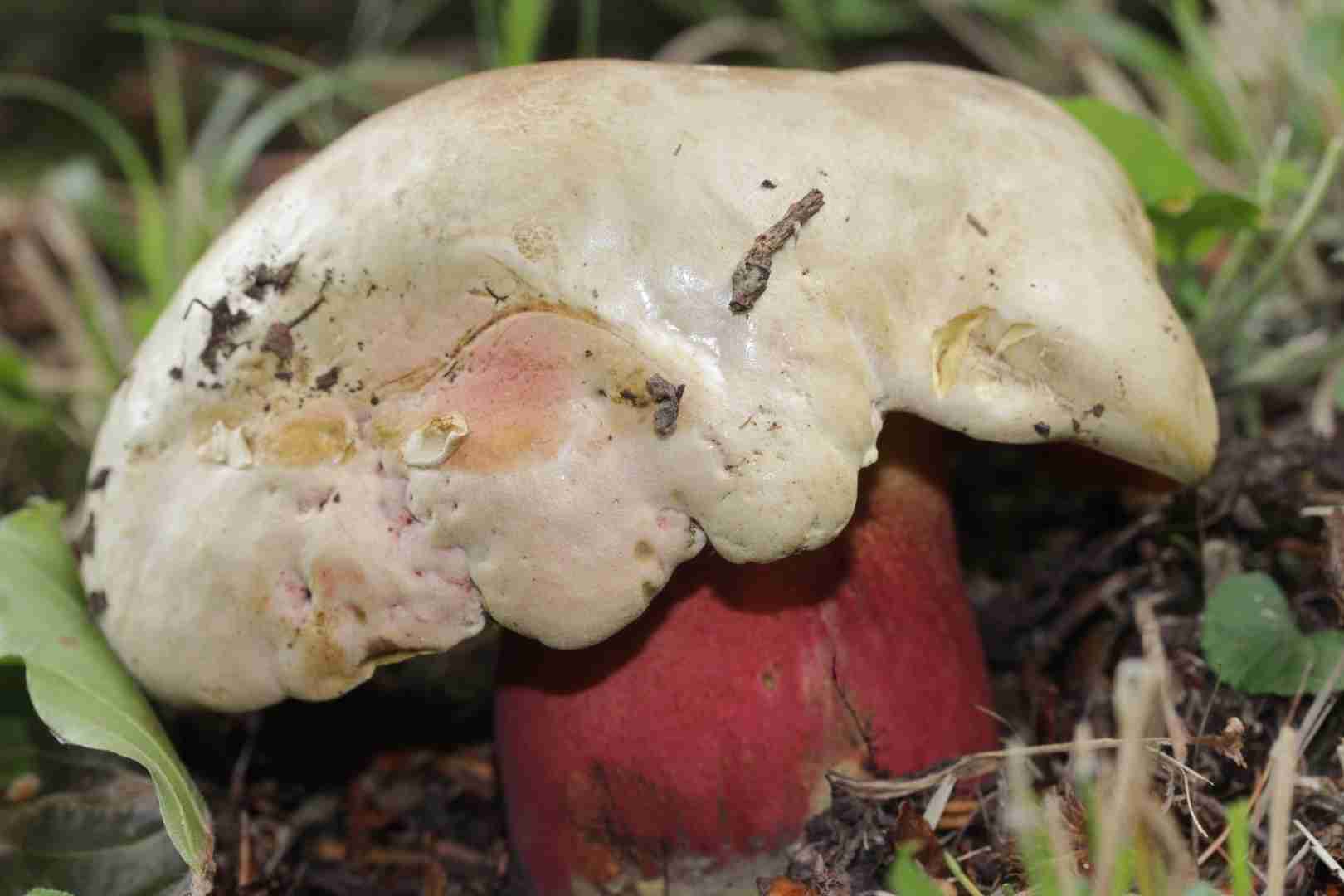
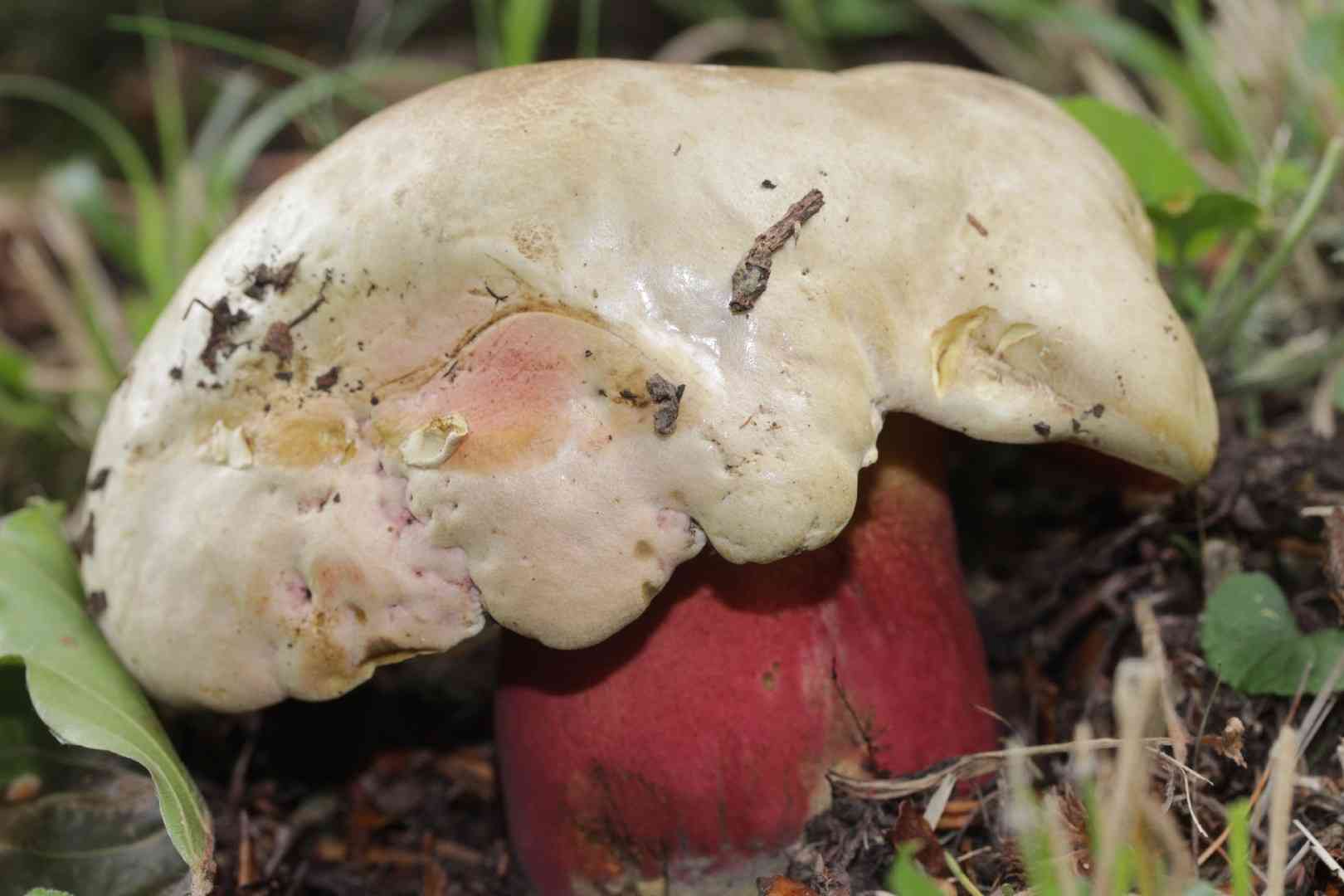
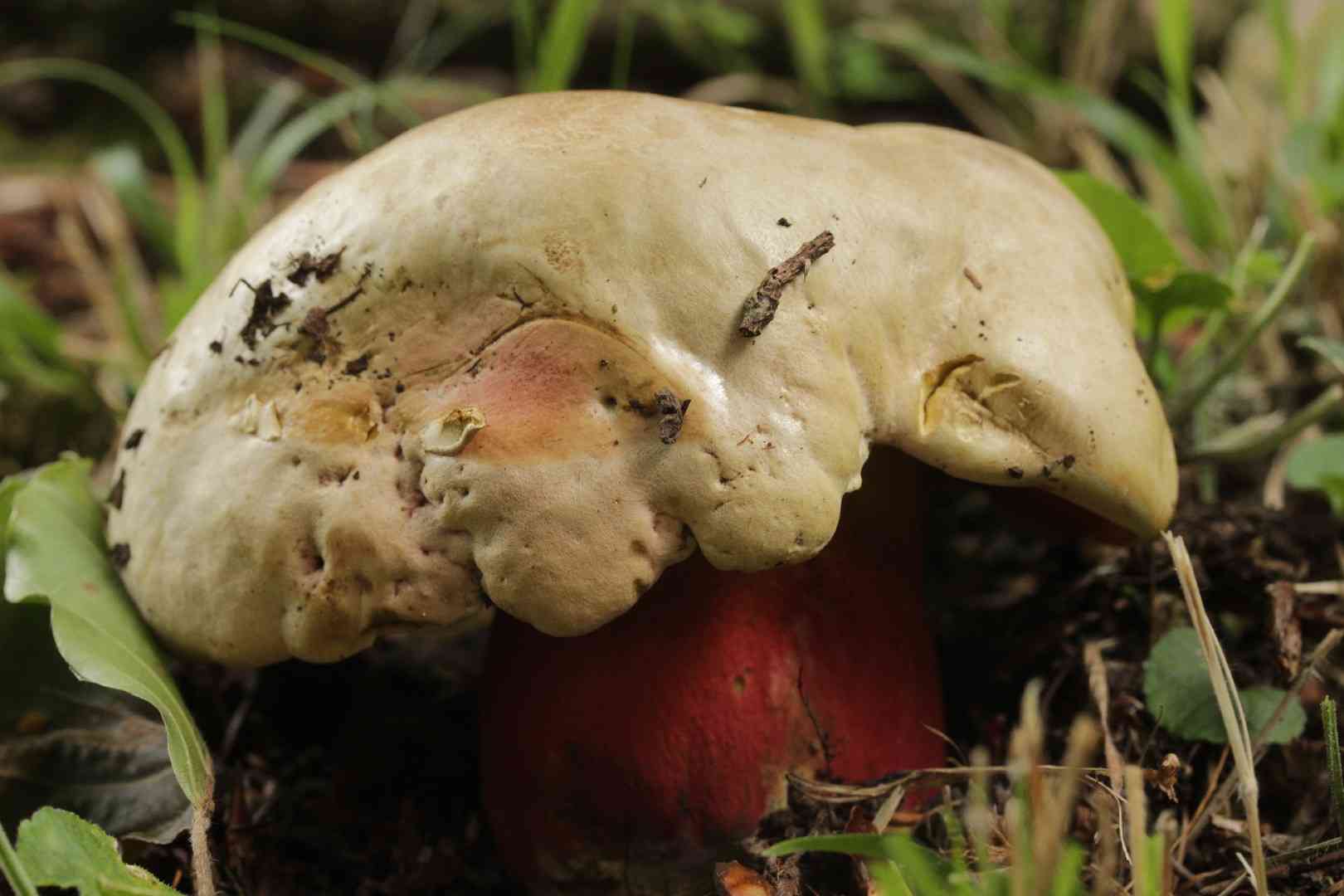
As its name suggests, the Devil's bolete (Rubroboletus satanas) is, predictably, poisonous, inducing severe discomfort if ingested. It emits a strong, putrid scent reminiscent of decaying flesh. This species thrives in calcareous soils and can attain substantial sizes, with caps sometimes expanding to 50 cm across.
In This Article
Attributes of Satan's bolete
Cap Diameter
30 - 50 cm
Height
8 - 25 cm
Cap
30 - 50 cm in diameter; convex, flat; whitish flushed with brown or buff; smooth
Cap Shape
Convex, Depressed
Cap Surfaces
Velvety
Stem
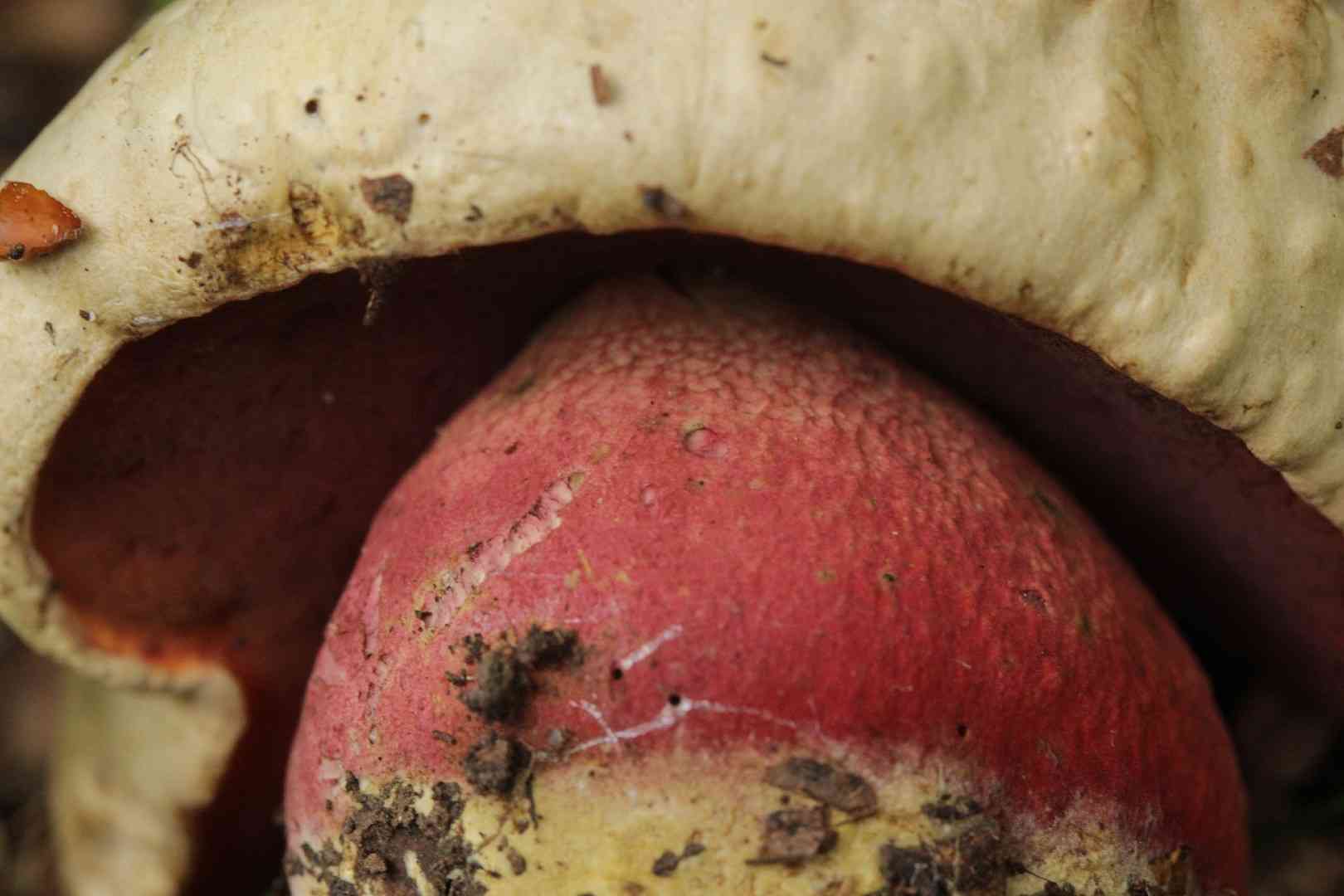
5 - 20 cm long; typically swollen above the base; yellow-orange at the top, red below, buff at the base; with a partial netlike covering
Stem Shapes
Bulbous
Stem Surfaces
With Reticulum
Flesh
Thick; spongy; white to pale yellow; turning pale blue when cut
Ring
Ringless
Spore Print Color
Olive-brown
Odor
Mild initially, becomes unpleasant with age.
Body Color
YellowRedGoldOrangePurplePink
Flesh Bruises
Discolor to blue
Growth Form
Solitary, Gregarious
Nutrient Gathering
Mycorrhizal
Substrate
On soil
You can find Satan's bolete by these plants
Oaks, Lindens, European beech
Occurence Habitats
Deciduous Woodland
Species Status
Widely distributed throughout the temperate zone
Endangered Species
No
Scientific Classification of Satan's bolete
Phylum
Club fungi
Class
Mushroom-forming fungi
Order
Boletes and allies
Family
Boletes
Genus
Rubroboletus
Toxicity and Edibility of Satan's bolete
Is Satan's bolete Toxic?
Satan's bolete is a poisonous mushroom. Ingesting it can lead to intense digestive upset, manifesting as diarrhea, abdominal discomfort, and vomiting, with rare instances of bloody stools. These effects typically last for up to six hours. Given its potent, disagreeable smell when fully grown and documented high toxicity, consumption should be entirely avoided.
Type of poisoning
Gastrointestinal
Toxic Severity
Low to high toxicity
Incubation Period
0.5-6 hours
Poisoning Symptoms
Digestive issues, vertigo, vision complications, blood circulation troubles.