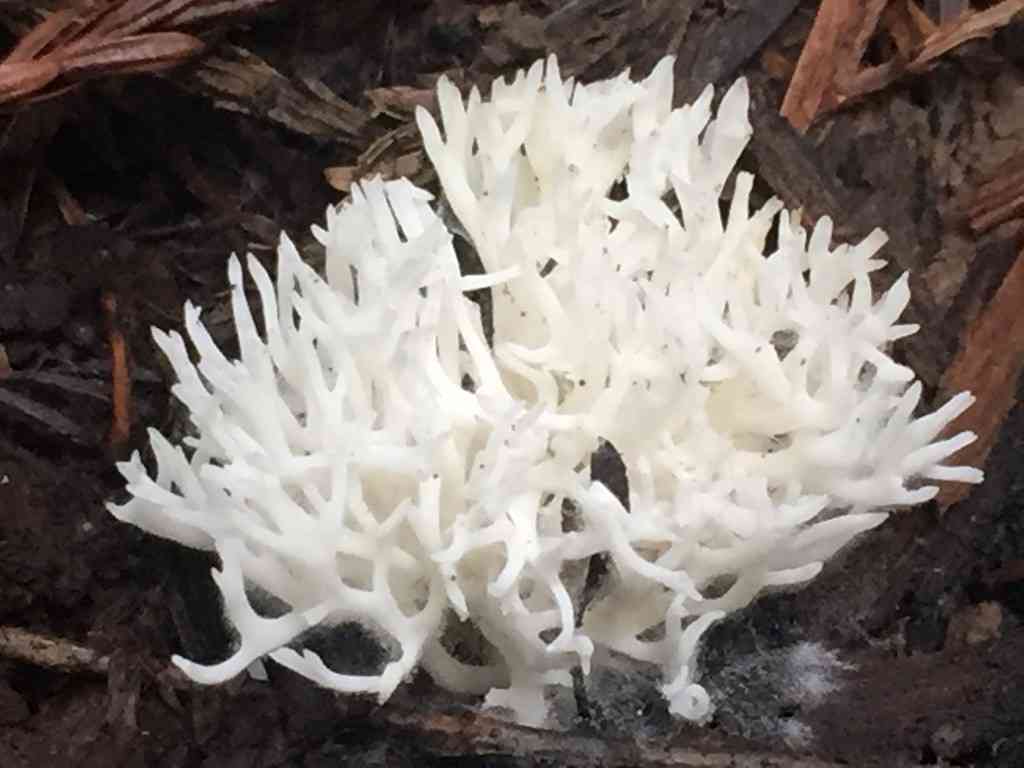
White coral
Ramariopsis kunzei
A species of Ramariopsis.
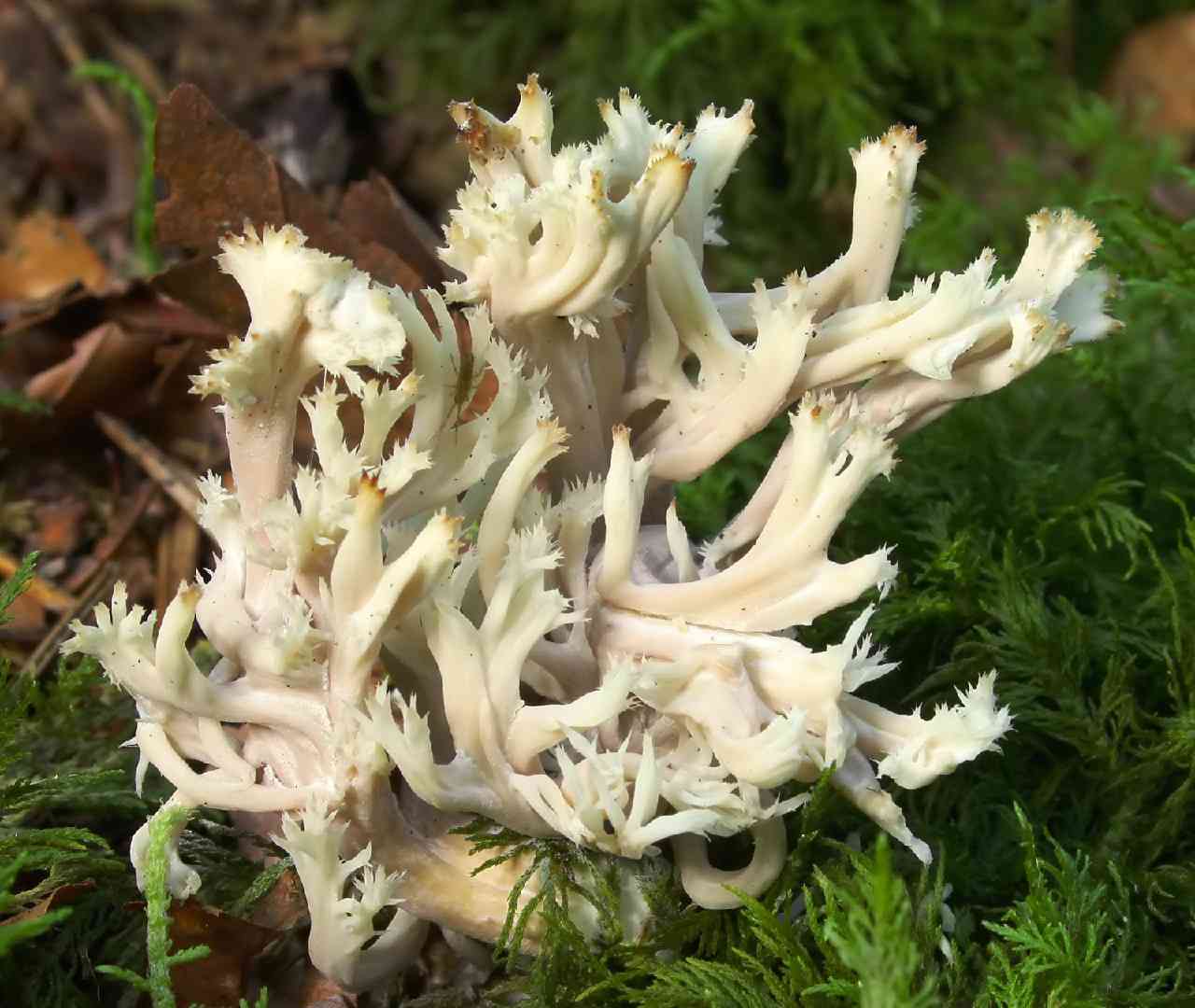
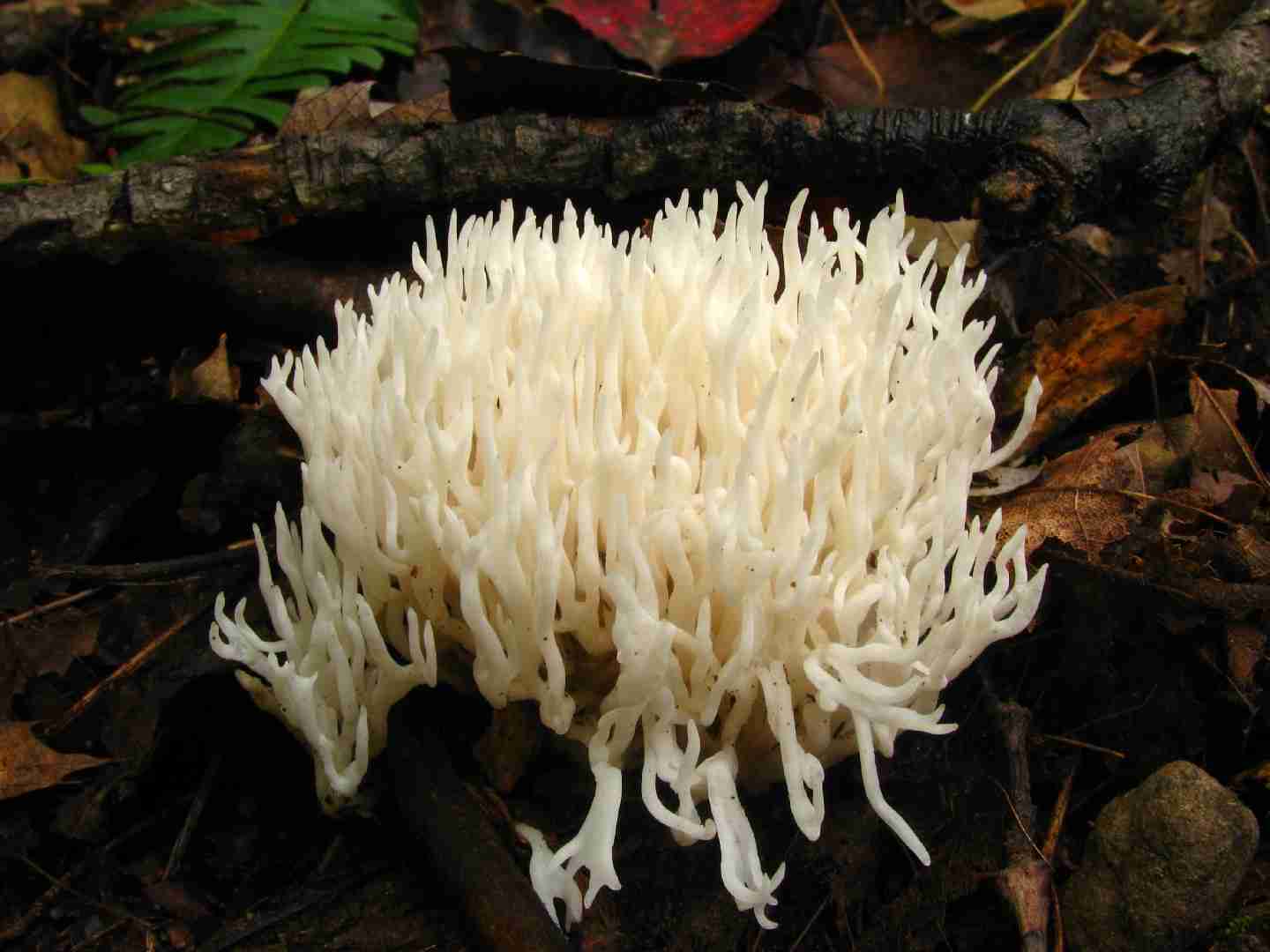
Ramariopsis kunzei, commonly known as white coral, presents a peculiar sight in woodland environments. Its upright, branching tendrils, devoid of caps, strikingly mimic the appearance of underwater corals. This species is a versatile organism, thriving globally in wooded areas, typically found on decaying organic matter.
In This Article
Attributes of White coral
Height
2 - 12 cm
Cap
Up to 10 cm wide; tips bluntly pointed; white
Stem
2 - 12 cm high, 1 - 5 mm thick; repeatedly branched; white, dirty pinkish; smooth
Flesh
Brittle, fragile; whitish
Spore Print Color
White
Odor
Mild, not unique or pronounced.
Body Color
YellowWhitePink
Flesh Bruises
The flesh or milk does not discolor when bruised or cut.
Growth Form
Solitary, Scattered
Nutrient Gathering
Saprophytic
Substrate
On soil, Dead Woods, Leaf or Needle Litter
You can find White coral by these plants
Hawthorns, European beech
Occurence Habitats
Mixed Woodland, Deciduous Woodland
Species Status
Widely distributed in North America
Endangered Species
No
Scientific Classification of White coral
Phylum
Club fungi
Class
Mushroom-forming fungi
Order
Gilled fungi
Family
Coral fungi
Genus
Ramariopsis
Toxicity and Edibility of White coral
Is White coral Toxic?
Toxicity information is not available for this mushroom. Always consult with an expert before consuming any wild mushrooms.