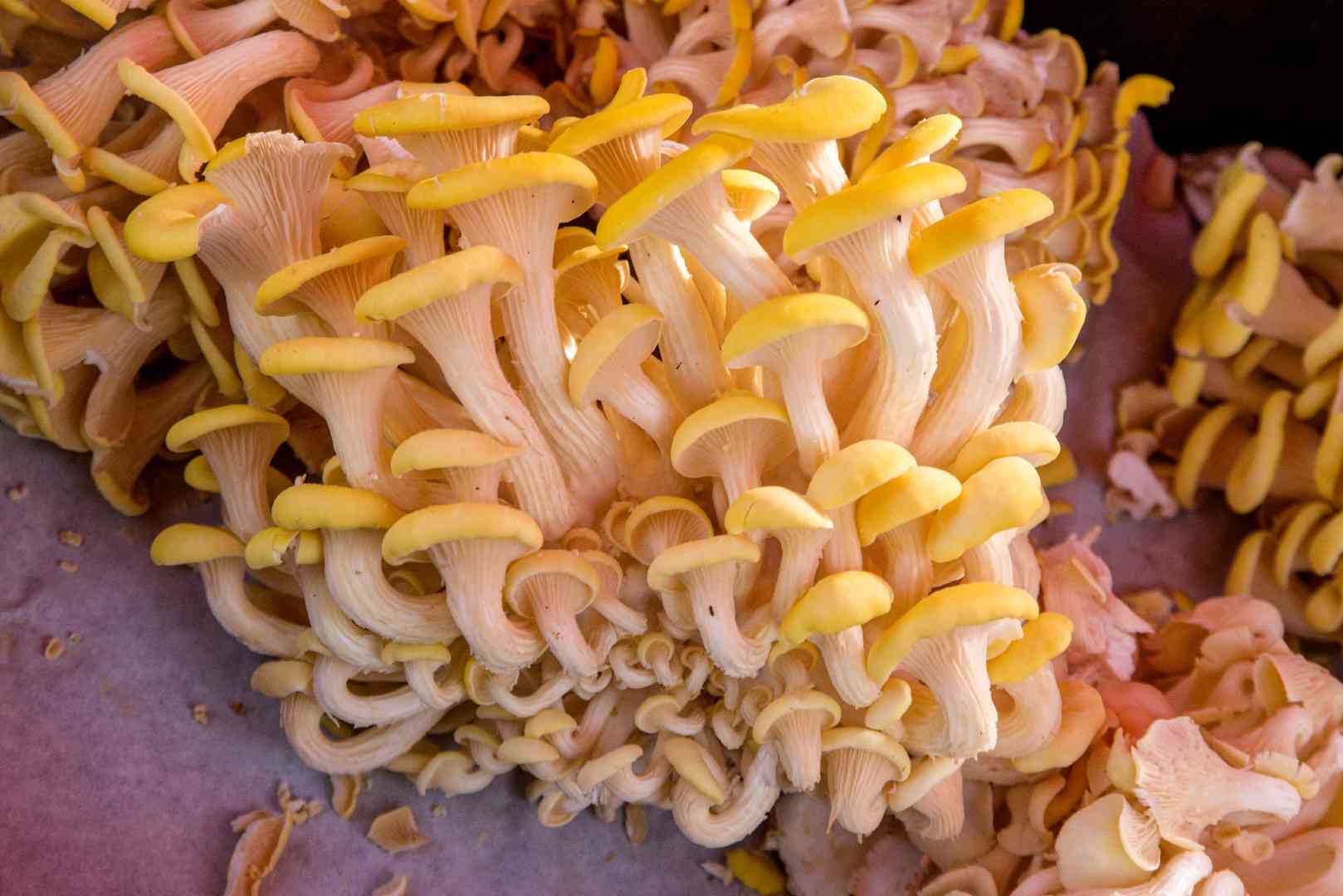
Golden oyster
Pleurotus citrinopileatus
A species of Oysters.
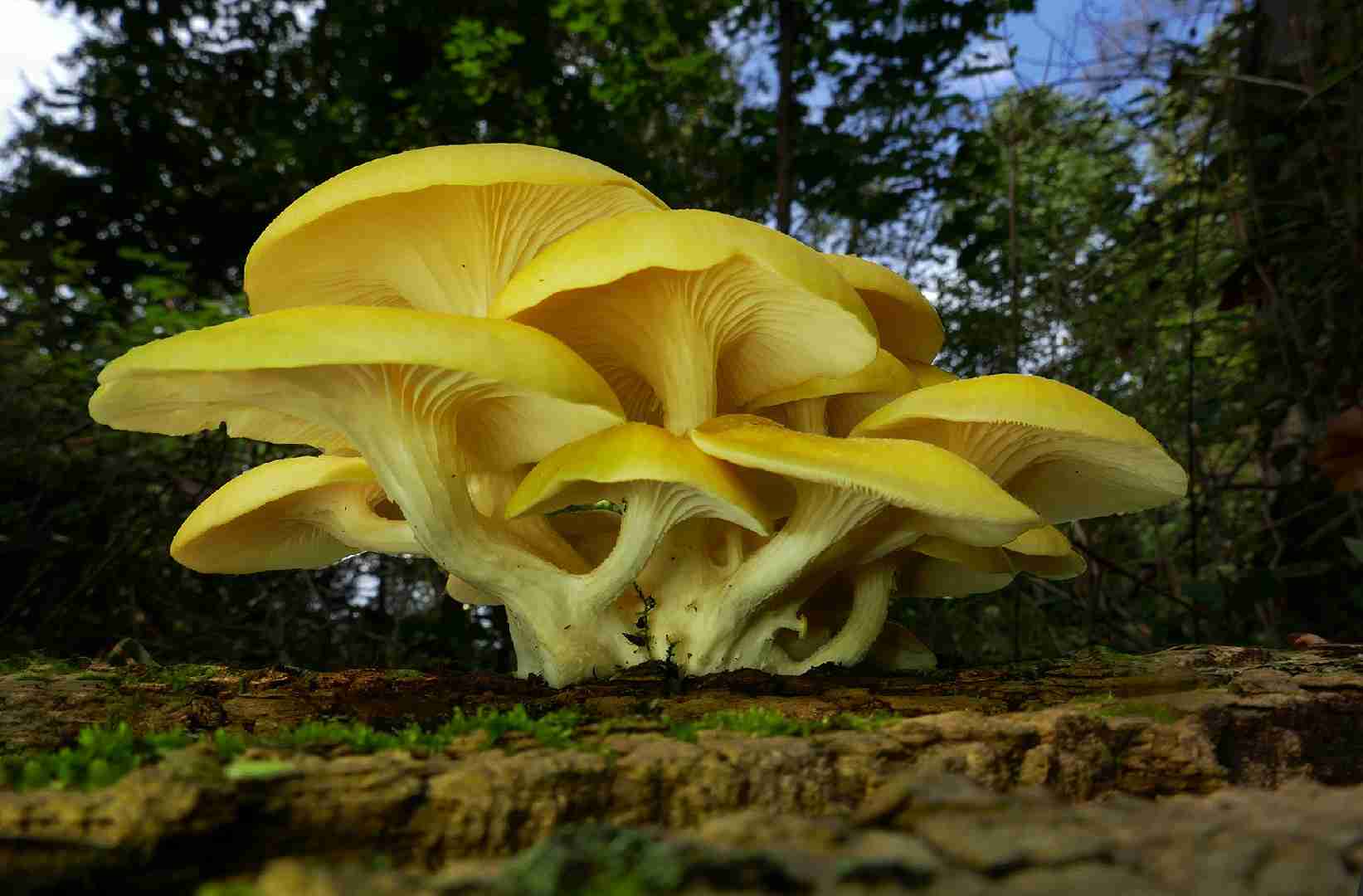
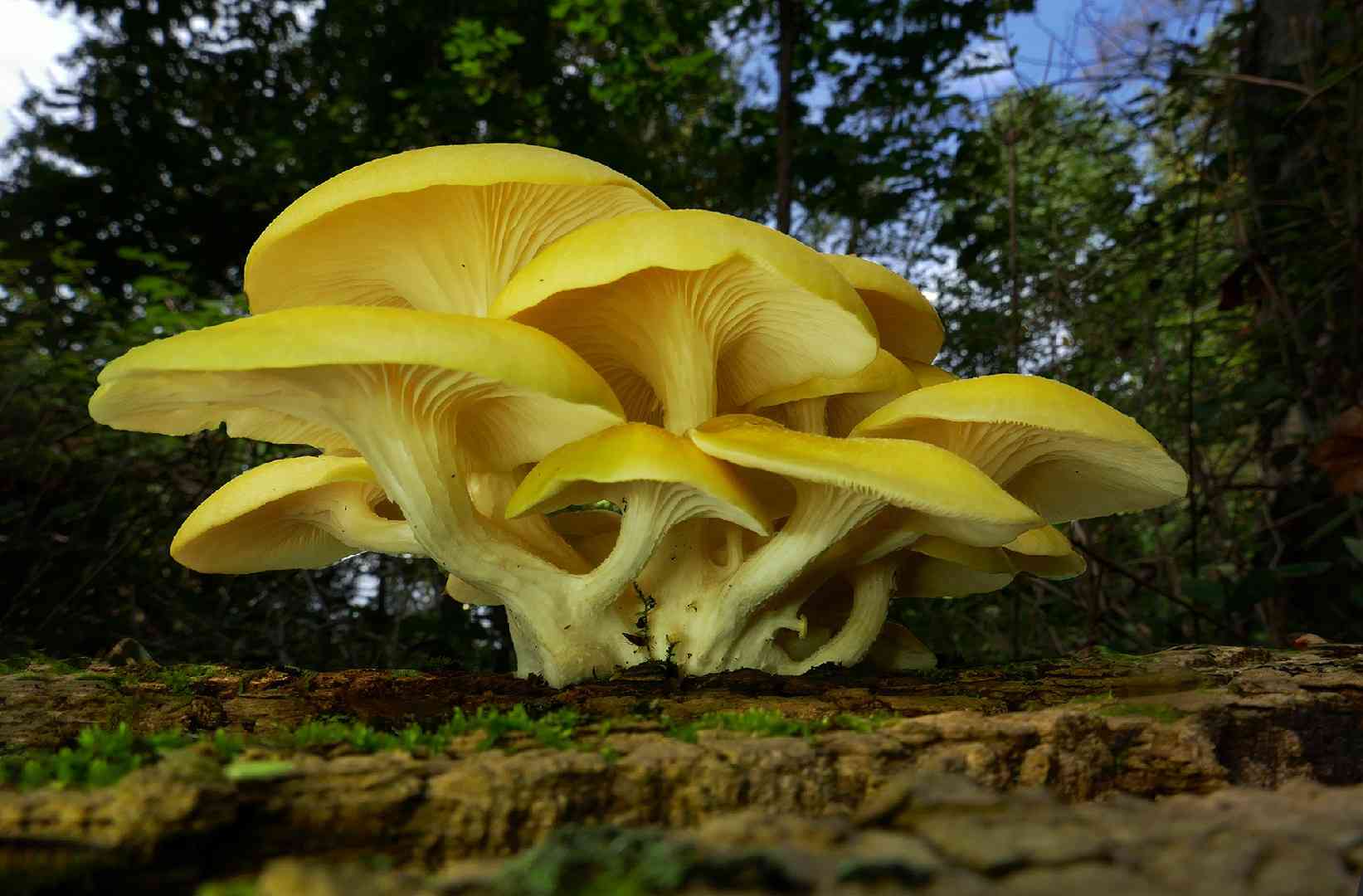
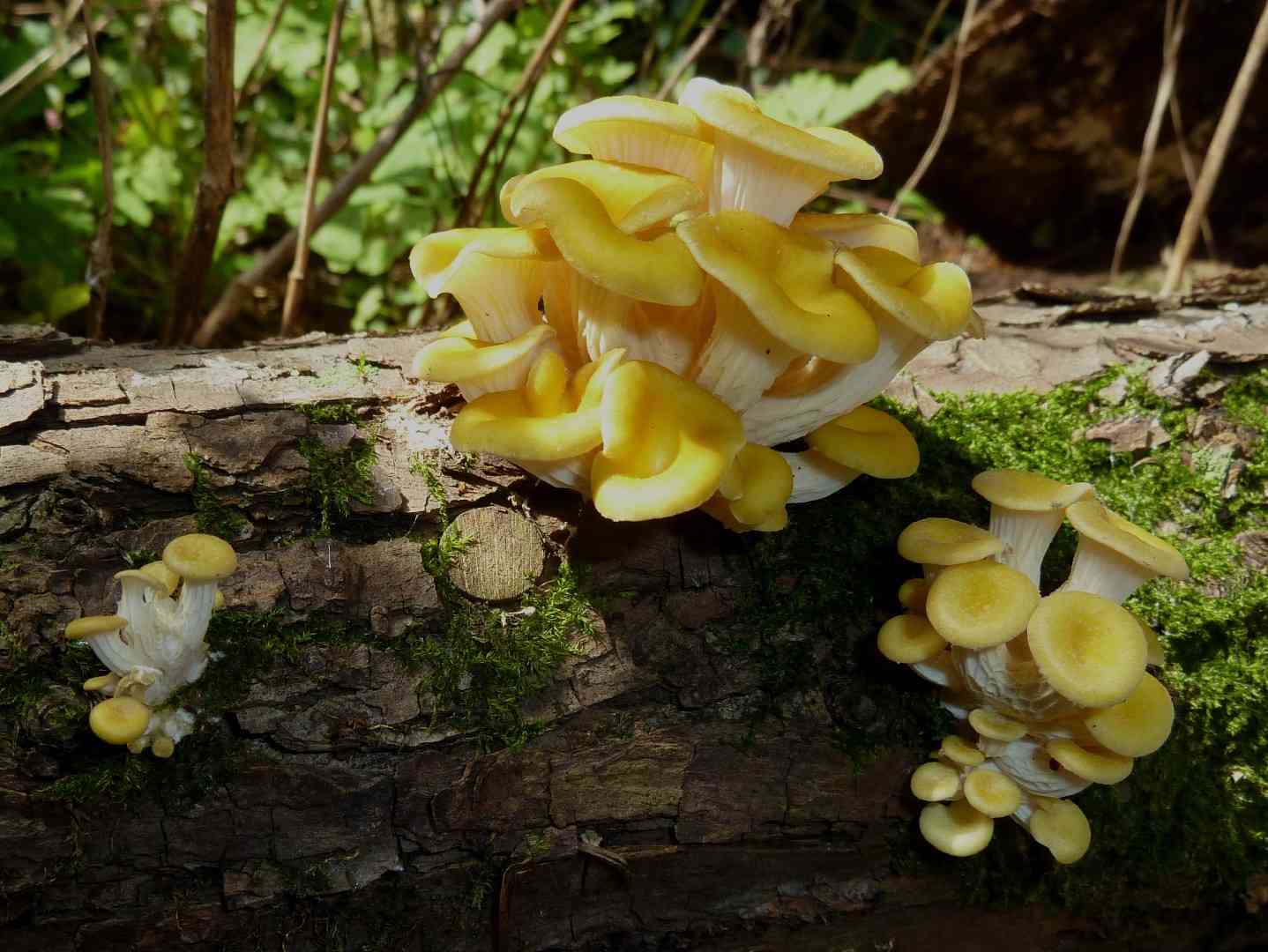
The golden oyster mushroom (Pleurotus citrinopileatus) is characterized by its distinct, shimmering butter-yellow cap that deepens to a bright, sun-like hue as it matures. With this color intensification, the cap also becomes notably fragile, posing a challenge for handling. This sought-after and delectable species is highly prized in the culinary world.
In This Article
Attributes of Golden oyster
Cap Diameter
3 - 8 cm
Height
5 - 10 cm
Cap
Cap 2 - 7 cm across; convex to flat to funnel-shaped; lemon-yellow; surface smooth
Cap Shape
Convex, Depressed
Cap Surfaces
Smooth
Gills
Deeply decurrent; close; white
Gill Attachment
Decurrent
Stem
Stem 2 - 5 cm long, 2 - 8 mm thick; cylindrical; white; surface smooth
Stem Shapes
Tapering
Stem Surfaces
Smooth to slightly fibrous
Flesh
Thin; white
Ring
Ringless
Spore Print Color
Pale white
Odor
Pungent, reminiscent of old seeds.
Body Color
YellowWhite
Flesh Bruises
The flesh or milk does not discolor when bruised or cut.
Growth Form
Clustered, Gregarious
Nutrient Gathering
Saprophytic
Substrate
Dead Woods
Occurence Habitats
Deciduous Woodland
Species Status
Common
Endangered Species
No
Scientific Classification of Golden oyster
Phylum
Club fungi
Class
Mushroom-forming fungi
Order
Gilled fungi
Family
The tree mushroom family
Genus
Oysters
Toxicity and Edibility of Golden oyster
Is Golden oyster Toxic?
Toxicity information is not available for this mushroom. Always consult with an expert before consuming any wild mushrooms.