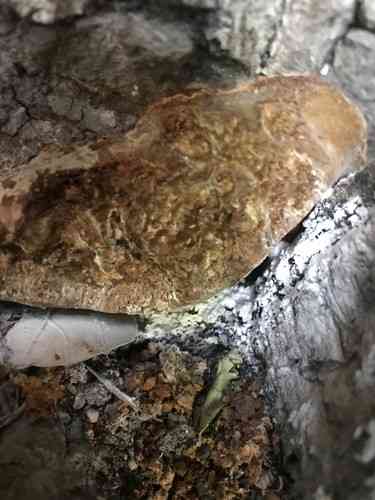
Mustard yellow polypore
Phellinus gilvus
A species of Phellinus.
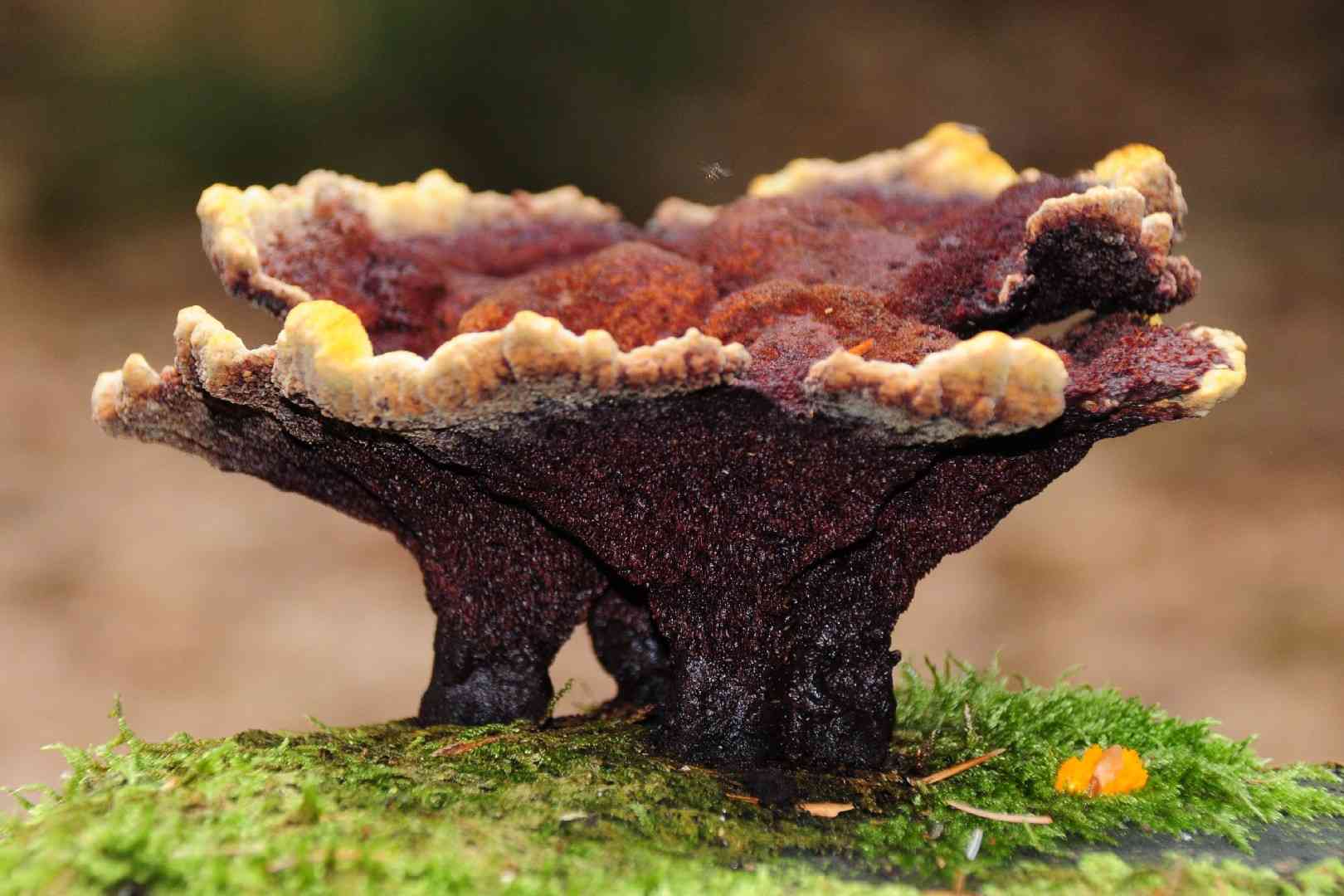
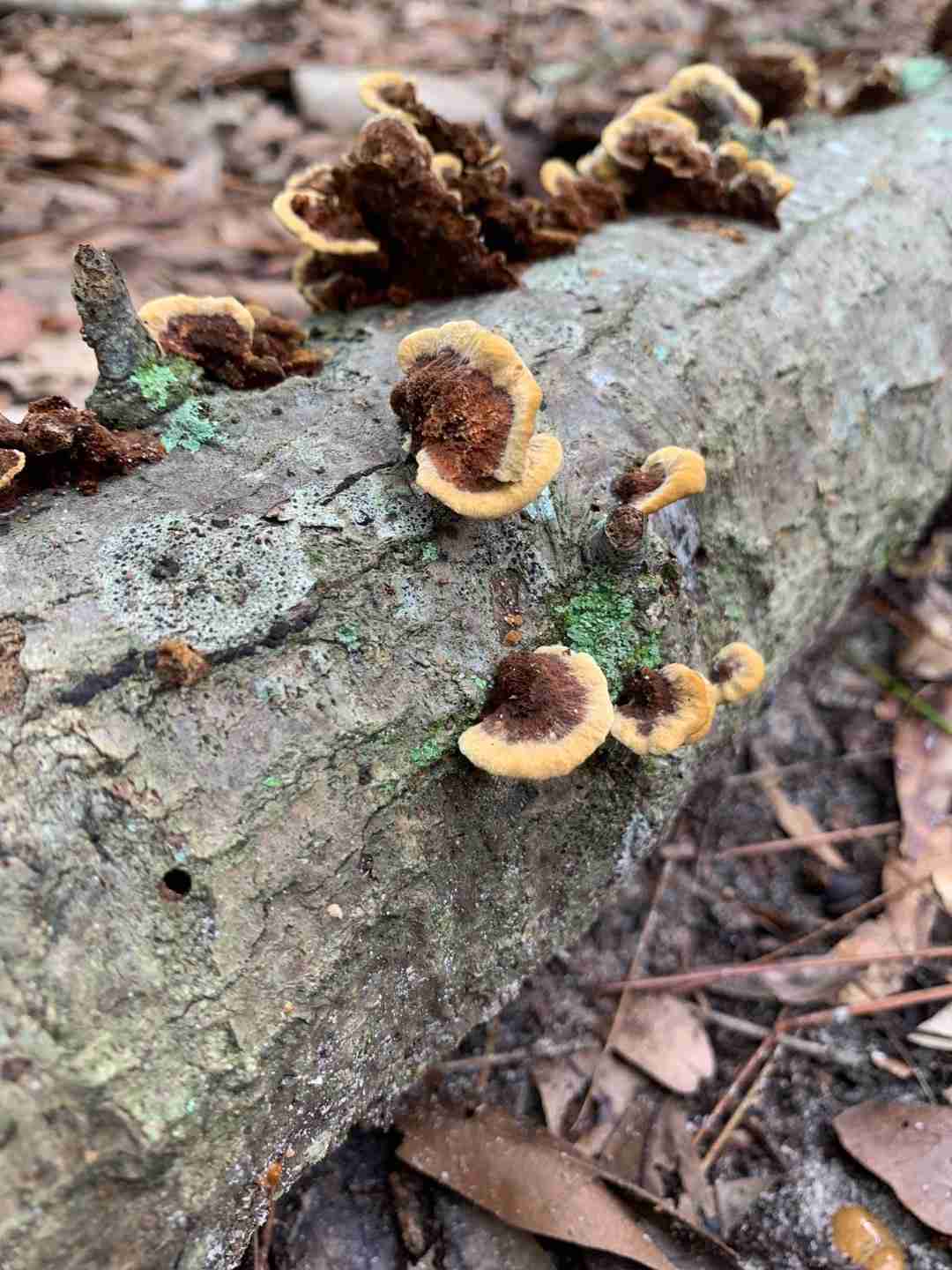
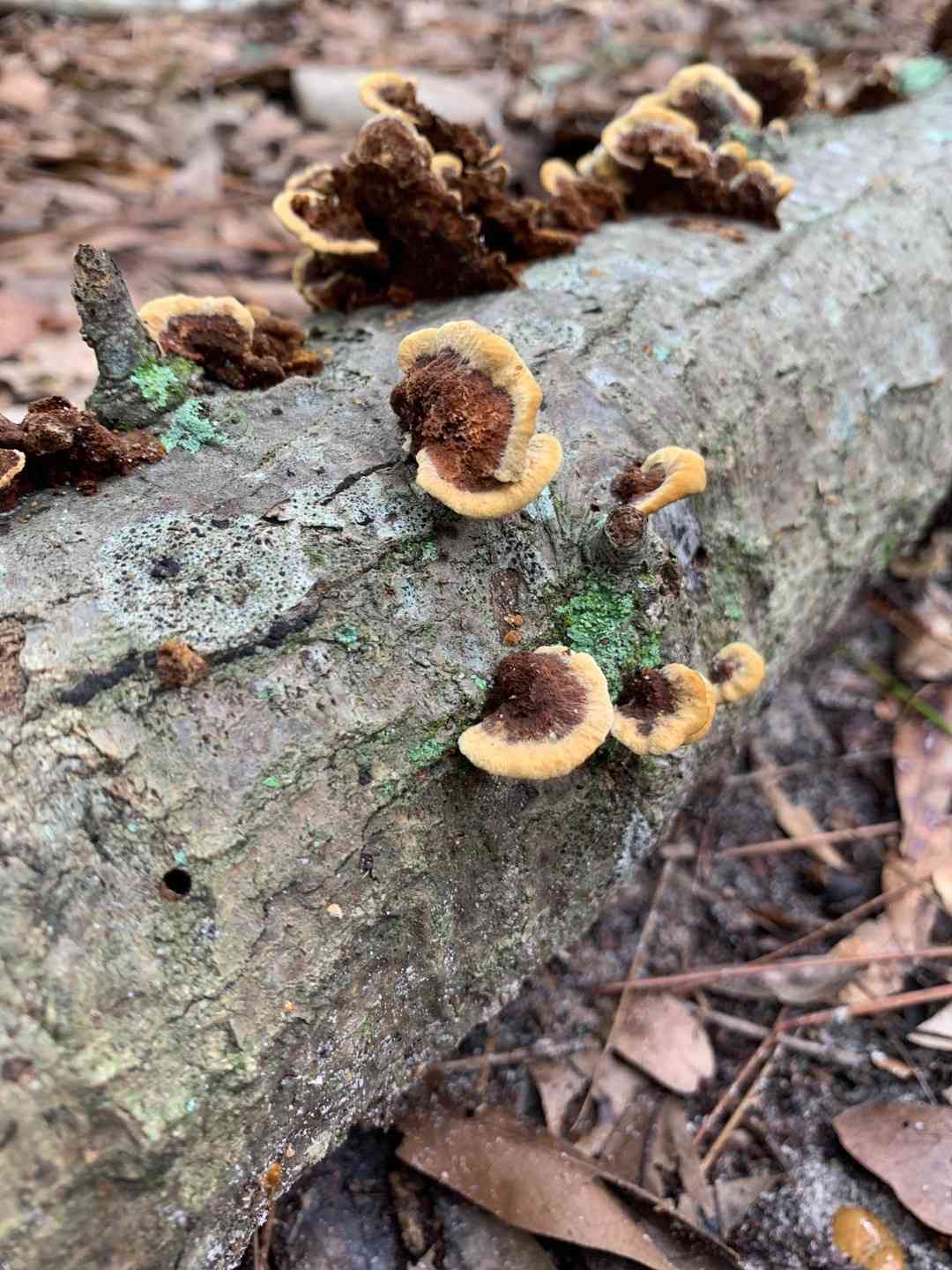
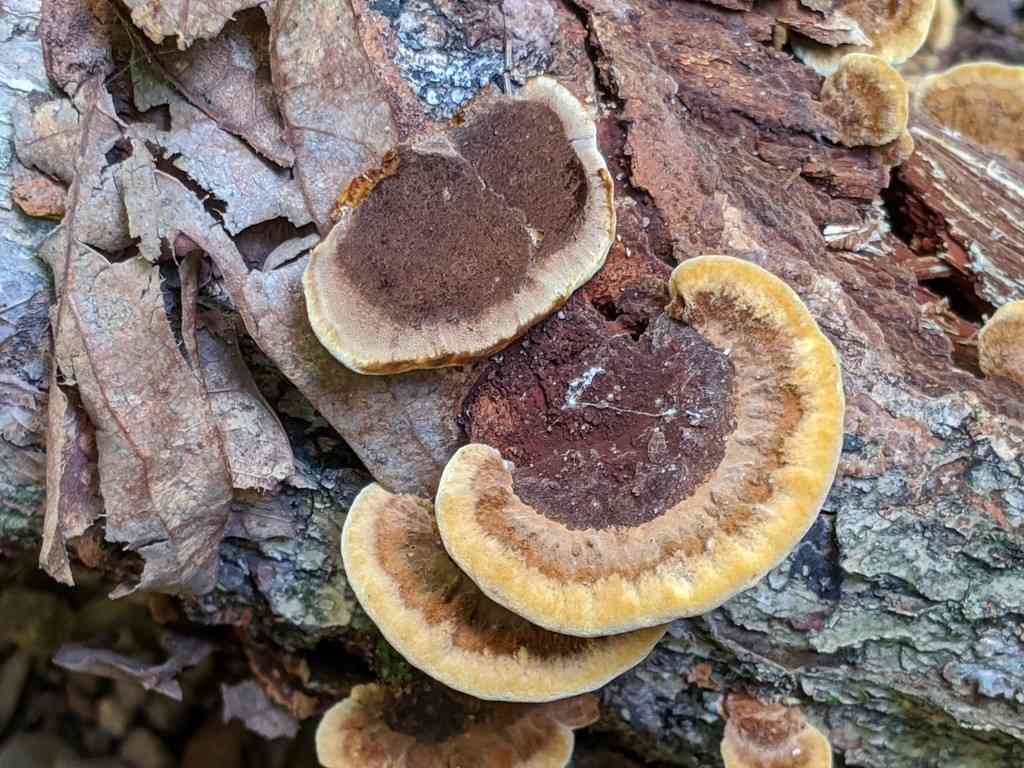
The cork-like mushroom, known as the Phellinus gilvus or mustard yellow polypore, is a frequent sight on logs and trees. This species can be found throughout the year in most regions. Its caps exhibit a burnt amber hue at their perimeter, gradually forming rings that deepen to near-black closer to their point of attachment on the wood. It's important to note that the mustard yellow polypore is not suitable for consumption.
In This Article
Attributes of Mustard yellow polypore
Cap Diameter
10 - 20 cm
Cap
Cap 15 cm across; semicircular, kidney-shaped; yellowish, brown; margin velvety
Cap Shape
Convex
Cap Surfaces
Velvety, Fibrillose-scaly
Flesh
Tough; bright yellowish brown to orange-brown
Spore Print Color
White
Body Color
BrownBlackYellowRed
Flesh Bruises
The flesh or milk does not discolor when bruised or cut.
Growth Form
Solitary, Clustered, Gregarious
Nutrient Gathering
Saprophytic, Parasitic
Substrate
Dead Woods, Wood of Living Trees
You can find Mustard yellow polypore by these plants
Cherry plum, Willows, Prunus
Occurence Habitats
Deciduous Woodland
Species Status
Widely distributed
Endangered Species
No
Scientific Classification of Mustard yellow polypore
Phylum
Club fungi
Class
Mushroom-forming fungi
Order
Hymenochaetales
Family
Hymenochaetaceae
Genus
Phellinus
Toxicity and Edibility of Mustard yellow polypore
Is Mustard yellow polypore Toxic?
Toxicity information is not available for this mushroom. Always consult with an expert before consuming any wild mushrooms.