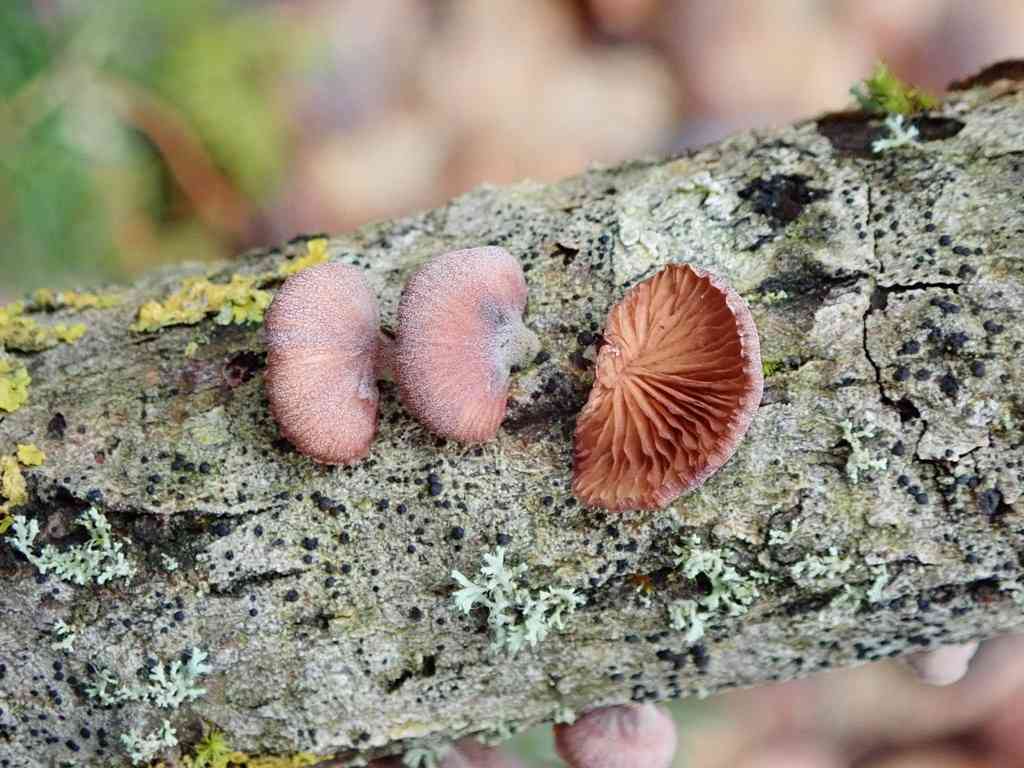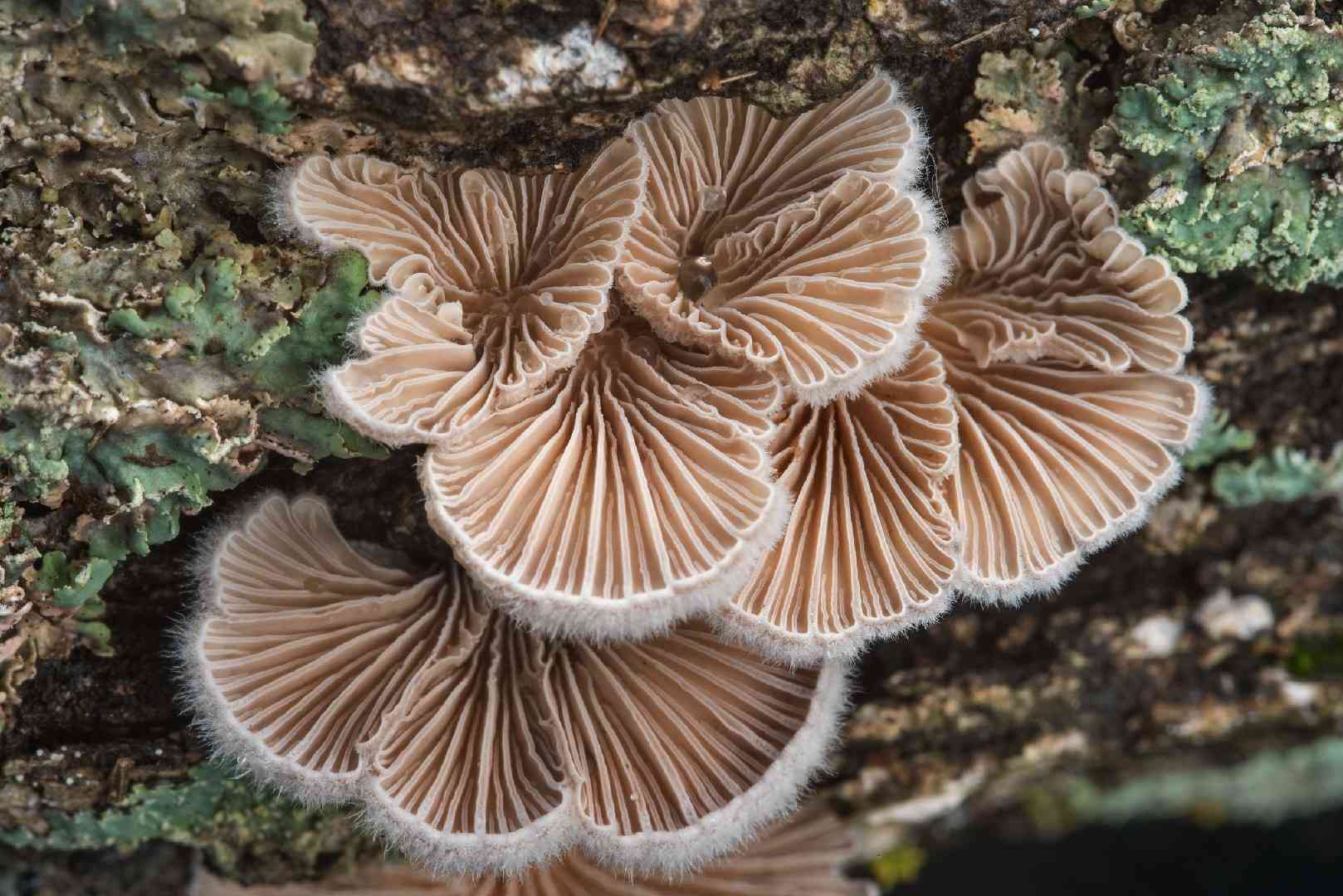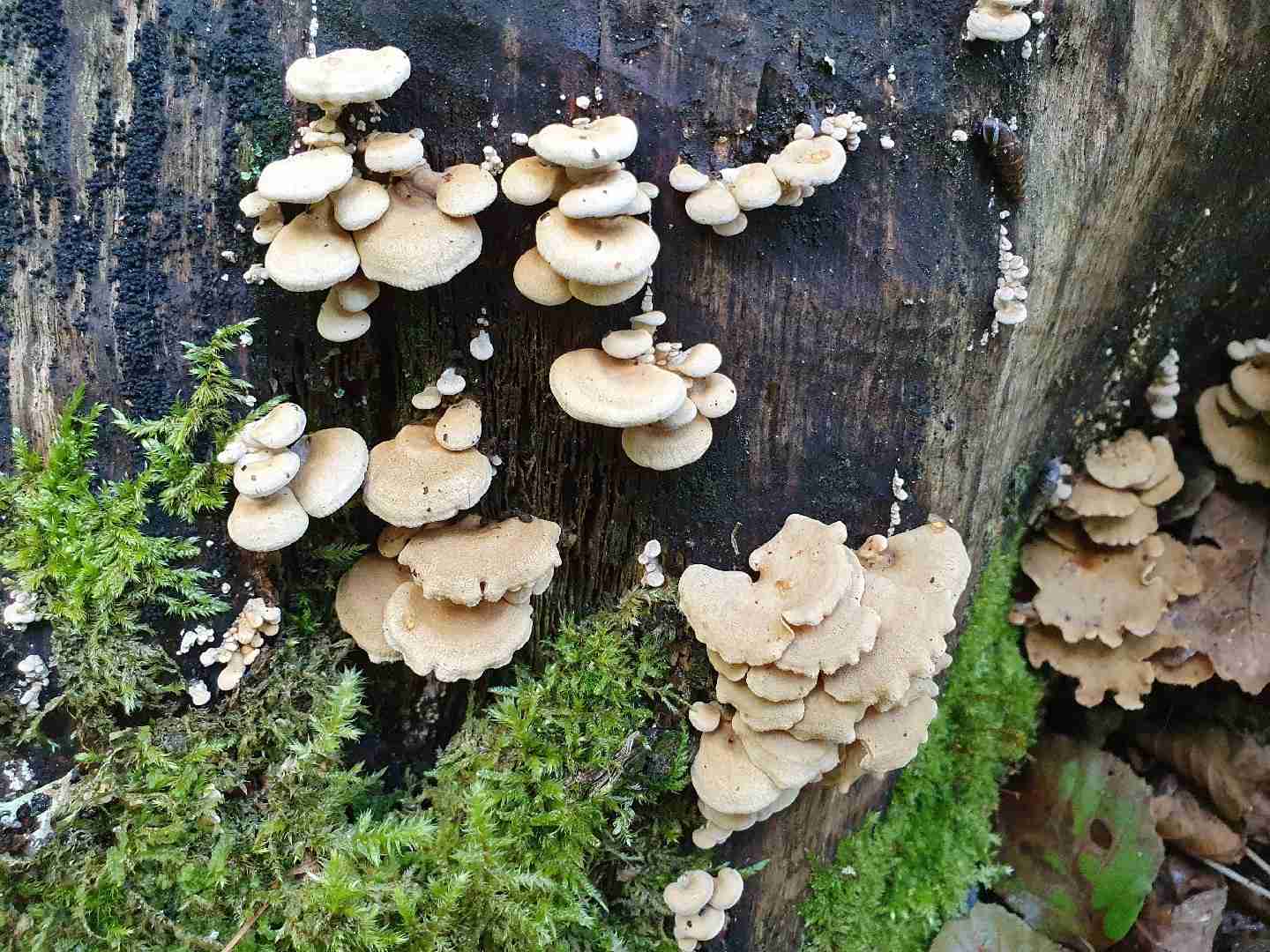
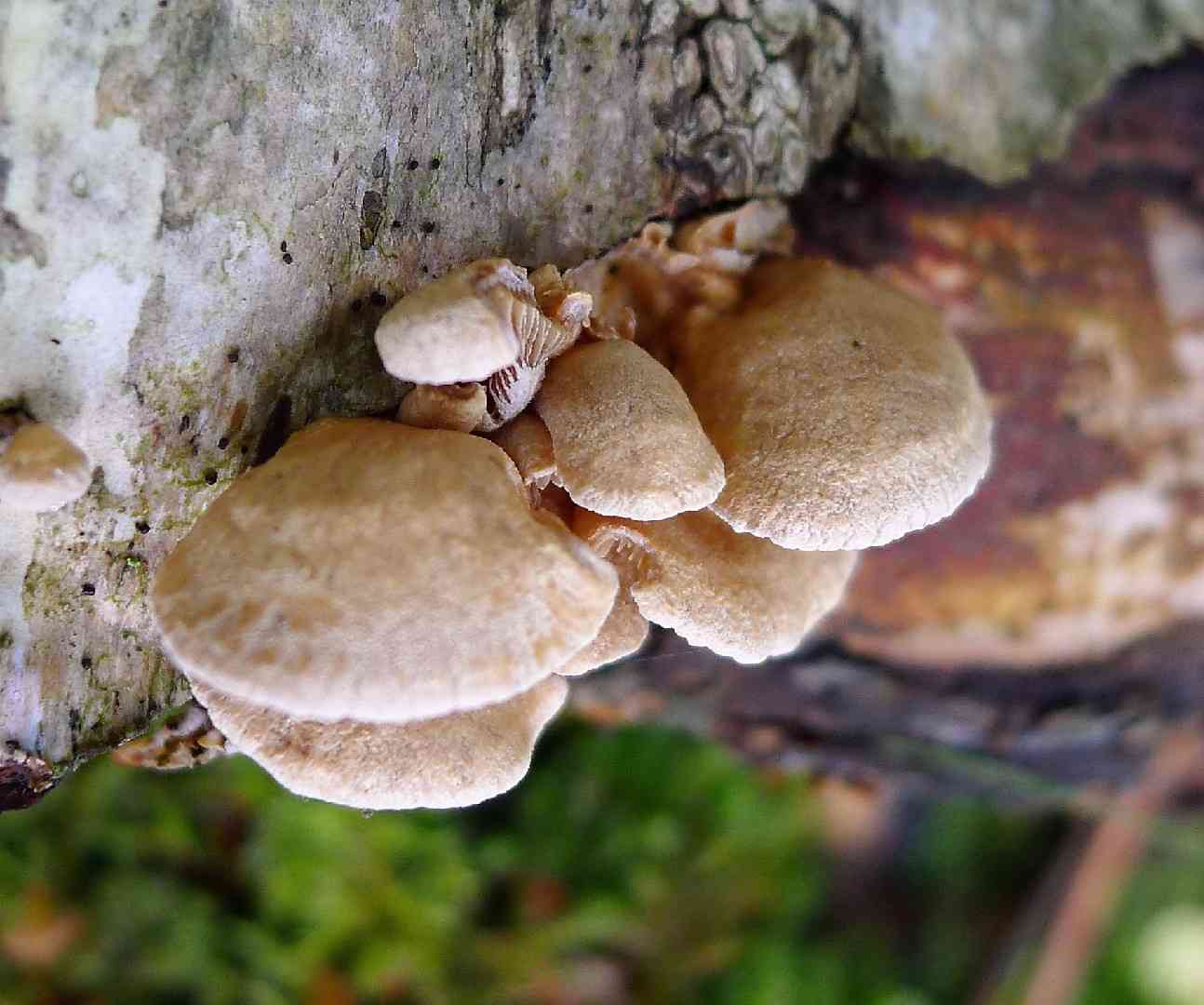
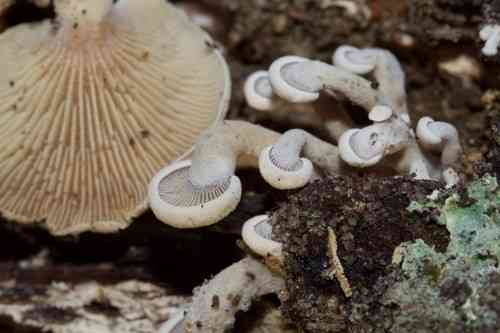
Bitter oysterling
Panellus stipticus
A species of Oysterlings. Also known as Luminescent panellus, Astringent panus.
Panellus stipticus, commonly known as the bitter oysterling, typically thrives on decaying or dead wood. Some varieties of this particular fungal species are noteworthy for their ability to produce light, a phenomenon known as bioluminescence, which, while uncommon, is not unheard of within the fungal kingdom. Due to its diminutive size and unpalatable taste, this species is generally deemed unsuitable for consumption.
In This Article
Attributes of Bitter oysterling
Cap Diameter
1 - 3 cm
Height
2 - 20 mm
Cap
Cap 5 - 20 mm across; weakly convex; ocher-buff to pinkish brown or yellow-brown; with finely velvety
Cap Shape
Convex, Flat
Cap Surfaces
Velvety, Fibrillose-scaly
Gills
Free; crowded; pale golden tan
Stem
Stem 3 mm long, 3 mm thick; cream to pale buff; with finely hairy
Stem Shapes
Tapering
Stem Surfaces
Fibrillose
Flesh
Tough; whitish, pale brownish
Ring
Ringless
Spore Print Color
White
Odor
Mildly mushroomy but not distinctive.
Body Color
BrownYellowGrayWhiteOrange
Flesh Bruises
The flesh or milk does not discolor when bruised or cut.
Growth Form
Clustered
Nutrient Gathering
Saprophytic
Substrate
Dead Woods
You can find Bitter oysterling by these plants
Oaks
Occurence Habitats
Deciduous Woodland
Species Status
Widely distributed
Endangered Species
No
Scientific Classification of Bitter oysterling
Phylum
Club fungi
Class
Mushroom-forming fungi
Order
Gilled fungi
Family
Bonnet mushrooms
Genus
Oysterlings
Toxicity and Edibility of Bitter oysterling
Is Bitter oysterling Toxic?
Consumption of the bitter oysterling has been linked to various instances of gentle toxic reactions. It is advisable to steer clear of this species, as it typically leads to digestive upset, frequently involving emesis.