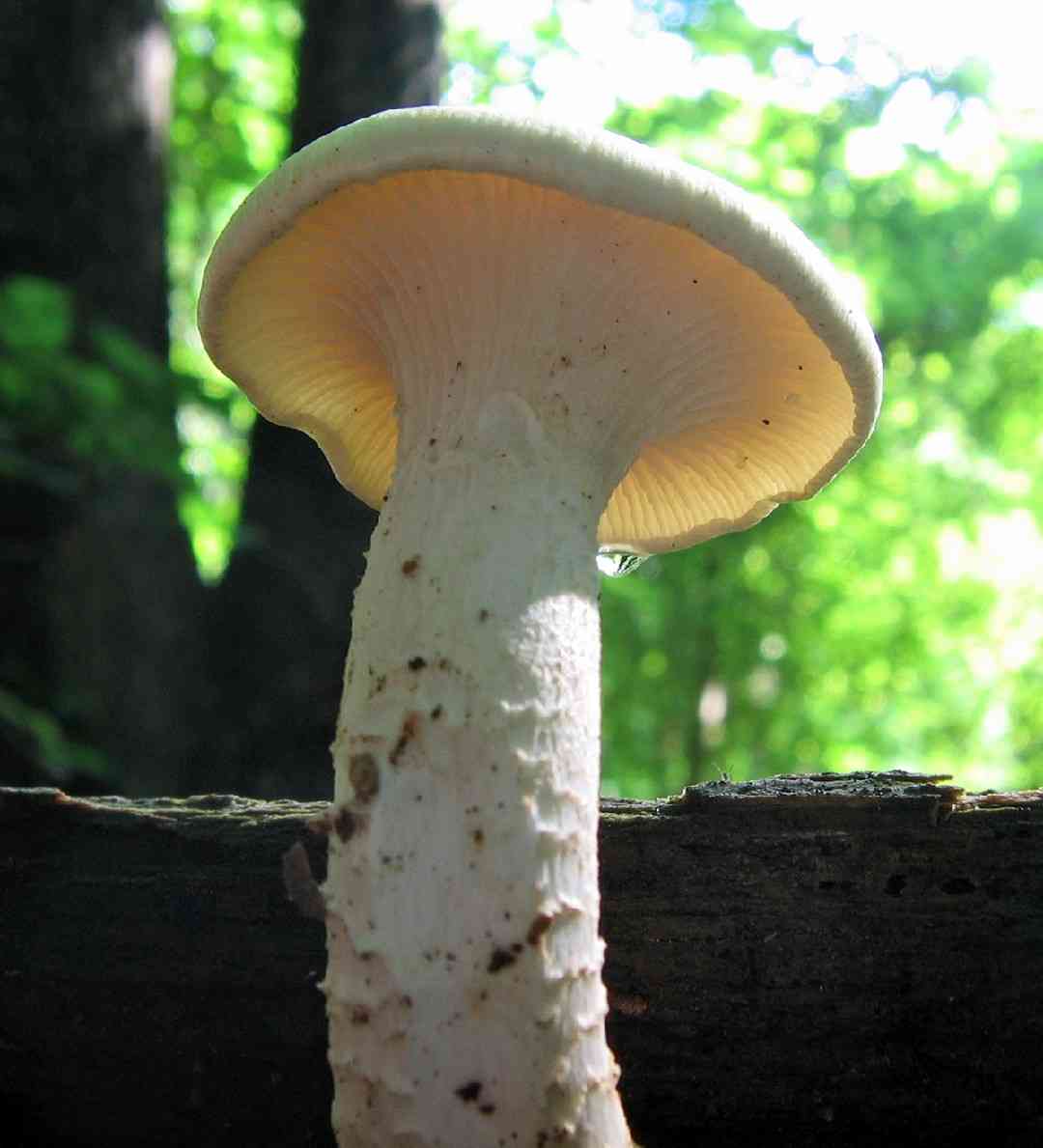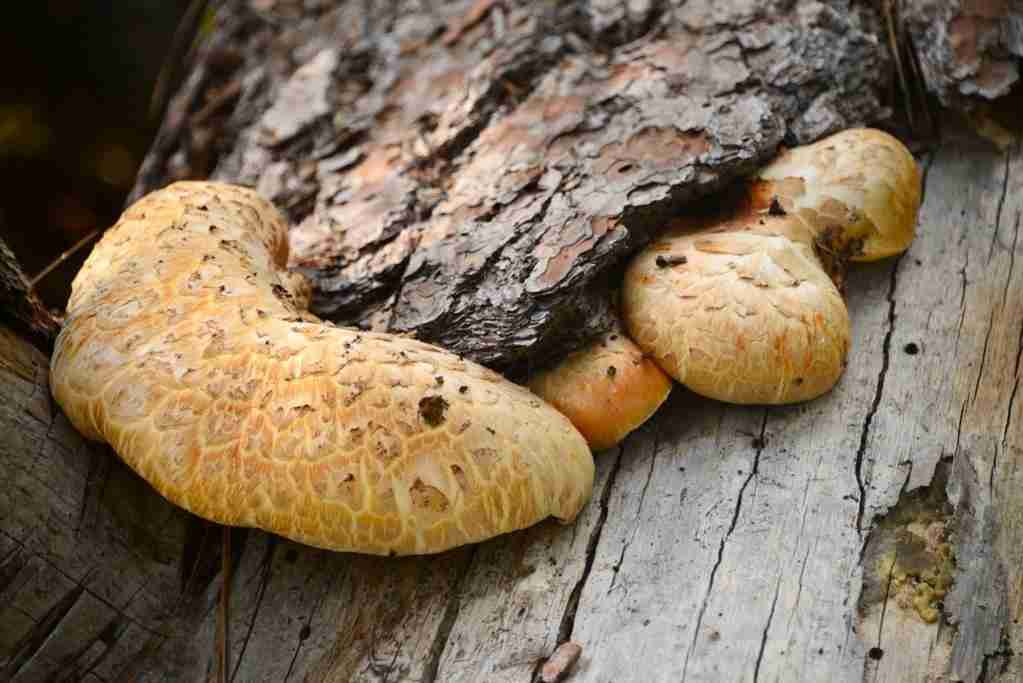
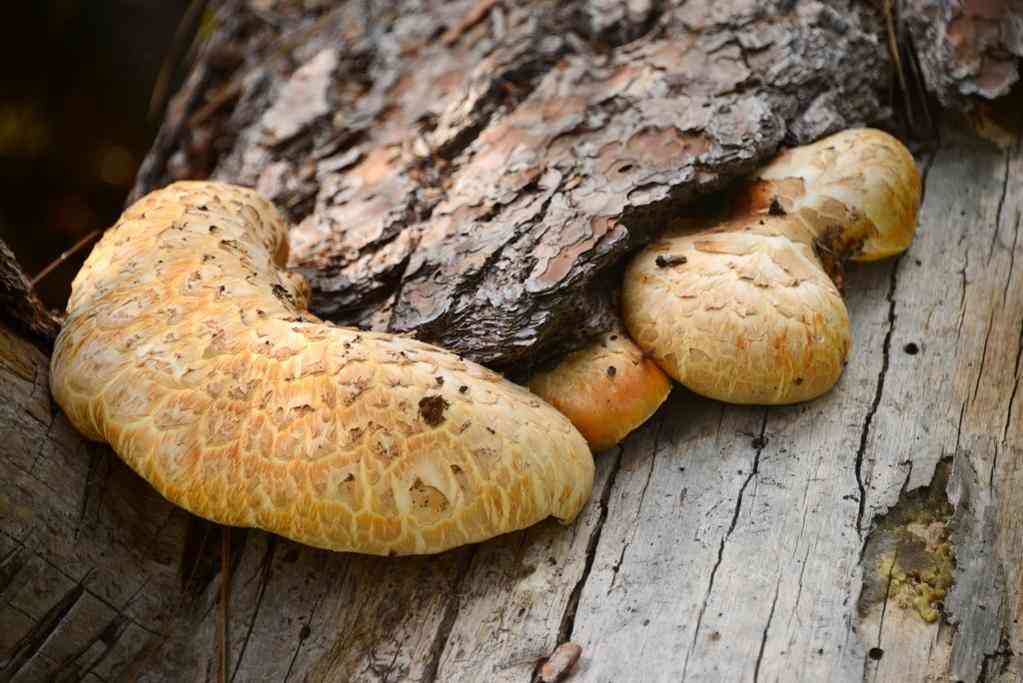
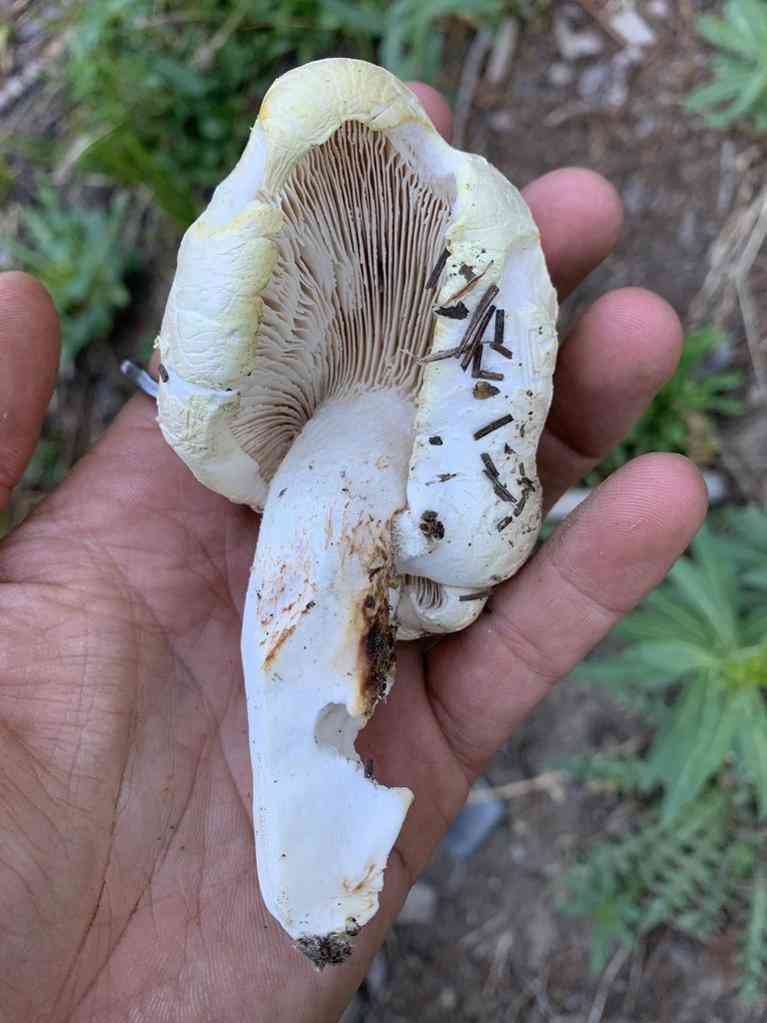
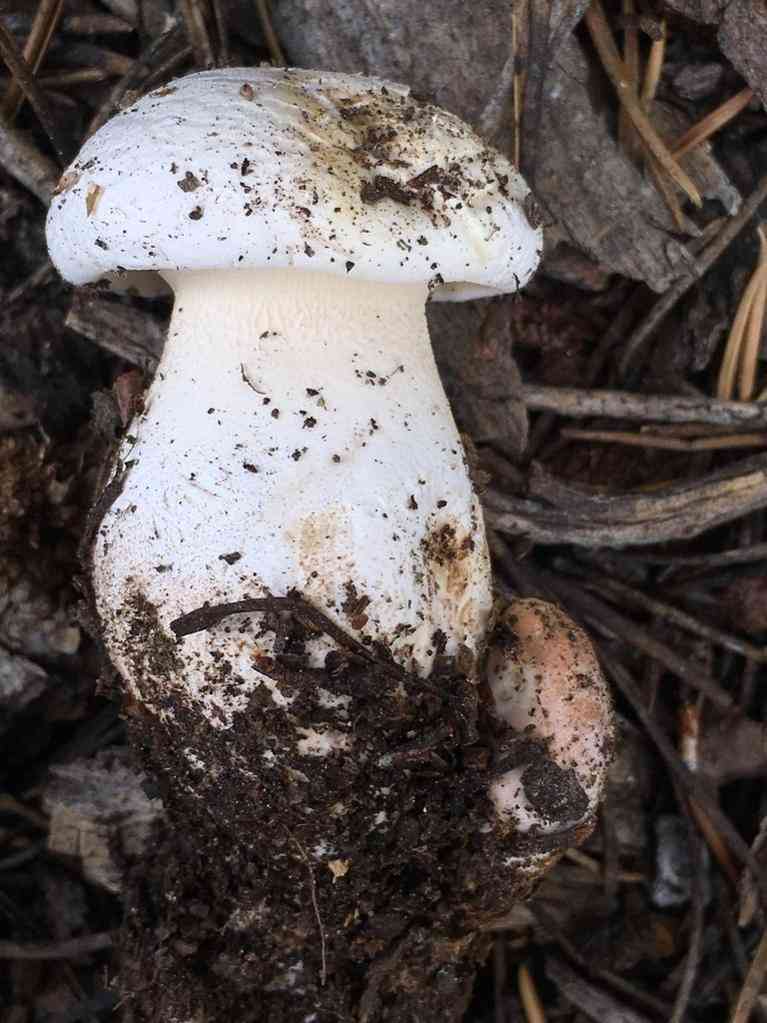
Giant sawgill
Neolentinus ponderosus
A species of Neolentinus. Also known as Large lentinus.
The giant sawgill (Neolentinus ponderosus) is notable for its remarkably large caps, which can extend up to 30 cm in diameter, often covering entire decomposing stumps and logs. A distinctive feature of this mushroom is its preference for warmer, drier periods, a contrast to many other fungi. You can typically find them growing in proximity to Ponderosa Pines.
In This Article
Attributes of Giant sawgill
Cap Diameter
5 - 35 cm
Height
6 - 16 cm
Cap
Cap 5 - 30 cm across; convex, broadly convex; buff to pinkish, brown; margin inrolled
Cap Shape
Convex, Flat, Depressed
Cap Surfaces
Fibrillose-scaly
Gills
Broadly adnexed; close; white to orangish white
Gill Attachment
Decurrent
Stem
Stem 3 - 10 cm long, 2 - 5 cm thick; slightly swollen, apered base; brown
Stem Shapes
Club Shaped
Stem Surfaces
Scaly
Flesh
Very tough; white to pinkish white; unchanging when sliced
Ring
Ringless
Spore Print Color
White
Odor
Slightly fragrant, generally non-distinctive.
Body Color
BrownYellowRedWhitePink
Flesh Bruises
The flesh or milk does not discolor when bruised or cut.
Growth Form
Solitary, Scattered, Gregarious
Nutrient Gathering
Saprophytic
Substrate
Dead Woods
You can find Giant sawgill by these plants
Ponderosa pine
Occurence Habitats
Coniferous Woodland
Scientific Classification of Giant sawgill
Phylum
Club fungi
Class
Mushroom-forming fungi
Order
Shelf fungi
Family
Polyporaceae
Genus
Neolentinus
Toxicity and Edibility of Giant sawgill
Is Giant sawgill Toxic?
Toxicity information is not available for this mushroom. Always consult with an expert before consuming any wild mushrooms.