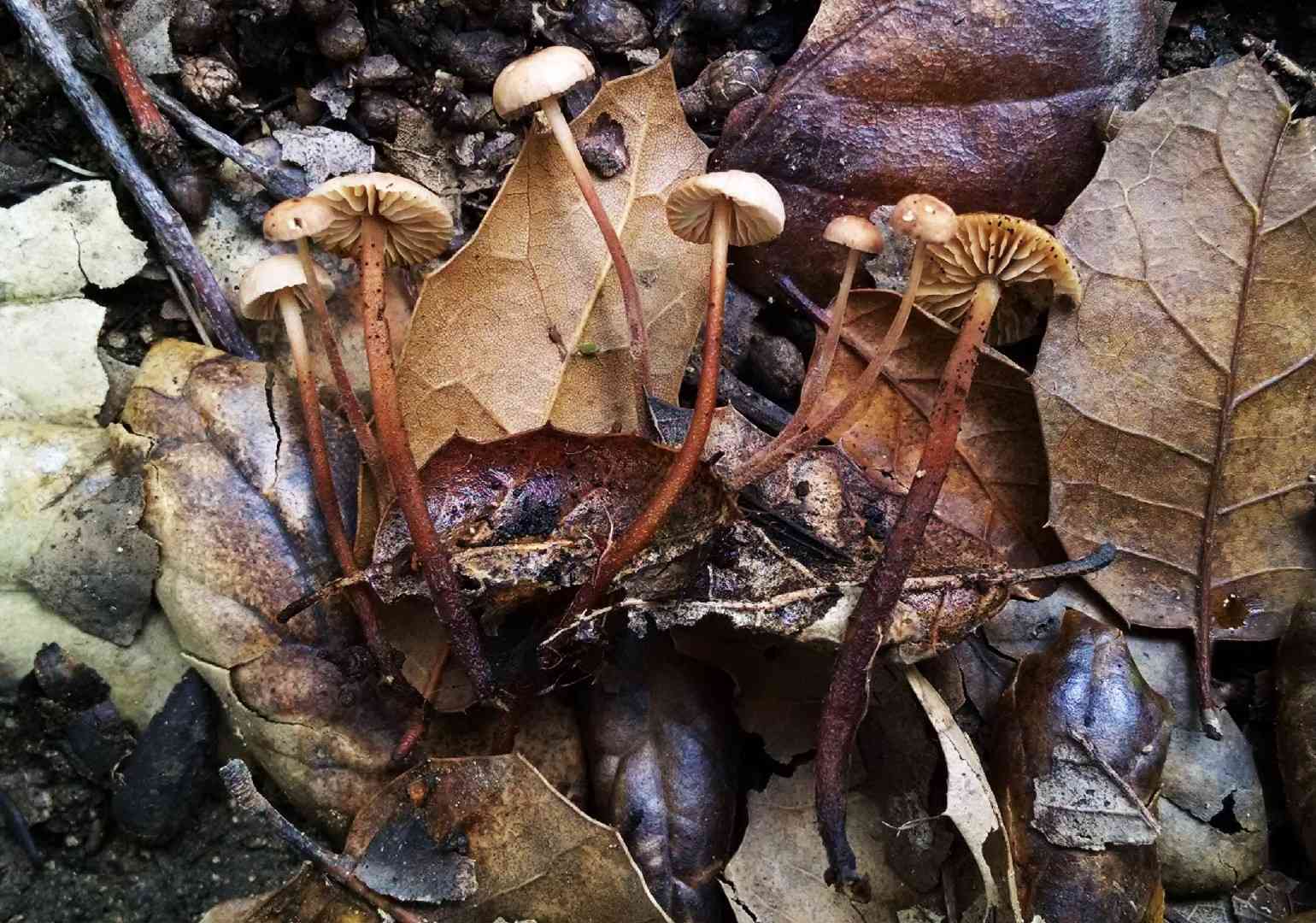
Garlic mushroom
Mycetinis copelandii
A species of Mycetinis.
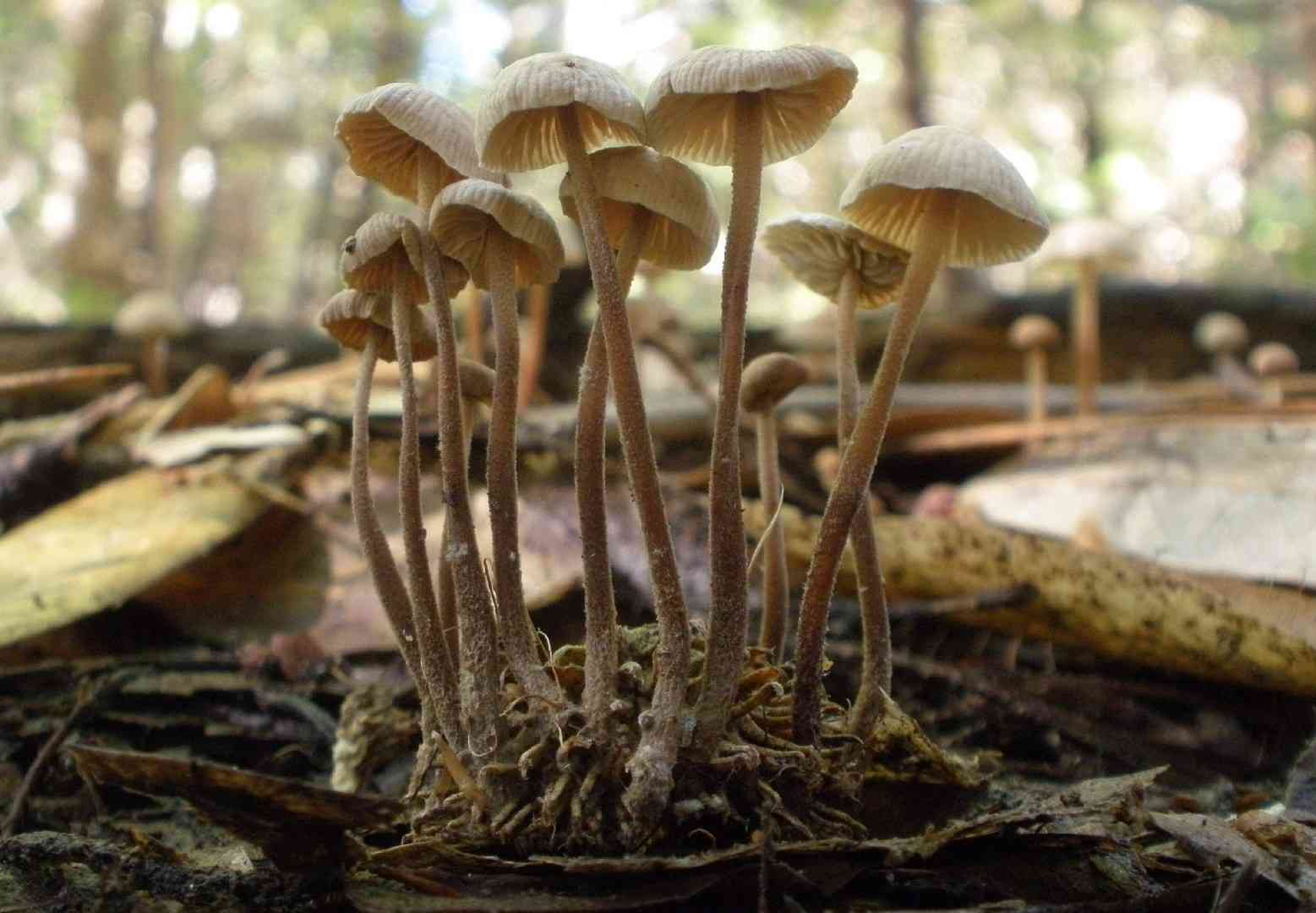
Recognizable for its distinct and potent garlic fragrance, the garlic mushroom, even without being bruised or sliced, releases this strong aroma, simplifying its identification. Commonly found in diverse woodland environments, it stands apart from similar species like M. Olidus and M. Copelandii due to their characteristic velvet-textured stalks.
In This Article
Attributes of Garlic mushroom
Cap Diameter
1 - 2 cm
Height
3 - 9 cm
Cap
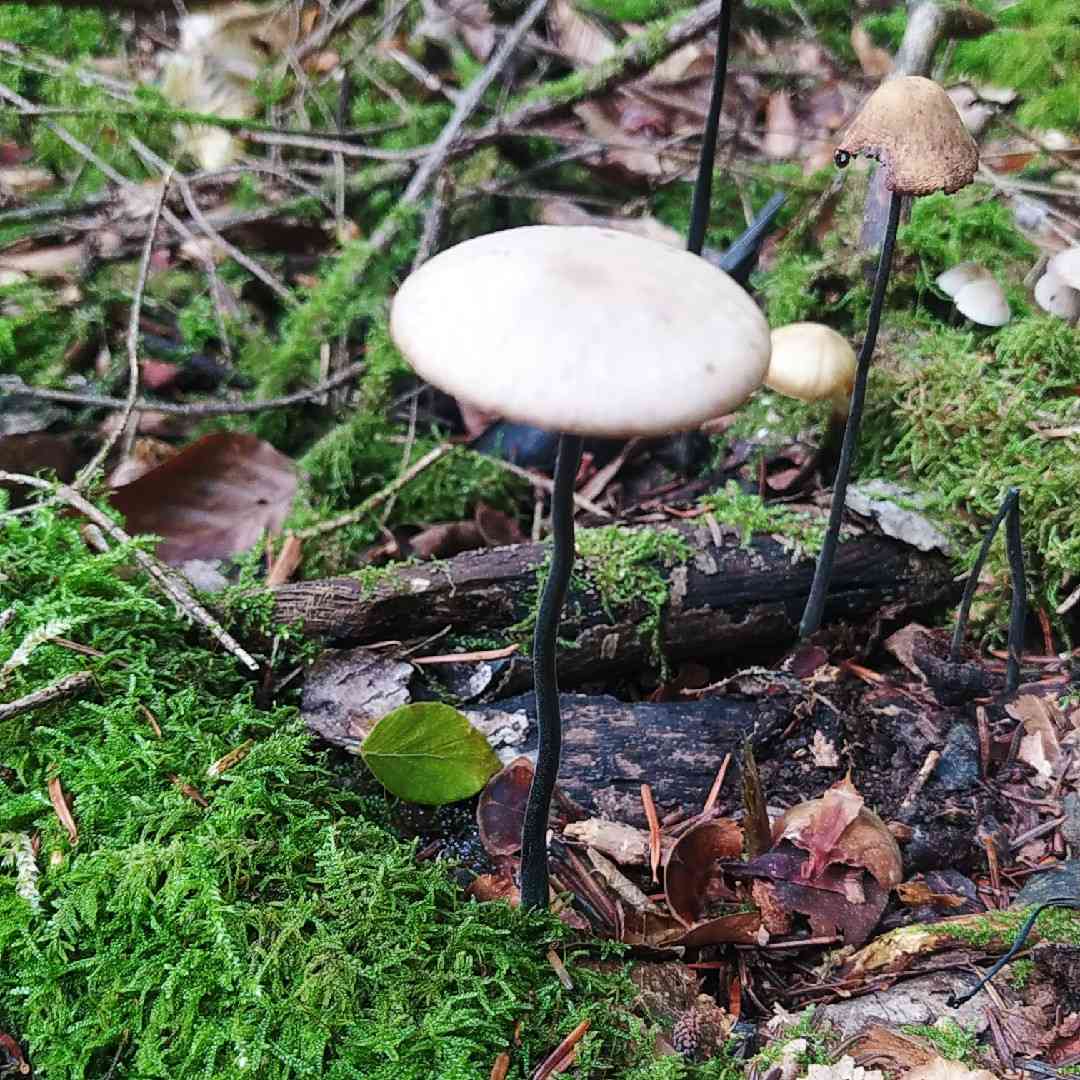
Cap 5 - 20 mm across; convex to nearly plane; brown to nearly white; glabrous; margin decurved
Cap Shape
Convex, Central Bump
Cap Surfaces
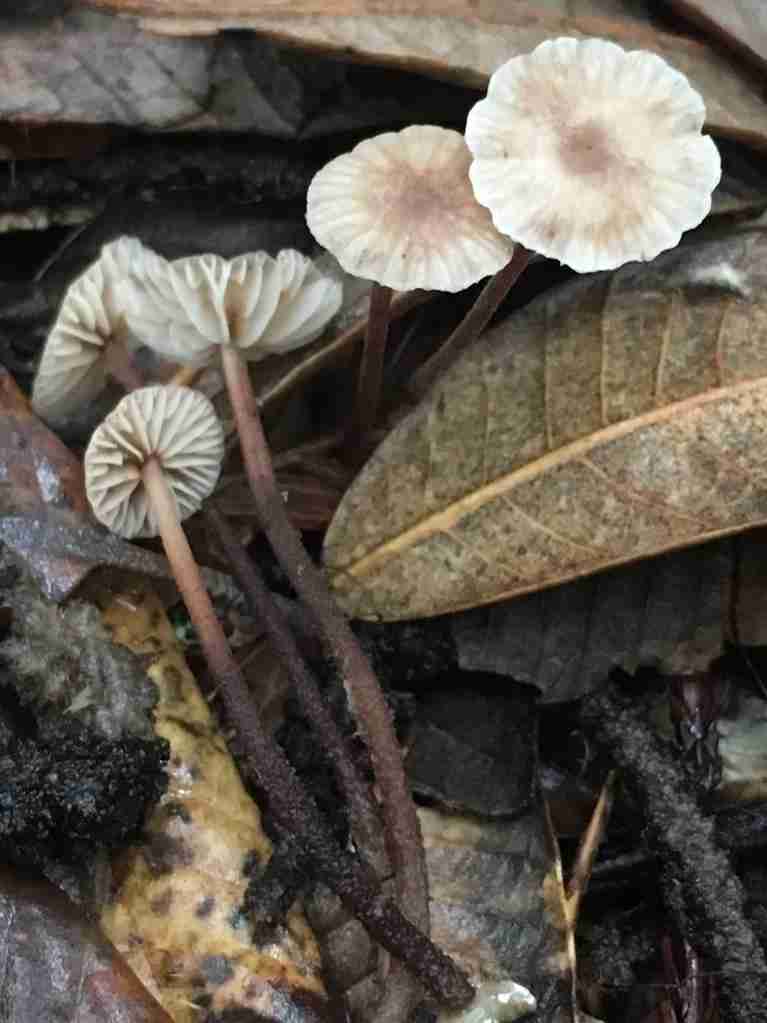
Smooth, Visible lines or stripes
Gills
Adnate, adnexed, seceding; close; cream-buff, darkening to tan-buff
Gill Attachment
Attached
Stem
Stem 3 - 8 cm long, 1 - 3 mm thick; slender; mahogany-brow, tan-buff; surface tomentose
Stem Shapes
Cylindrical
Stem Surfaces
Fibrillose
Ring
Ringless
Spore Print Color
Whitish
Odor
Garlicky or mildly garlic-like aroma.
Body Color
BrownWhite
Growth Form
Scattered, Gregarious
Nutrient Gathering
Saprophytic
Substrate
Leaf or Needle Litter
You can find Garlic mushroom by these plants
European beech, Oaks
Occurence Habitats
Mixed Woodland
Endangered Species
No
Scientific Classification of Garlic mushroom
Phylum
Club fungi
Class
Mushroom-forming fungi
Order
Gilled fungi
Family
Marasmiaceae
Genus
Mycetinis
Toxicity and Edibility of Garlic mushroom
Is Garlic mushroom Toxic?
Toxicity information is not available for this mushroom. Always consult with an expert before consuming any wild mushrooms.