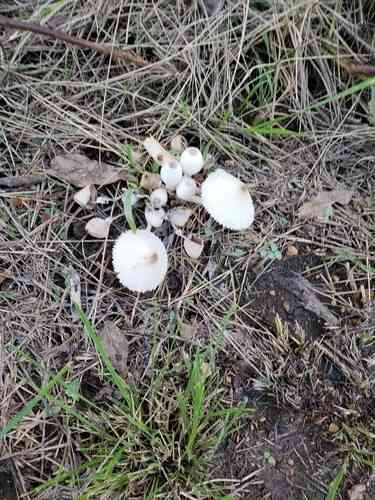
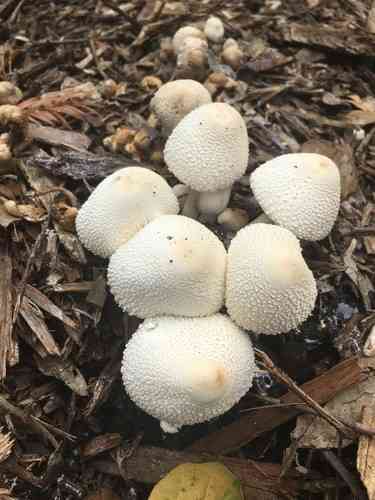
Onion-stalk parasol mushroom
Leucocoprinus cepistipes
A species of Leucocoprinus.
This versatile mushroom, widespread throughout North America, thrives in various damp woodland environments. It seems to have a particular affinity for wood chips or mulch, frequently appearing in gardens and parks. Despite its name, the onion-stalk parasol mushroom is not edible.
In This Article
Attributes of Onion-stalk parasol mushroom
Cap Diameter
3 - 7 cm
Height
5 - 10 cm
Cap
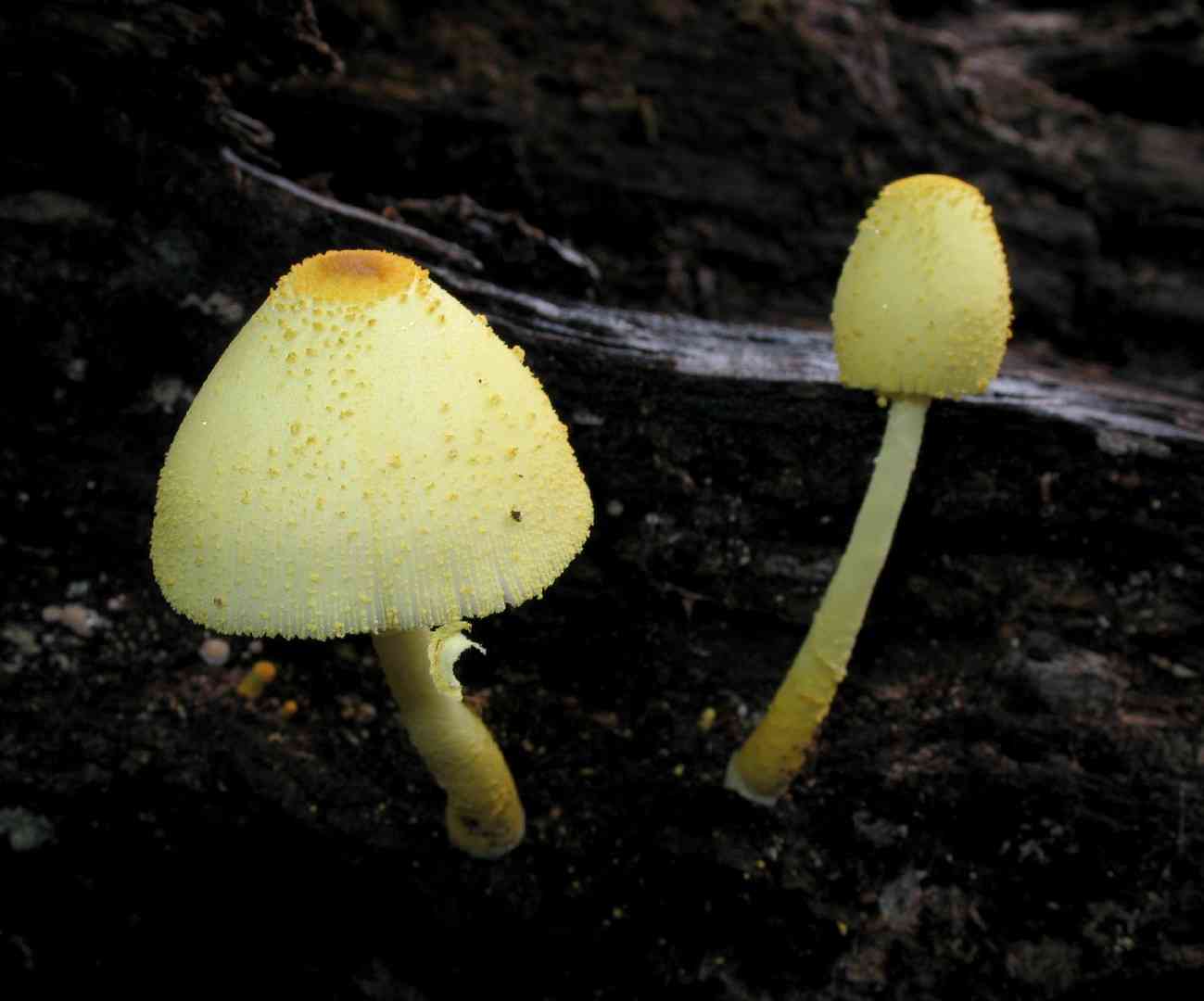
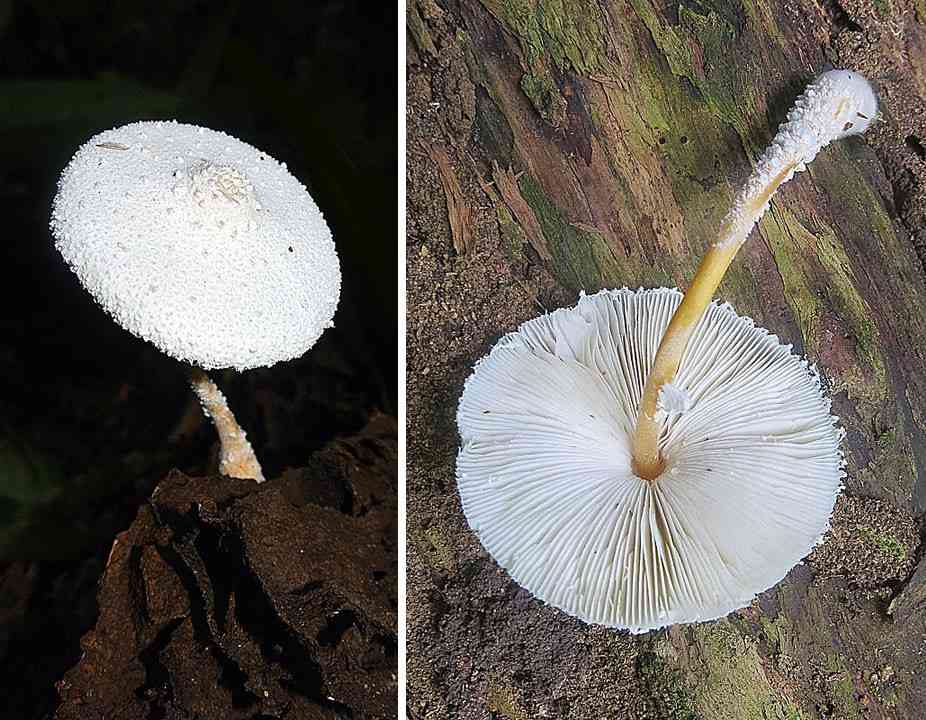
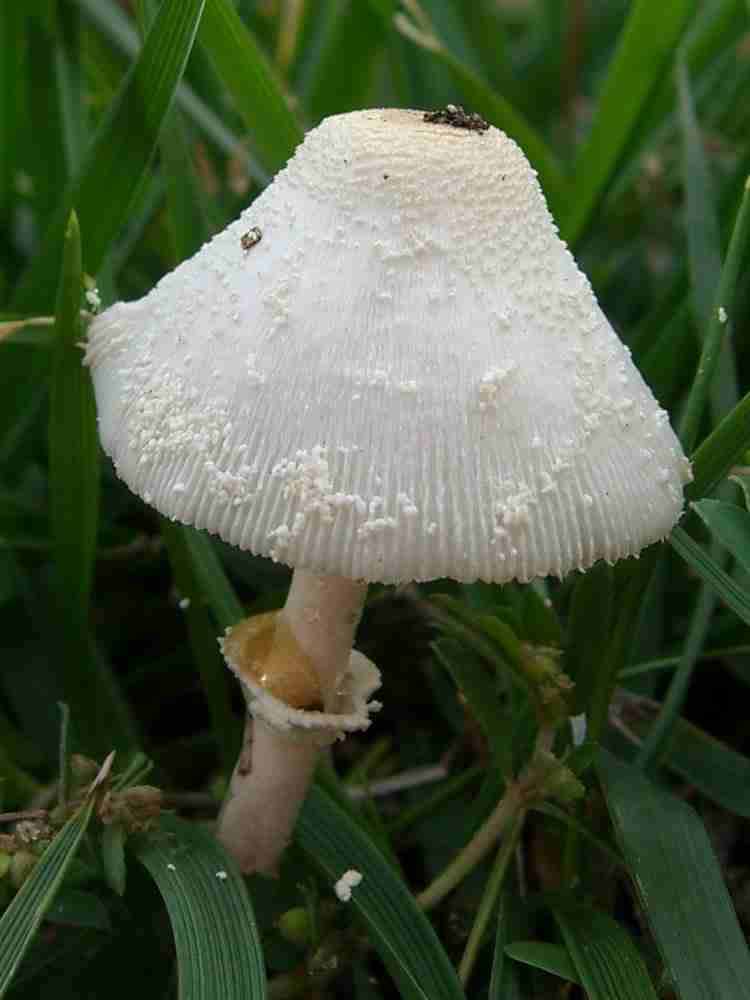
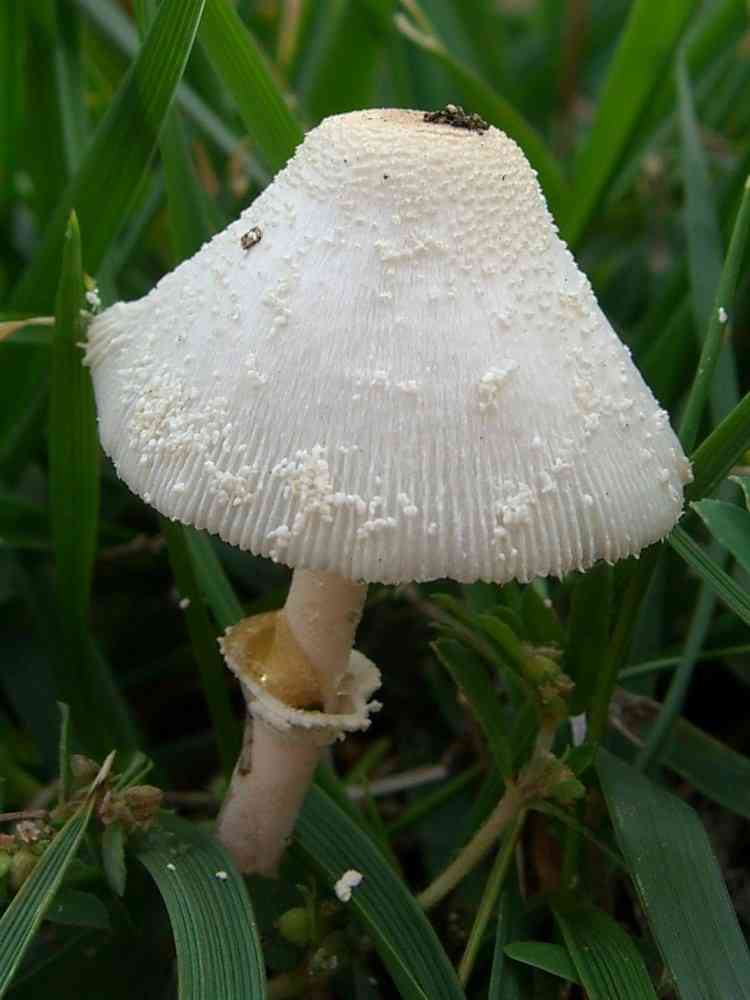
Cap 3 - 9 cm; egg-shaped to broadly convex; whitish to pale brownish; dry
Cap Shape
Bell-shaped, Flat, Central Bump
Cap Surfaces
Fibrillose-scaly
Gills
Free; close or nearly crowded; white, brownish
Gill Attachment
Free
Stem
Stem 6 - 9 cm long, 4 - 10 mm thick; equal, swollen slightly near the bottom; white
Stem Shapes
Cylindrical
Flesh
Very thin; whitish, unchanging when sliced
Ring
With Ring
Spore Print Color
White
Odor
Mildly earthy, generally pleasant.
Body Color
BrownYellowGrayWhitePink
Flesh Bruises
The flesh or milk does not discolor when bruised or cut.
Growth Form
Scattered, Gregarious
Nutrient Gathering
Saprophytic
Species Status
Widely distributed
Endangered Species
No
Scientific Classification of Onion-stalk parasol mushroom
Phylum
Club fungi
Class
Mushroom-forming fungi
Order
Gilled fungi
Family
Agaricaceae
Genus
Leucocoprinus
Toxicity and Edibility of Onion-stalk parasol mushroom
Is Onion-stalk parasol mushroom Toxic?
The onion-stalk parasol mushroom frequently appears among decaying vegetation during warmer periods. Ingesting this fungus can trigger significant gastrointestinal upset, manifesting as abdominal cramps, sickness, throwing up, and loose stools. Its identifying features include a white or light hue and a thin, onion-shaped stalk. It is vital to avoid mistaking this mushroom for harmless types.
Type of poisoning
Gastrointestinal
Toxic Severity
Low to moderate toxicity
Incubation Period
0.5-4 hours
Poisoning Symptoms
Severe stomach cramps, nausea, persistent vomiting, and diarrhea. These symptoms can be particularly distressing and may lead to dehydration if not managed properly.