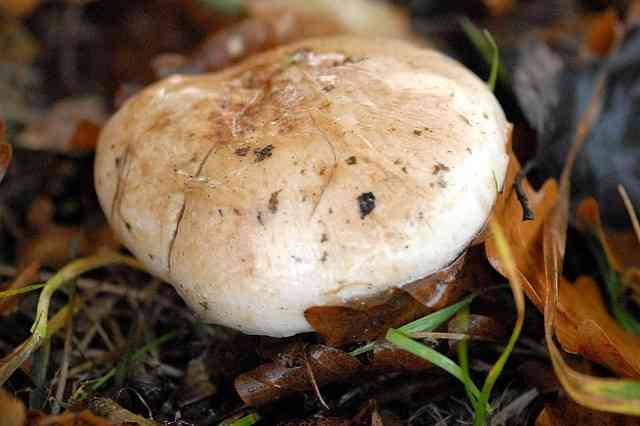
Rooting poison pie
Hebeloma radicosum
A species of Bitter poisonpie.
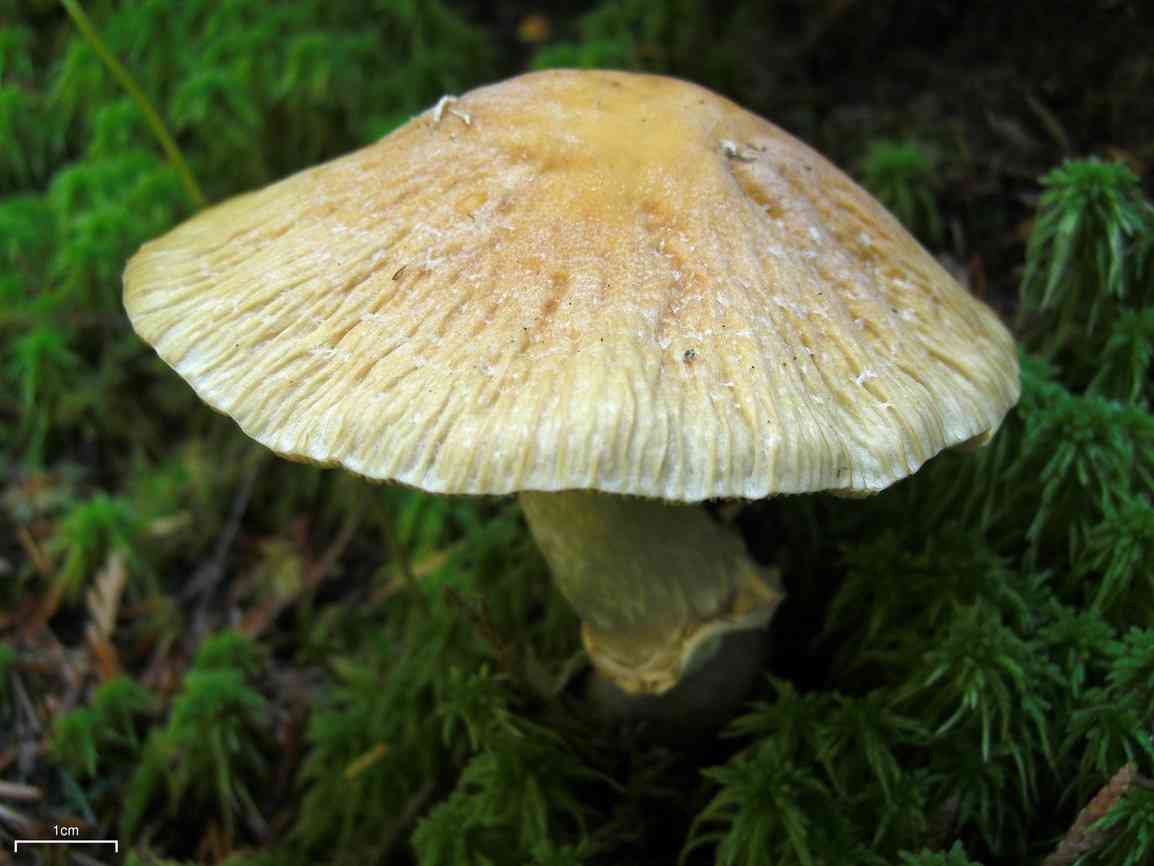
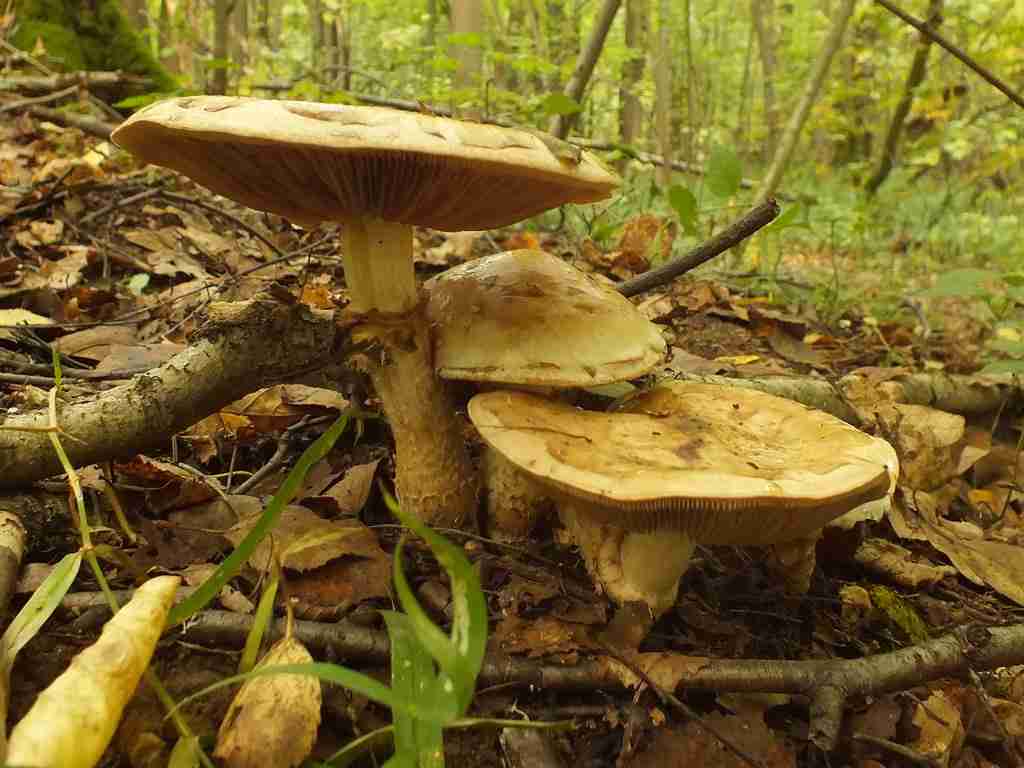
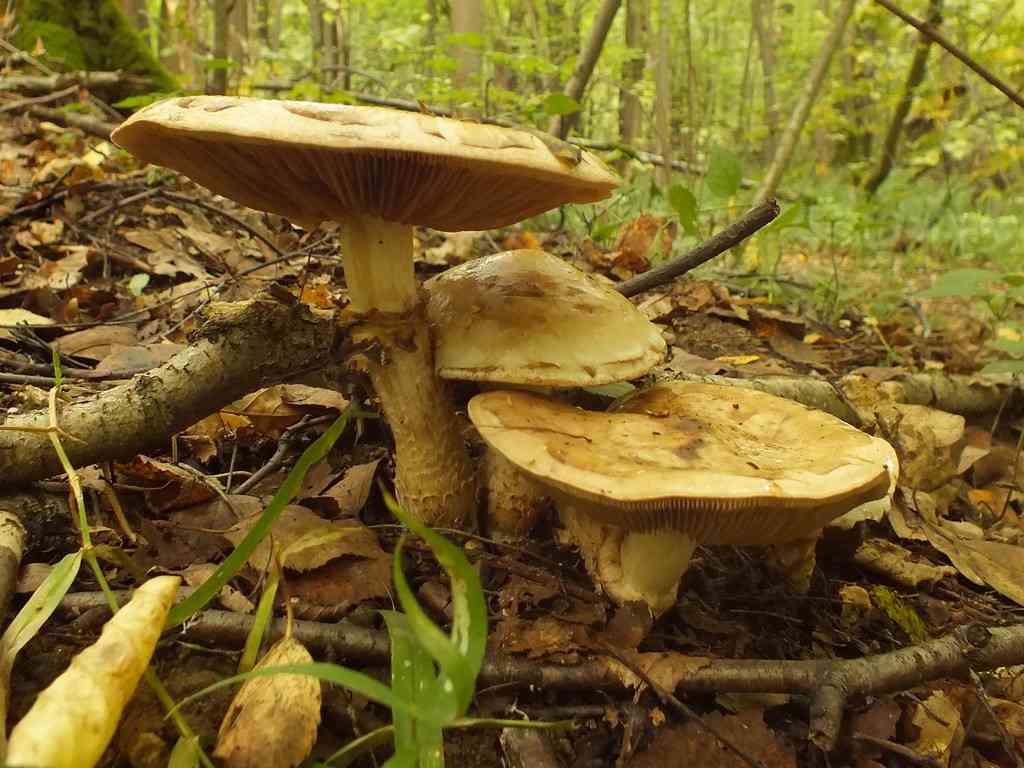
Distinguished by its affinity for fertile, frequently disrupted soils, rooting poison pie typically thrives in wooded environments. It features a stem with a pronounced, bulbous base and leaves spore prints that present as a distinct earthy brown. A key identifying characteristic is its cap, which exhibits a sticky texture when damp, making it quite recognizable in the field.
In This Article
Attributes of Rooting poison pie
Cap Diameter
4 - 13 cm
Height
15 - 30 cm
Cap
Cap 5 - 10 cm across; convex to flat; cream to pale buff; surface smooth; with scales
Cap Shape
Convex, Flat
Cap Surfaces
Fibrillose-scaly, Slimy or slightly sticky
Gills
Adnate; crowded; cream to tobacco brown
Gill Attachment
Free to Attached
Stem
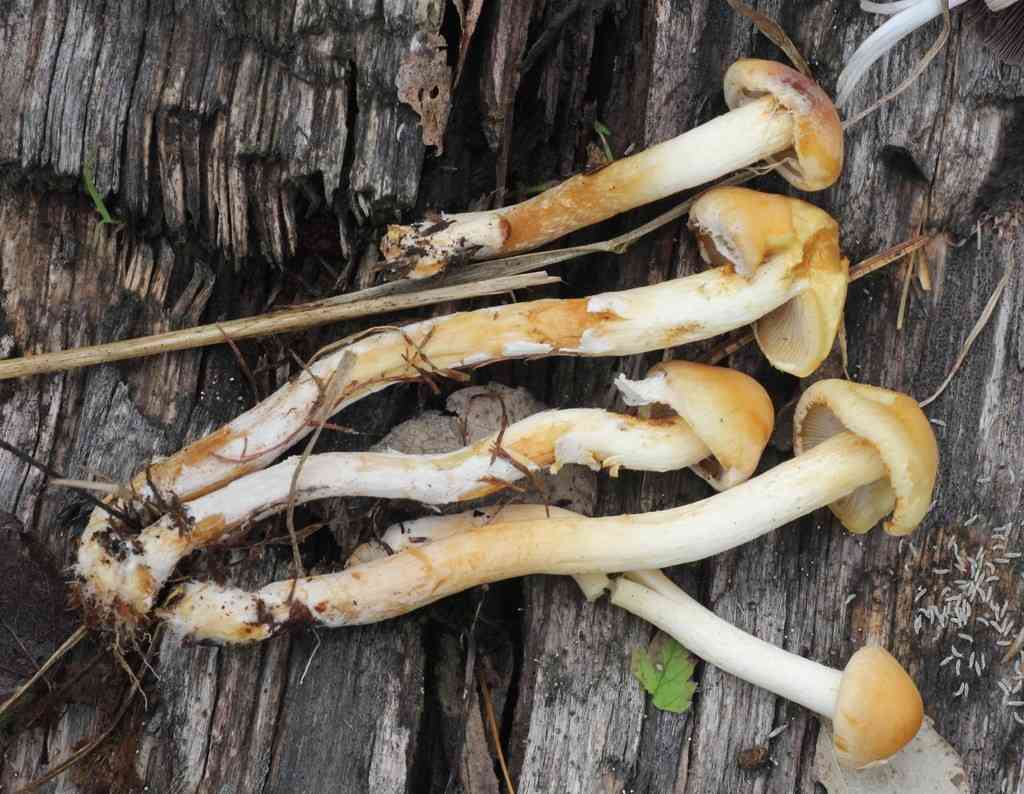
Stem 8 - 18 cm long, 1.3 - 2.5 cm thick; taproot-like; whitish; surface smooth, with fleecy scale
Stem Shapes
Rooting
Flesh
Fibrous; white; unchanging
Ring
With Ring Zone
Spore Print Color
Pale clay-brown
Odor
Intense almond-like fragrance.
Body Color
BrownYellowGoldCream
Growth Form
Solitary, Gregarious
Nutrient Gathering
Mycorrhizal
Substrate
On soil
You can find Rooting poison pie by these plants
Pines, Oaks, Spruces, European beech
Endangered Species
No
Scientific Classification of Rooting poison pie
Phylum
Club fungi
Class
Mushroom-forming fungi
Order
Gilled fungi
Family
Hymenogastraceae
Genus
Bitter poisonpie
Toxicity and Edibility of Rooting poison pie
Is Rooting poison pie Toxic?
This mushroom could contain hazardous substances, making it advisable to avoid consumption.