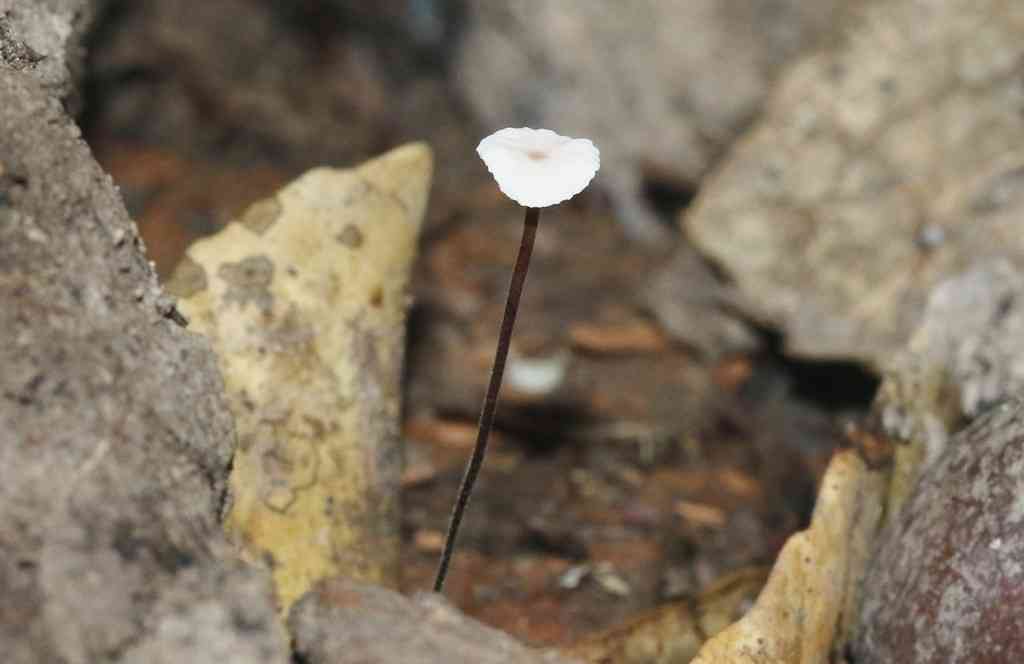
Oak toughshank
Gymnopus quercophilus
A species of Gymnopus.
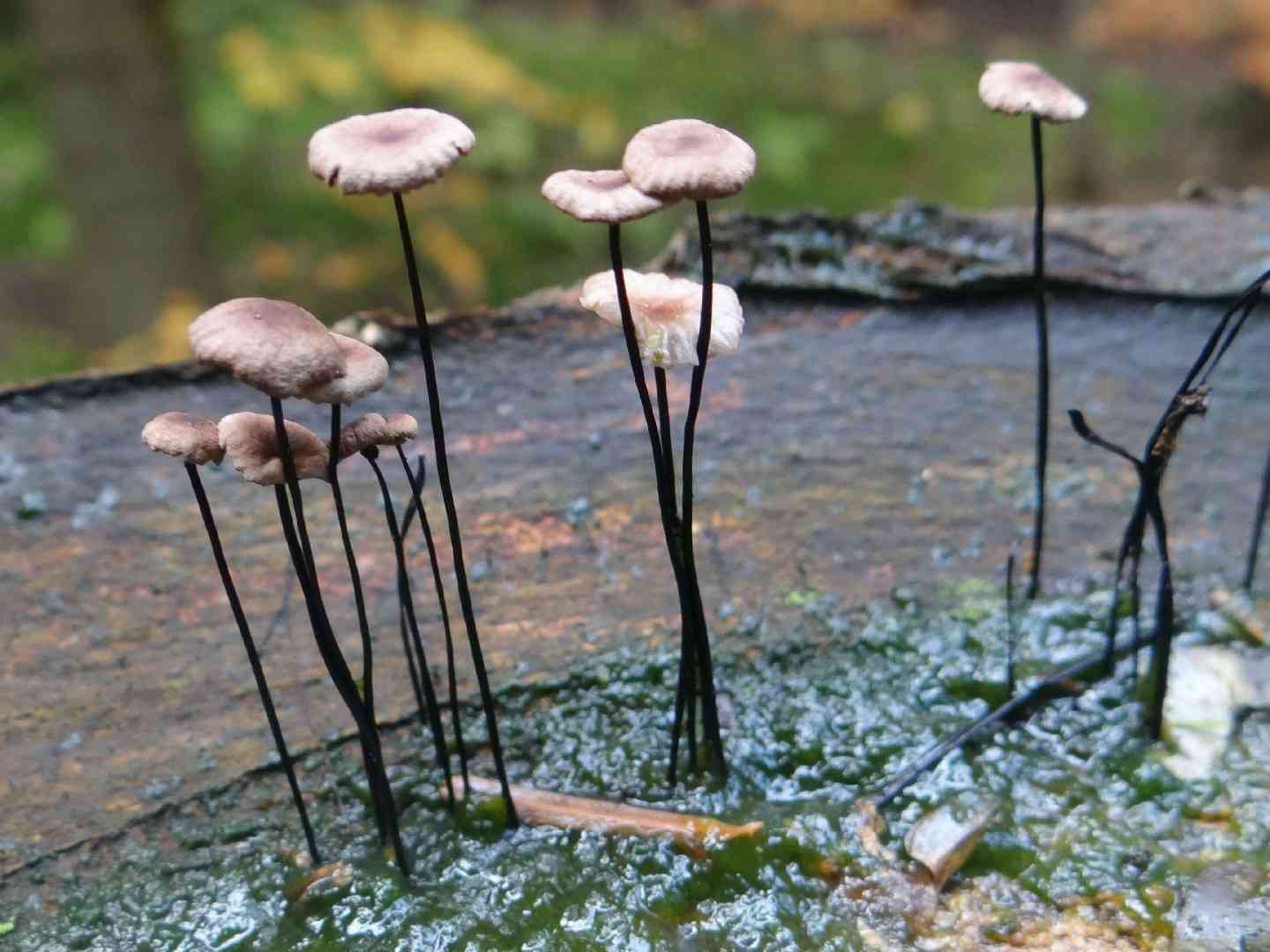
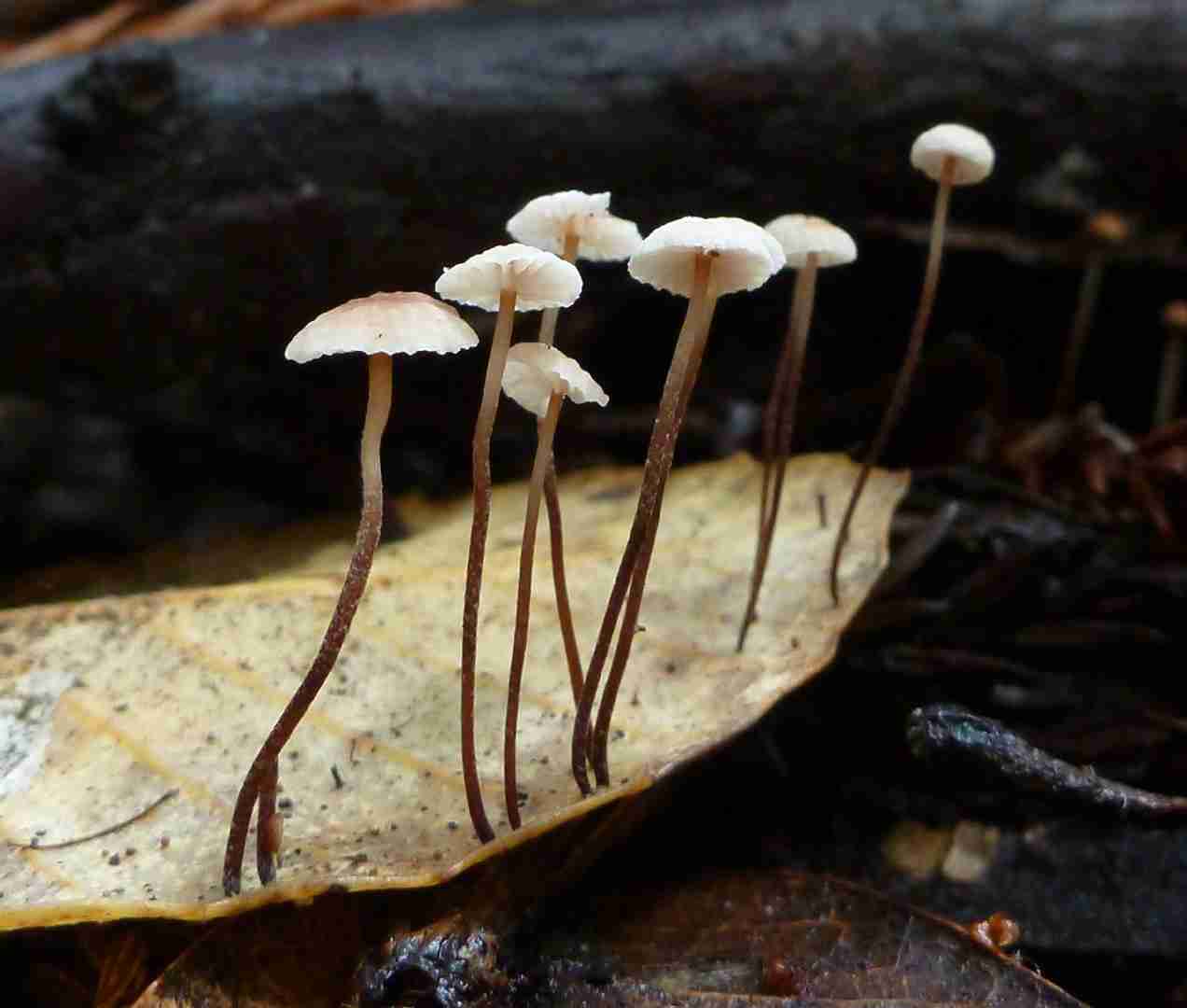
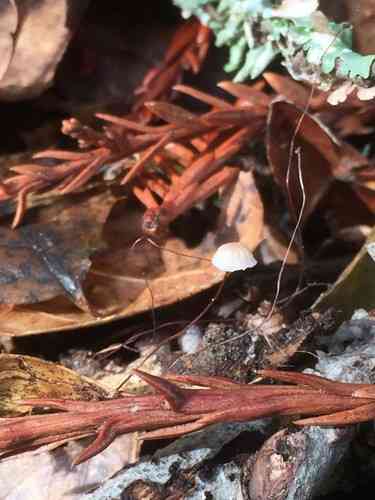
It's quite simple to miss these diminutive fungi. Oak toughshanks, characterized by their minuscule caps and incredibly slender stalks, are so small they can emerge directly from fallen foliage. While they show a preference for oak leaves, instances of them appearing on the leaves of other deciduous trees are also known.
In This Article
Attributes of Oak toughshank
Cap Diameter
1 - 2 cm
Height
1 - 3 cm
Cap
Cap 2 - 5 mm broad; convex, plane; with a striate from the margin to the disc; light-brown; margin is decurved, often sulcate
Cap Shape
Convex, Flat, Central Bump
Cap Surfaces
Smooth, Visible lines or stripes
Gills
Adnexed; moderately broad; whitish
Gill Attachment
Free to Attached
Stem
1 - 2.5 cm long, less than 1 mm thick; round; darker brown, almost reddish; hair-like; possible darkening when bruising
Stem Shapes
Cylindrical
Ring
Ringless
Spore Print Color
White, whitish, cream
Odor
Mildly mushroomy but not distinctive
Body Color
BrownWhiteCream
Flesh Bruises
The flesh or milk does not discolor when bruised or cut.
Growth Form
Scattered, Gregarious
Substrate
On needle duff
Species Status
Moderately common
Endangered Species
No
Scientific Classification of Oak toughshank
Phylum
Club fungi
Class
Mushroom-forming fungi
Order
Gilled fungi
Family
Marasmiaceae
Genus
Gymnopus
Toxicity and Edibility of Oak toughshank
Is Oak toughshank Toxic?
Toxicity information is not available for this mushroom. Always consult with an expert before consuming any wild mushrooms.