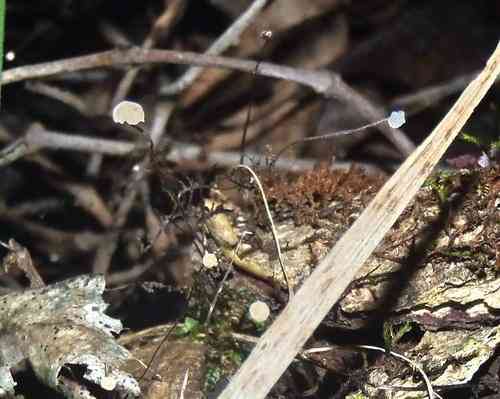
Horsehair fungus
Gymnopus androsaceus
A species of Gymnopus.
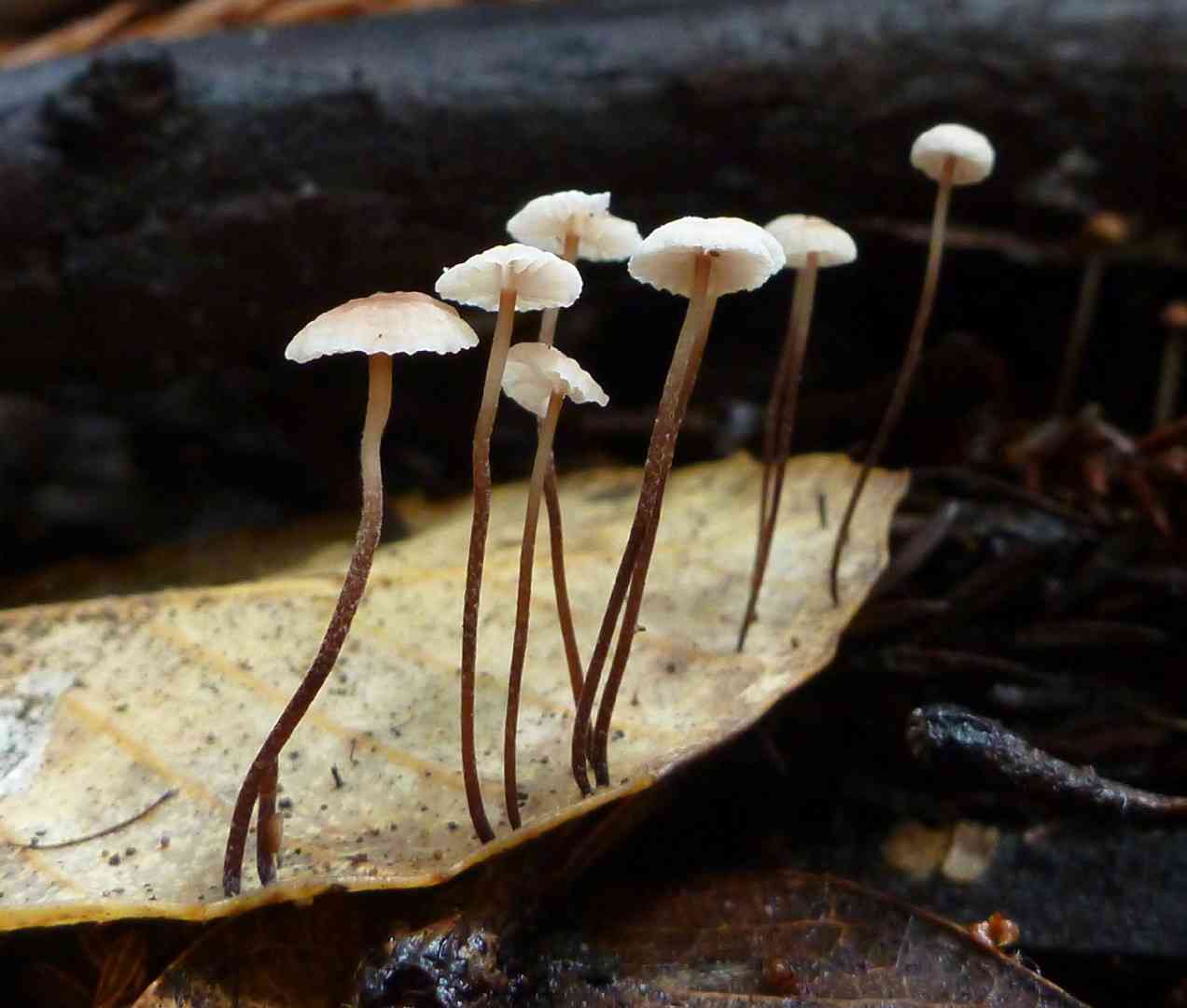
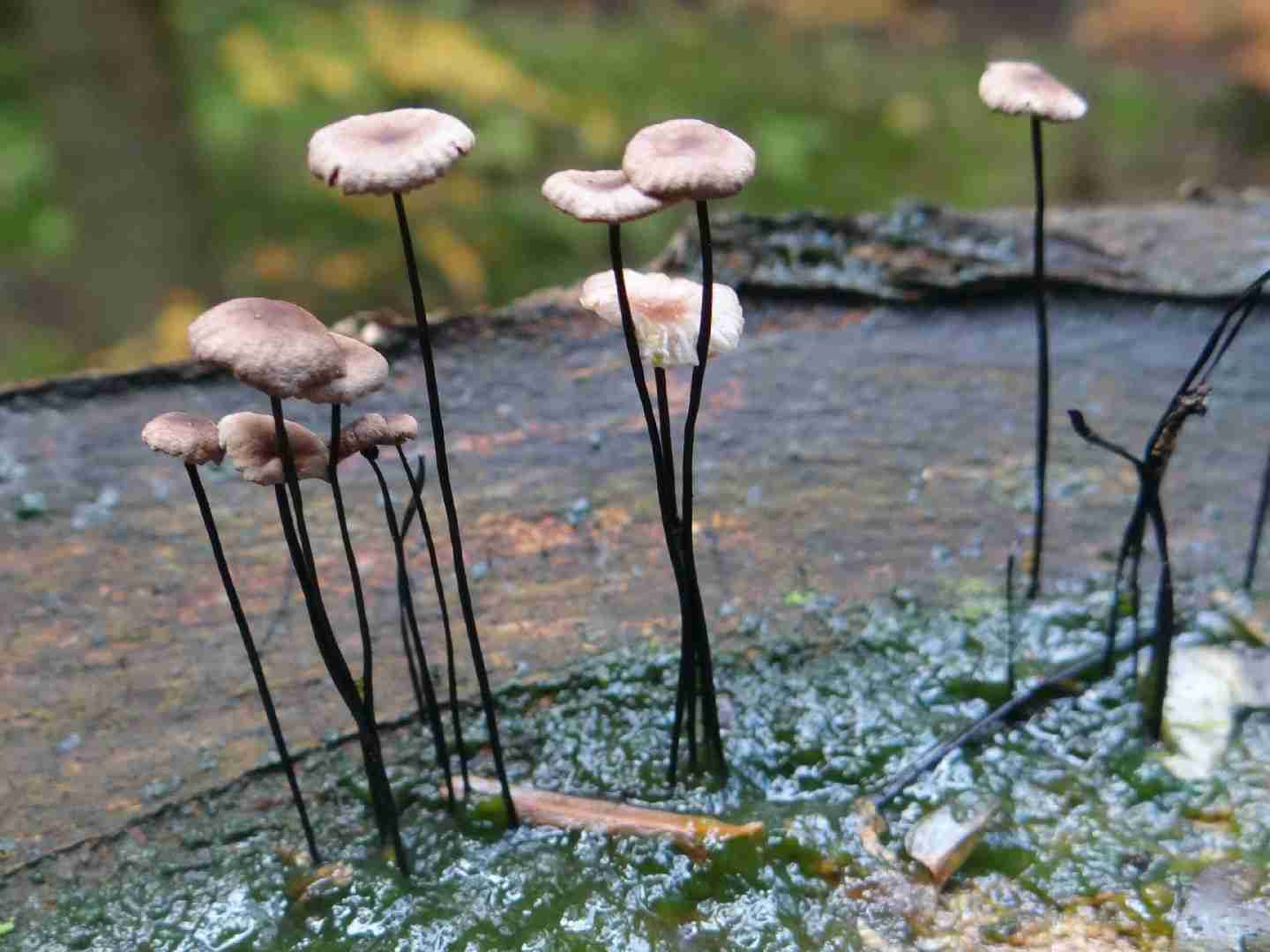
Horsehair fungus can be challenging to differentiate from lookalikes. Nevertheless, it typically inhabits distinct environments, flourishing on decaying, downed timber and appearing in small aggregations. Its developmental stage is identifiable by the stalk's hue. Younger specimens possess a lighter stalk, progressively darkening to brownish-red or black upon reaching maturity.
In This Article
Attributes of Horsehair fungus
Cap Diameter
3 - 12 mm
Height
3 - 6 cm
Cap
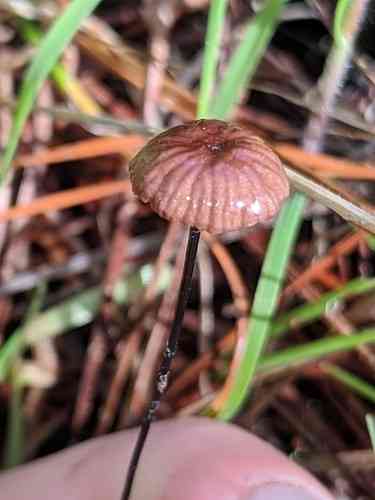
Cap 4 - 11 mm; convex; brown, center is darker; smooth but corrugated, dry, bald
Cap Shape
Convex, Flat, Depressed
Cap Surfaces
Smooth, Visible lines or stripes
Gills
Broadly attached to the stem; distant; pinkish
Gill Attachment
Attached
Stem
Stem 2 - 7 cm long, up to 1 mm thick; equal; dark reddish brown to black; dry, wiry, shiny
Stem Shapes
Cylindrical
Stem Surfaces
Smooth
Flesh
Insubstantial; pale brownish; unchanging when sliced
Ring
Ringless
Spore Print Color
White
Odor
Mildly mushroomy but not distinctive.
Body Color
BrownBlackRedOrangePink
Flesh Bruises
The flesh or milk does not discolor when bruised or cut.
Growth Form
Gregarious
Nutrient Gathering
Saprophytic
Substrate
Dead Woods, Leaf or Needle Litter
You can find Horsehair fungus by these plants
Jack pine, Spruces, Pines, Firs
Occurence Habitats
Coniferous Woodland, Mixed Woodland
Species Status
Widely distributed
Endangered Species
No
Scientific Classification of Horsehair fungus
Phylum
Club fungi
Class
Mushroom-forming fungi
Order
Gilled fungi
Family
Marasmiaceae
Genus
Gymnopus
Toxicity and Edibility of Horsehair fungus
Is Horsehair fungus Toxic?
Toxicity information is not available for this mushroom. Always consult with an expert before consuming any wild mushrooms.