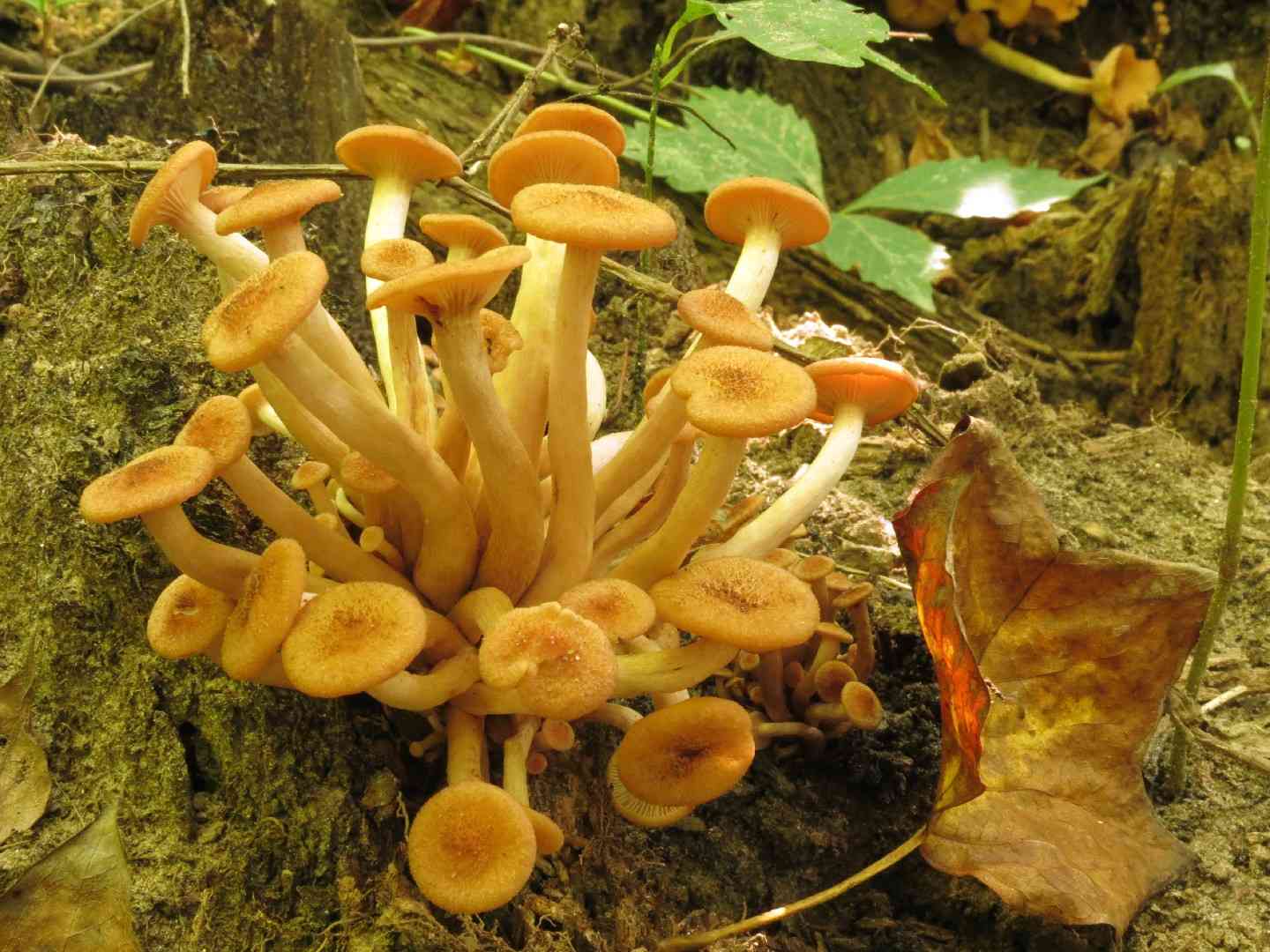
Ringless honey mushroom
Desarmillaria tabescens
A species of Desarmillaria.
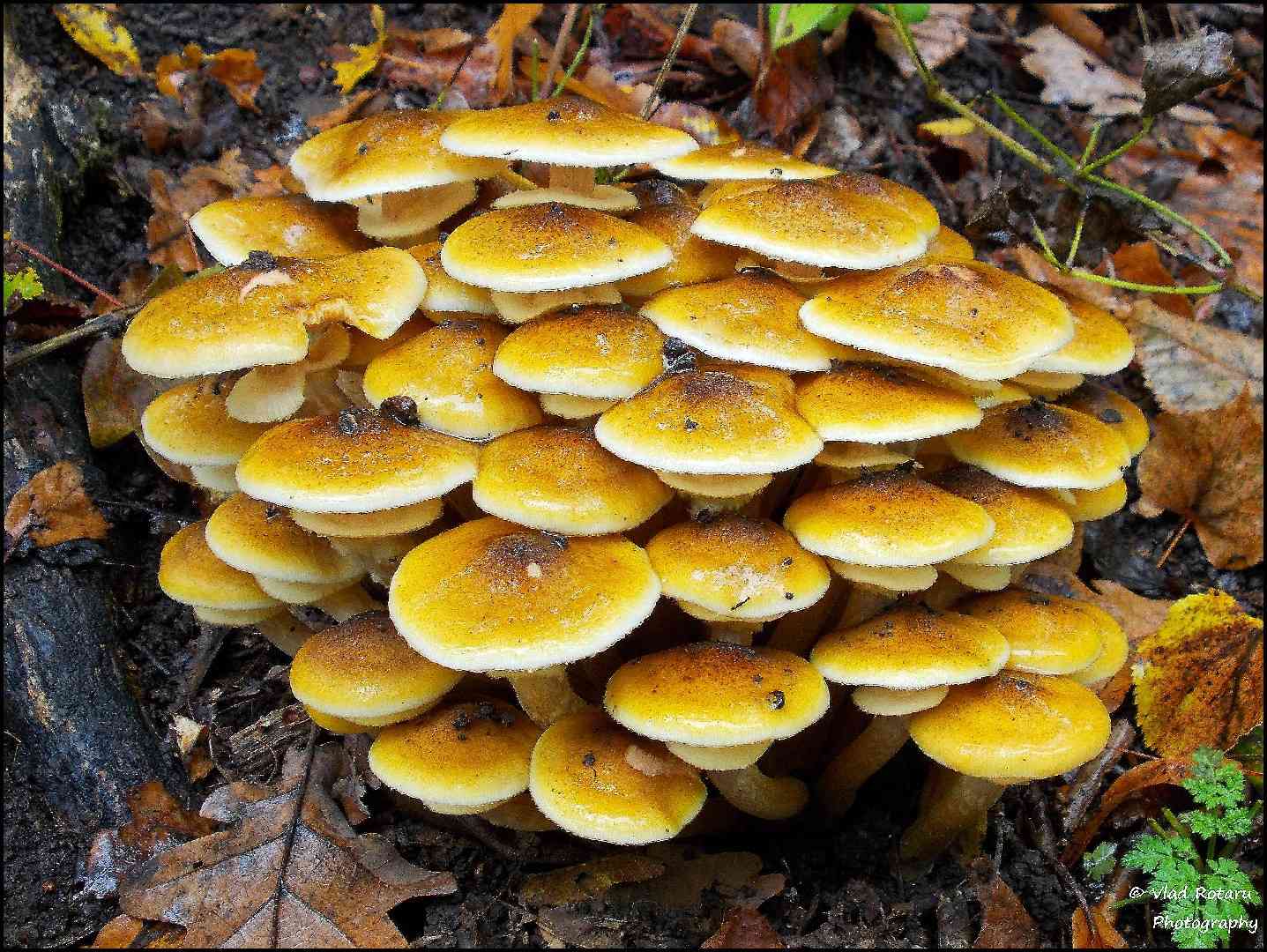
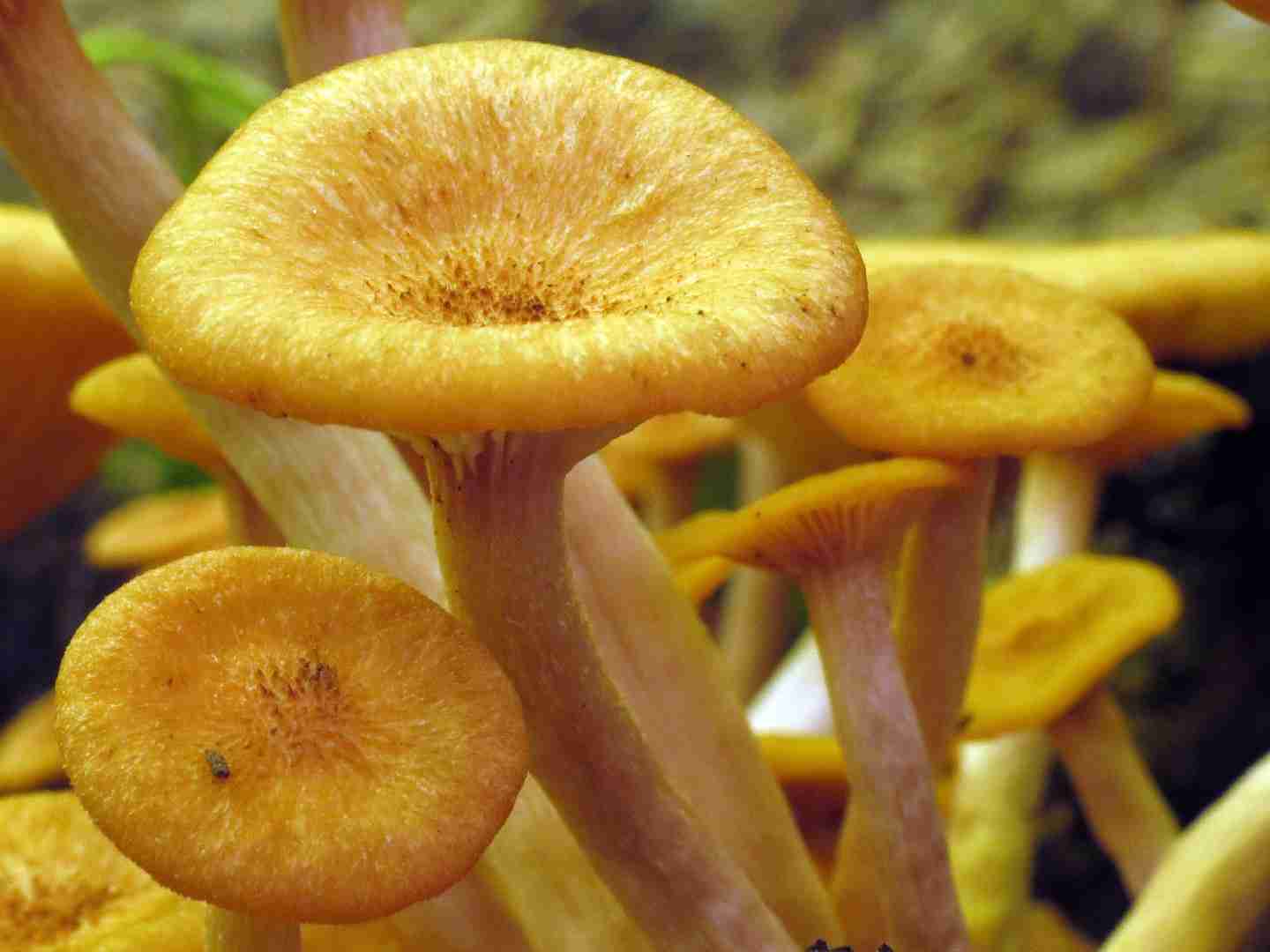
Ringless honey mushrooms bear a strong resemblance to other honey mushroom varieties. A key distinguishing feature, however, is the absence of a ring on theless honey mushroom's stem—a fleshy, circular band found on its counterparts. This particular mushroom acts as a wood decomposer, showing a distinct predilection for dead oak wood.
In This Article
Attributes of Ringless honey mushroom
Cap Diameter
2 - 7 cm
Height
2 - 10 cm
Cap
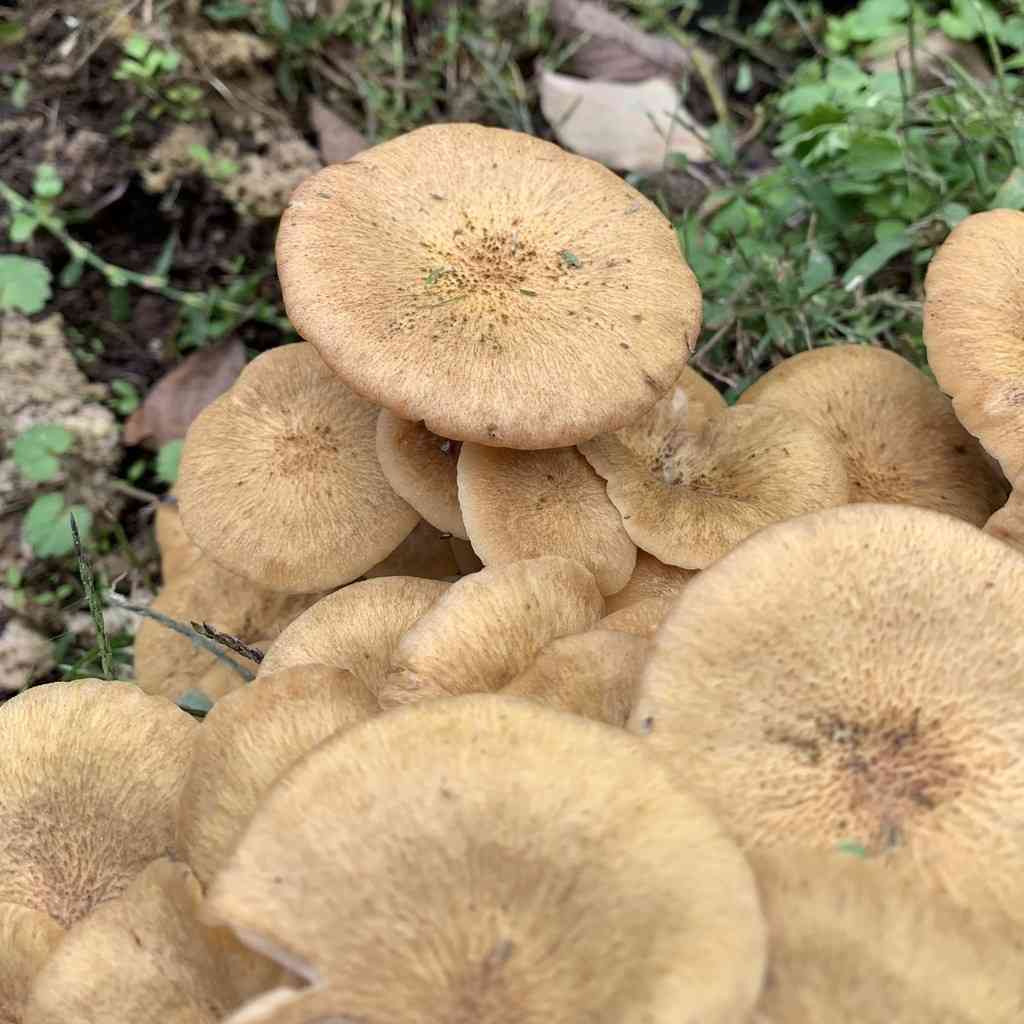
3 - 10 cm wide; yellow-brown; dry, with darker hairs or tufts of fibers; margin with veil remnants
Cap Shape
Convex, Flat, Central Bump
Cap Surfaces
Fibrillose-scaly, Visible lines or stripes
Gills
Subdecurrent; whitish, pinkish-brown
Gill Attachment
Decurrent
Stem
5 - 20 cm long, 4 - 16 mm wide; tapering to base; white above, brown base
Stem Shapes
Cylindrical
Flesh
Whitish to watery tan, unchanging when sliced
Ring
Ringless
Spore Print Color
White
Odor
Mildly mushroomy with a hint of cabbage.
Body Color
BrownYellow
Flesh Bruises
The flesh or milk does not discolor when bruised or cut.
Growth Form
Gregarious, Clustered
Nutrient Gathering
Parasitic
Substrate
On wood
You can find Ringless honey mushroom by these plants
Silver maple, Sugar maple
Species Status
Widely throughout central and southern mainland Europe
Endangered Species
No
Scientific Classification of Ringless honey mushroom
Phylum
Club fungi
Class
Mushroom-forming fungi
Order
Gilled fungi
Family
Physalacriaceae
Genus
Desarmillaria
Toxicity and Edibility of Ringless honey mushroom
Is Ringless honey mushroom Toxic?
Toxicity information is not available for this mushroom. Always consult with an expert before consuming any wild mushrooms.