Peeling oysterling
Crepidotus mollis
A species of Crepidotus. Also known as Flabby crepidotus.
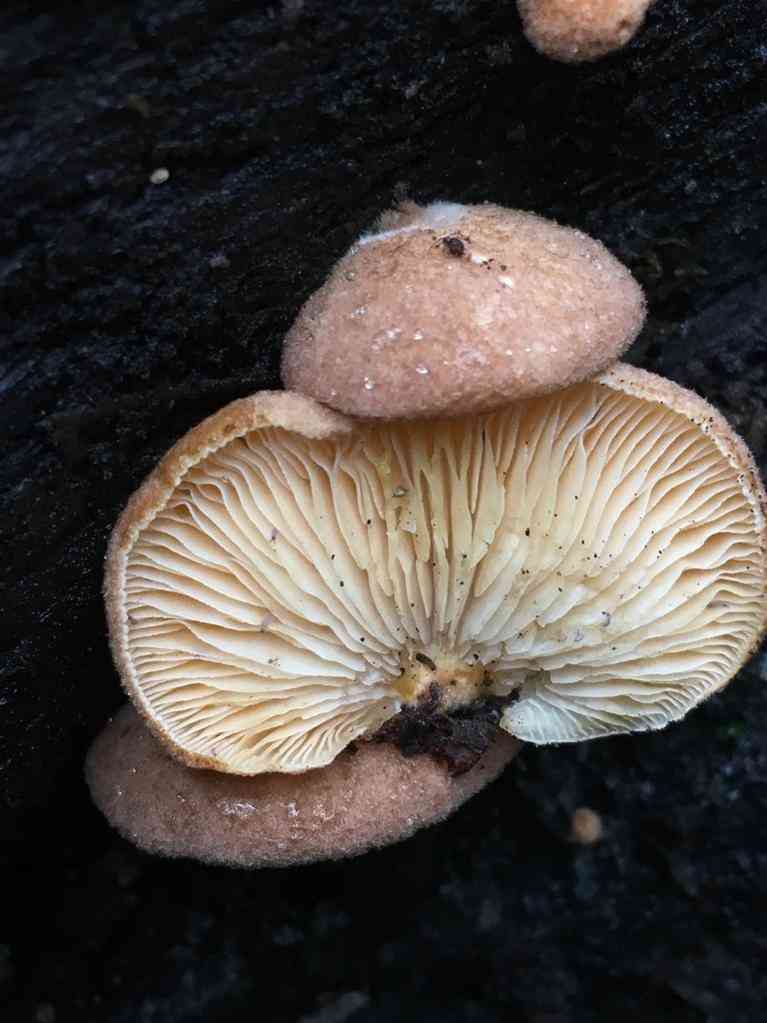
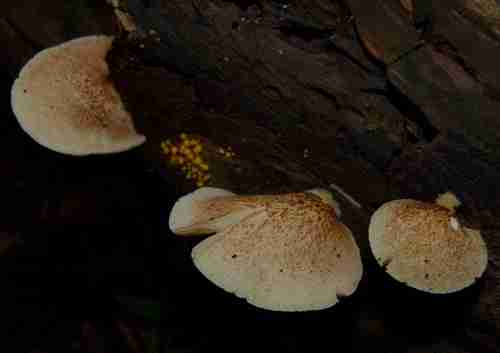
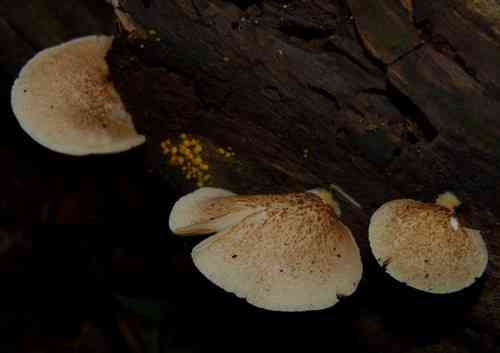
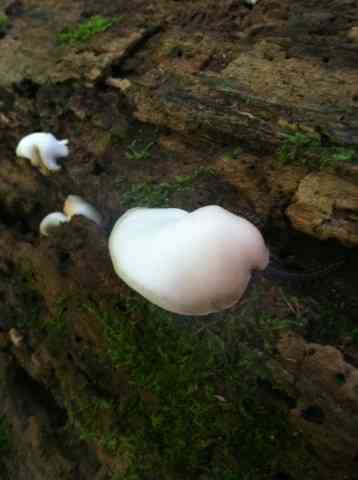
The Crepidotus mollis, often called the peeling oysterling, presents as a flat, somewhat reniform fungus emerging directly from decaying timber. Initially, its color is an off-white and its texture viscous, gradually transitioning to a muted buff hue upon maturation. The lamellae on the cap's underside exhibit wide spacing, and the entire fungal structure is remarkably fragile. It is poisonous and thus unfit for consumption.
In This Article
Attributes of Peeling oysterling
Cap Diameter
1 - 5 cm
Height
5 - 30 mm
Cap
Cap 1 - 5 cm across; convex; whitish to pale brown, reddish brown; surface smooth
Cap Surfaces
Fibrillose-scaly, Slimy or slightly sticky, Visible lines or stripes
Gills
Whitish, pale pinkish brown
Gill Attachment
Free to Attached
Flesh
Flabby; white
Spore Print Color
Snuff brown
Odor
Mildly mushroomy, generally non-distinctive.
Body Color
BrownWhite
Flesh Bruises
The flesh or milk does not discolor when bruised or cut.
Growth Form
Solitary, Scattered, Gregarious
Nutrient Gathering
Saprophytic
Substrate
Dead Woods, Wood of Living Trees
You can find Peeling oysterling by these plants
Ashes, Populus
Occurence Habitats
Deciduous Woodland, Coniferous Woodland
Species Status
Widely distributed, very common
Endangered Species
No
Scientific Classification of Peeling oysterling
Phylum
Club fungi
Class
Mushroom-forming fungi
Order
Gilled fungi
Family
Inocybaceae
Genus
Crepidotus
Toxicity and Edibility of Peeling oysterling
Is Peeling oysterling Toxic?
Toxicity information is not available for this mushroom. Always consult with an expert before consuming any wild mushrooms.