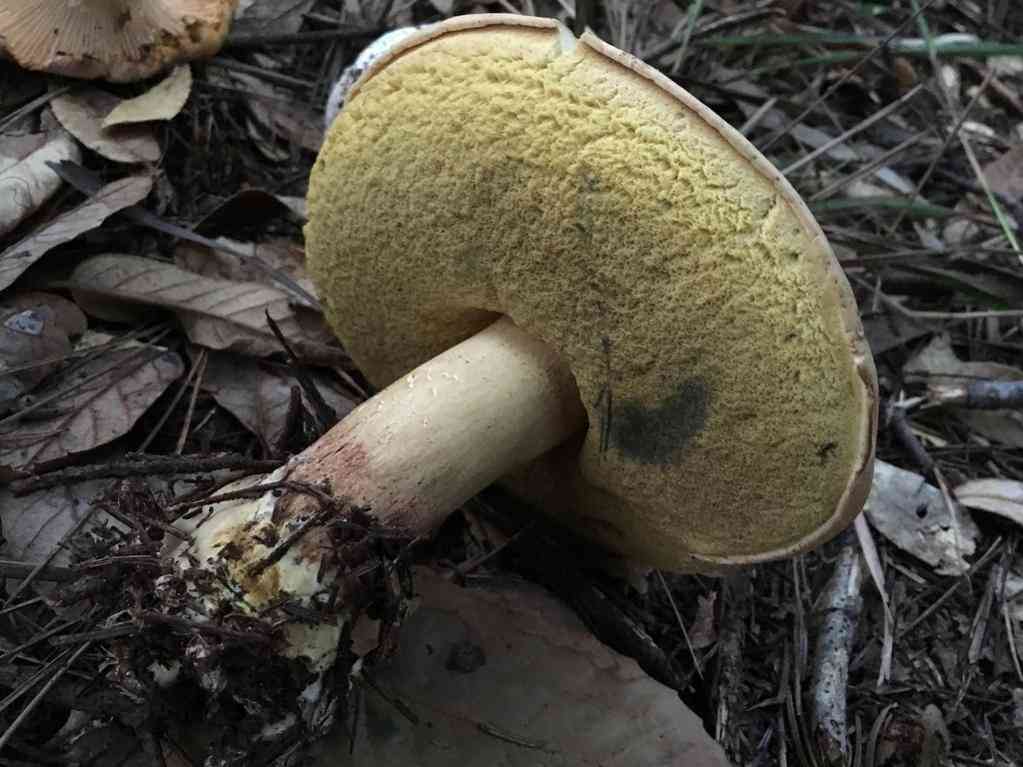
Red-stipe bolete
Caloboletus rubripes
A species of Bitter boletes. Also known as Western bitter bolete.
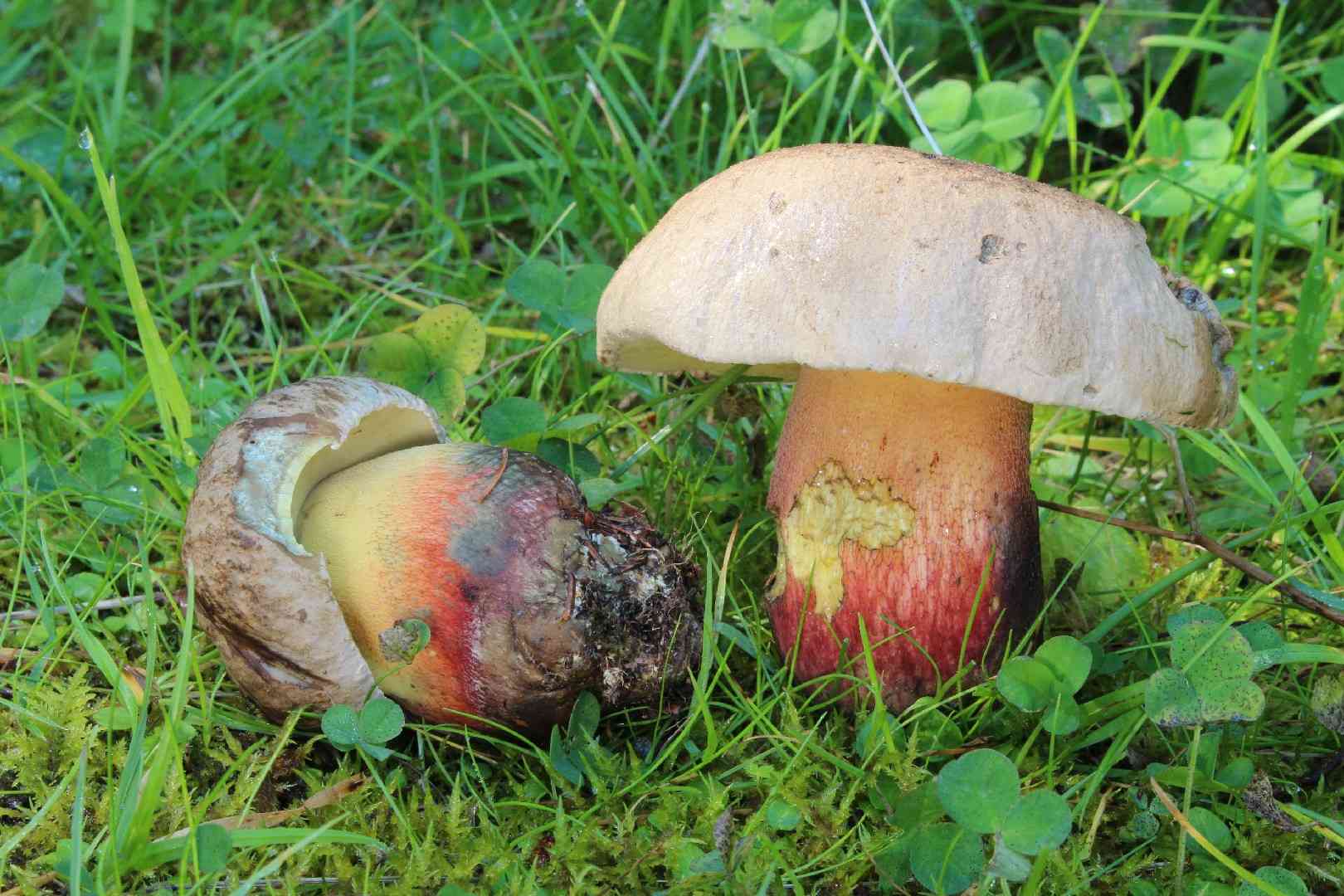
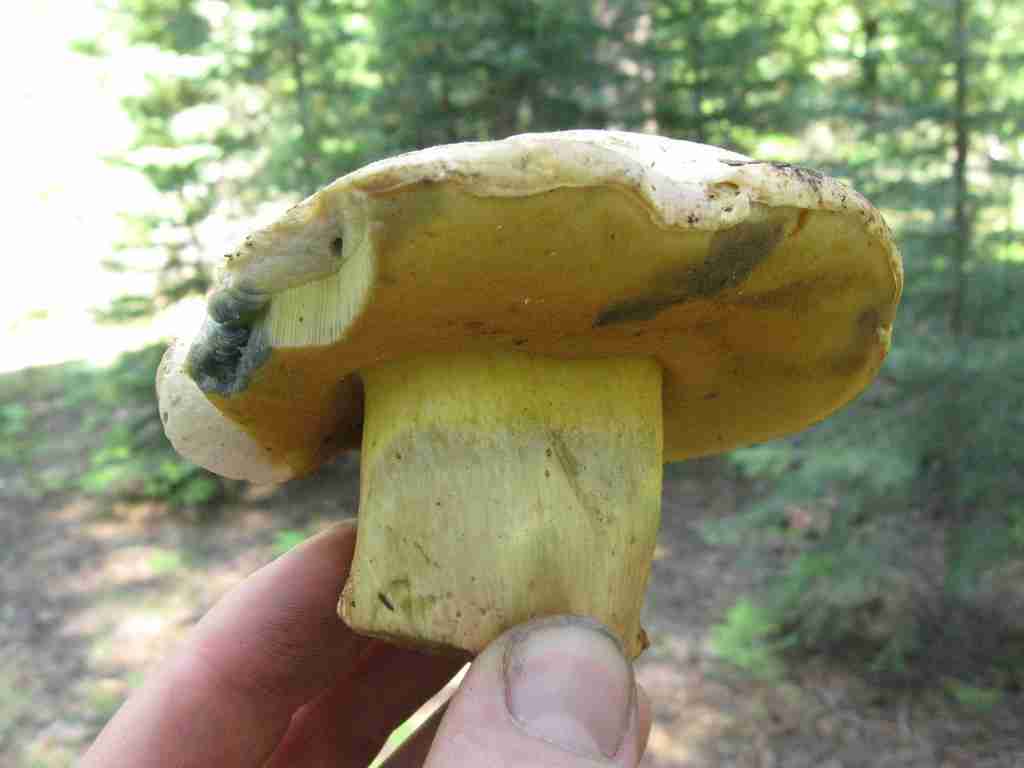
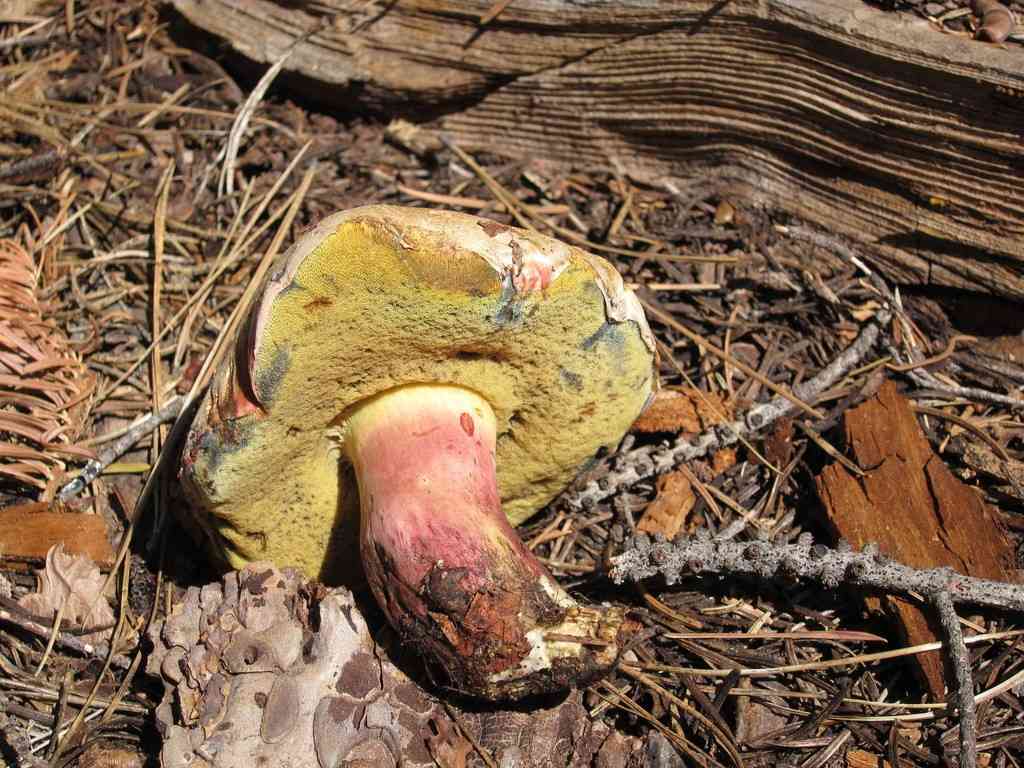
The Red-stipe bolete is a common choice for mushroom dyers looking to extract different shades of brown or beige. Its distinct, disagreeable odor is a notable characteristic. As these fungi develop, their caps may develop fissures, and any damage or cutting to their white flesh quickly results in a blue discoloration. They are also frequently found forming symbiotic relationships with coniferous trees.
In This Article
Attributes of Red-stipe bolete
Cap Diameter
6 - 20 cm
Height
7 - 18 cm
Cap
Cap diameters of 4 - 20 cm; convex to cushion-shaped, flat; buff to olive-brown; dry, with a velvet-like to slightly hairy textur; margin is rolled or curved inward
Cap Shape
Convex, Flat
Cap Surfaces
Fibrillose-scaly
Stem
Stem 5 - 15 cm long by 2 - 5 cm wide; nearly equal, clavate, solid; pinkish-red to purple-red, yellow; dry surface with slight longitudinal grooves
Stem Shapes
Tapering
Stem Surfaces
Ribbed
Flesh
Whitish to pale yellow; quickly turn blue when cut or exposed to air
Ring
Ringless
Spore Print Color
Olive-brown
Odor
Indistinct to mildly unpleasant
Body Color
GreenYellowRedPurplePink
Flesh Bruises
Discolor to blue
Growth Form
Solitary, Gregarious
Nutrient Gathering
Mycorrhizal
Substrate
On soil
You can find Red-stipe bolete by these plants
Oaks
Occurence Habitats
Mixed Woodland
Species Status
Least Concern
Endangered Species
No
Scientific Classification of Red-stipe bolete
Phylum
Club fungi
Class
Mushroom-forming fungi
Order
Boletes and allies
Family
Boletes
Genus
Bitter boletes
Toxicity and Edibility of Red-stipe bolete
Is Red-stipe bolete Toxic?
Toxicity information is not available for this mushroom. Always consult with an expert before consuming any wild mushrooms.