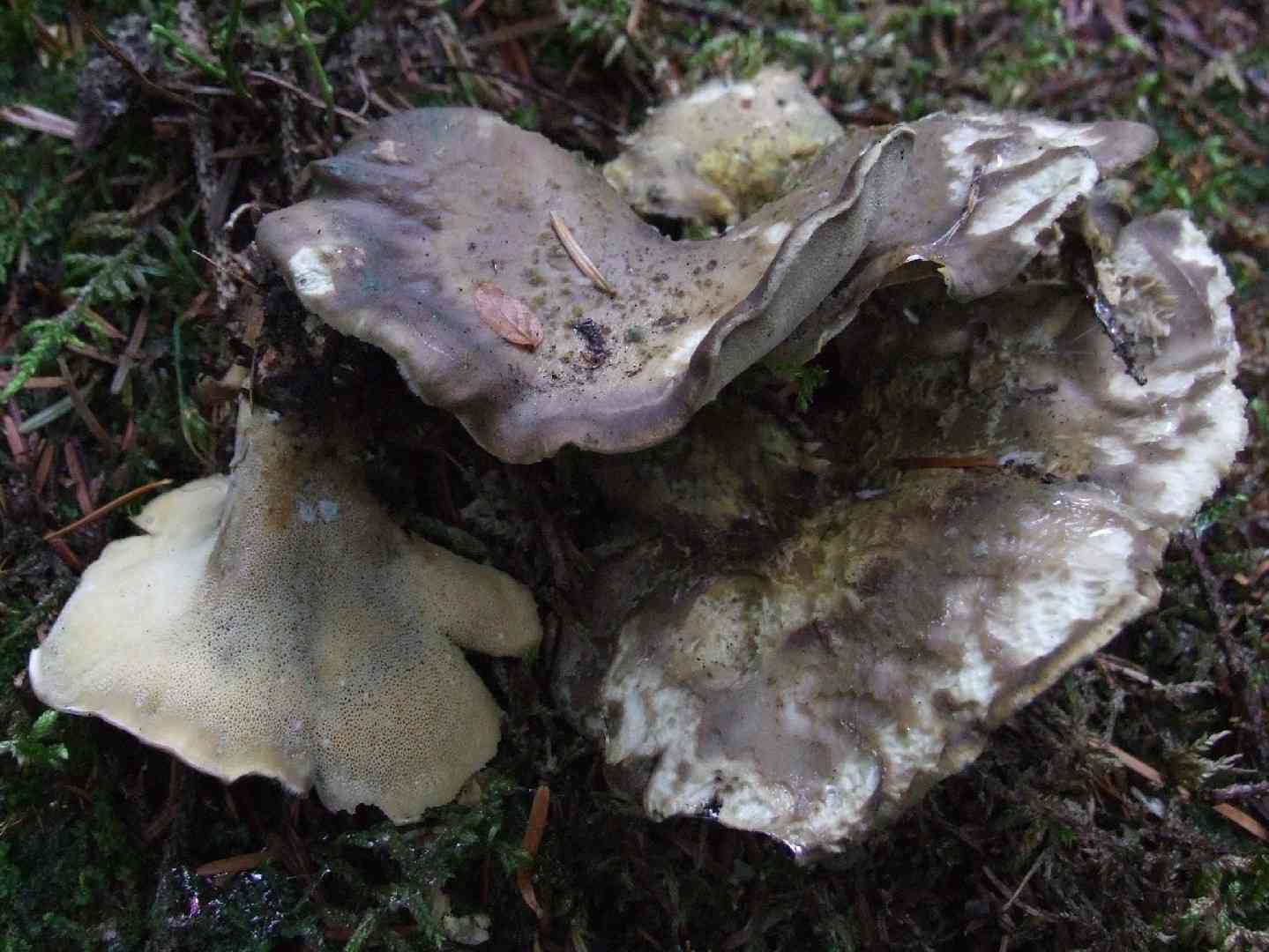
Boletopsis leucomelaena
Boletopsis leucomelaena
A species of Boletopsis.
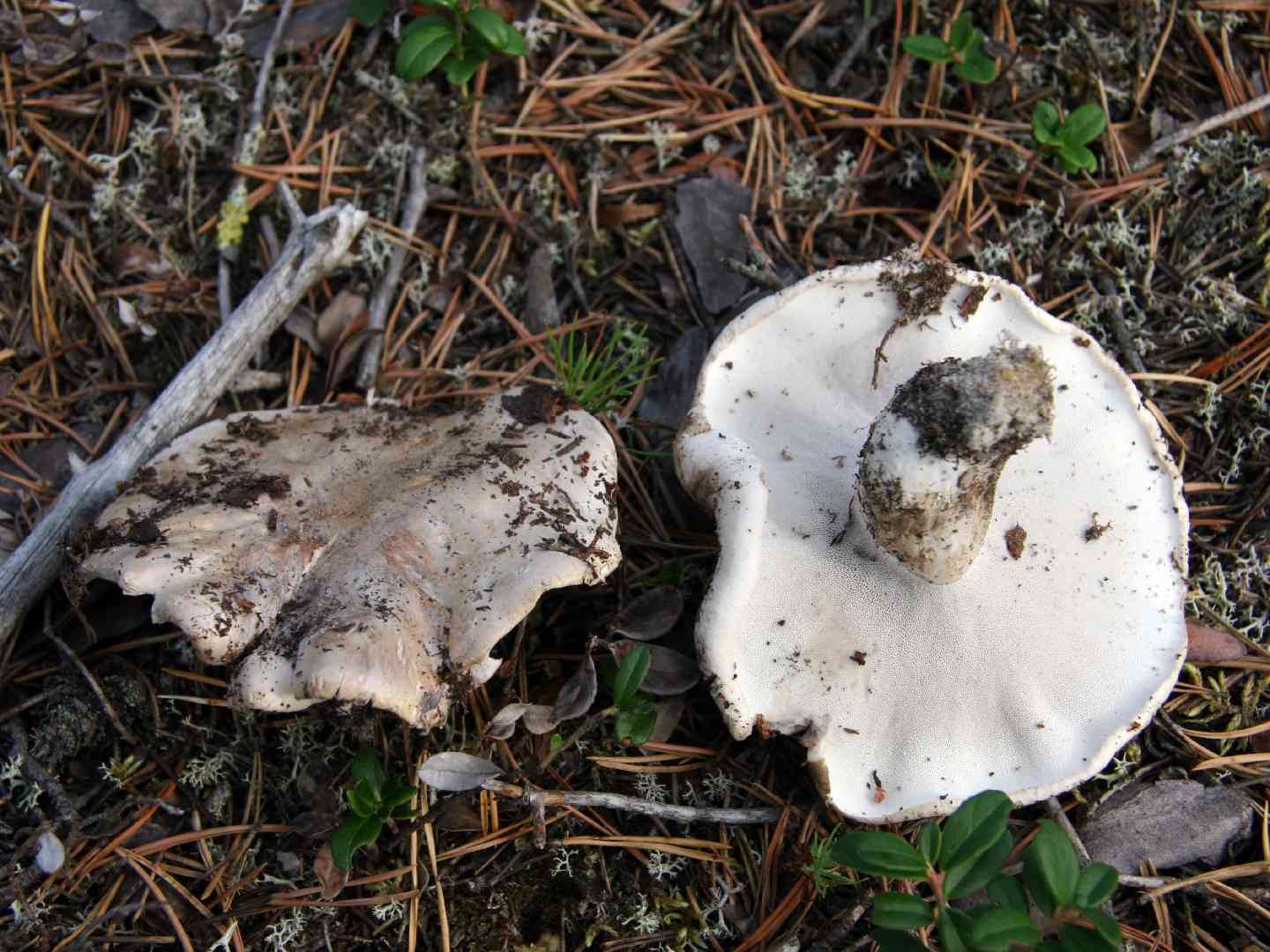
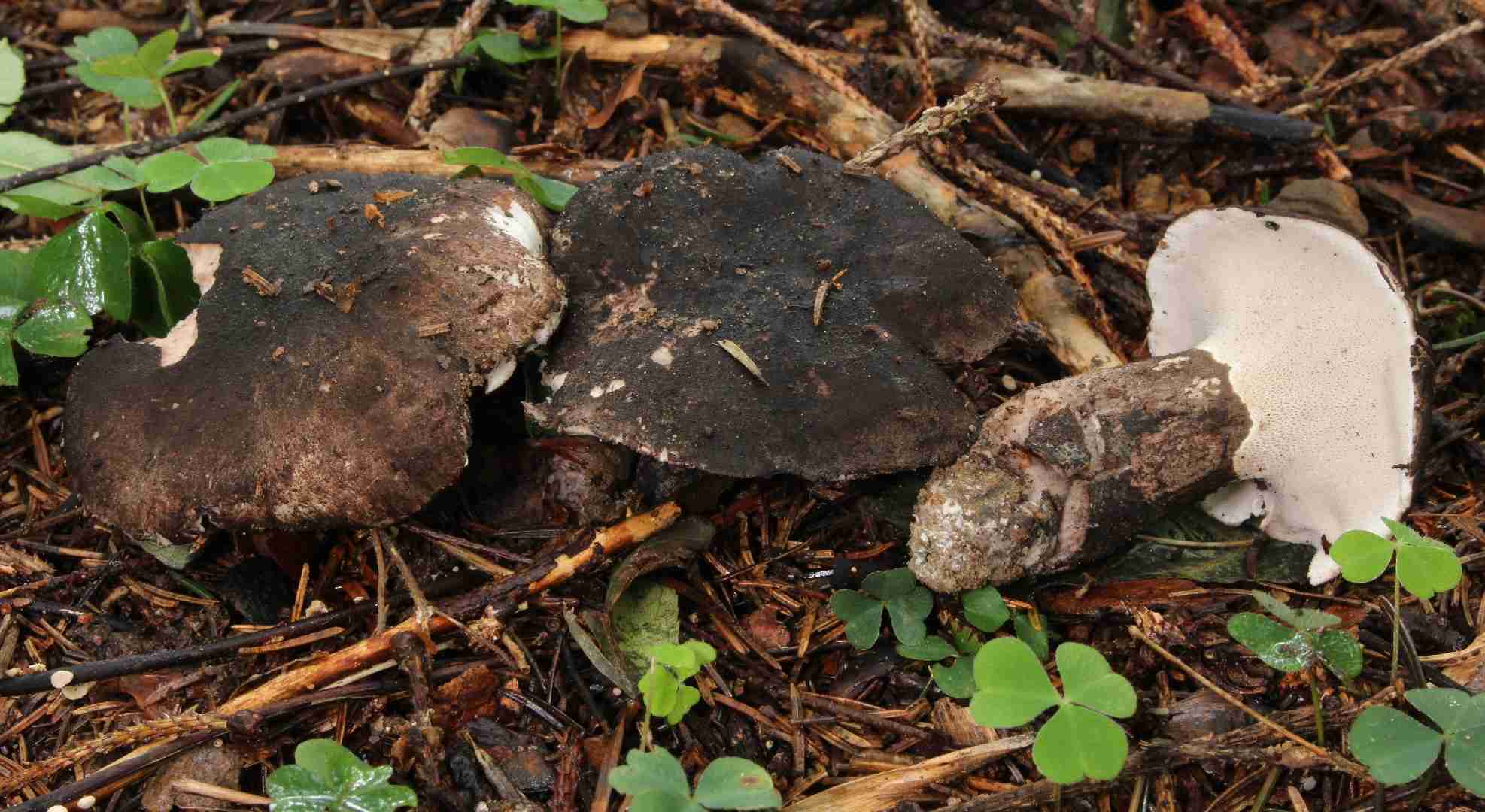
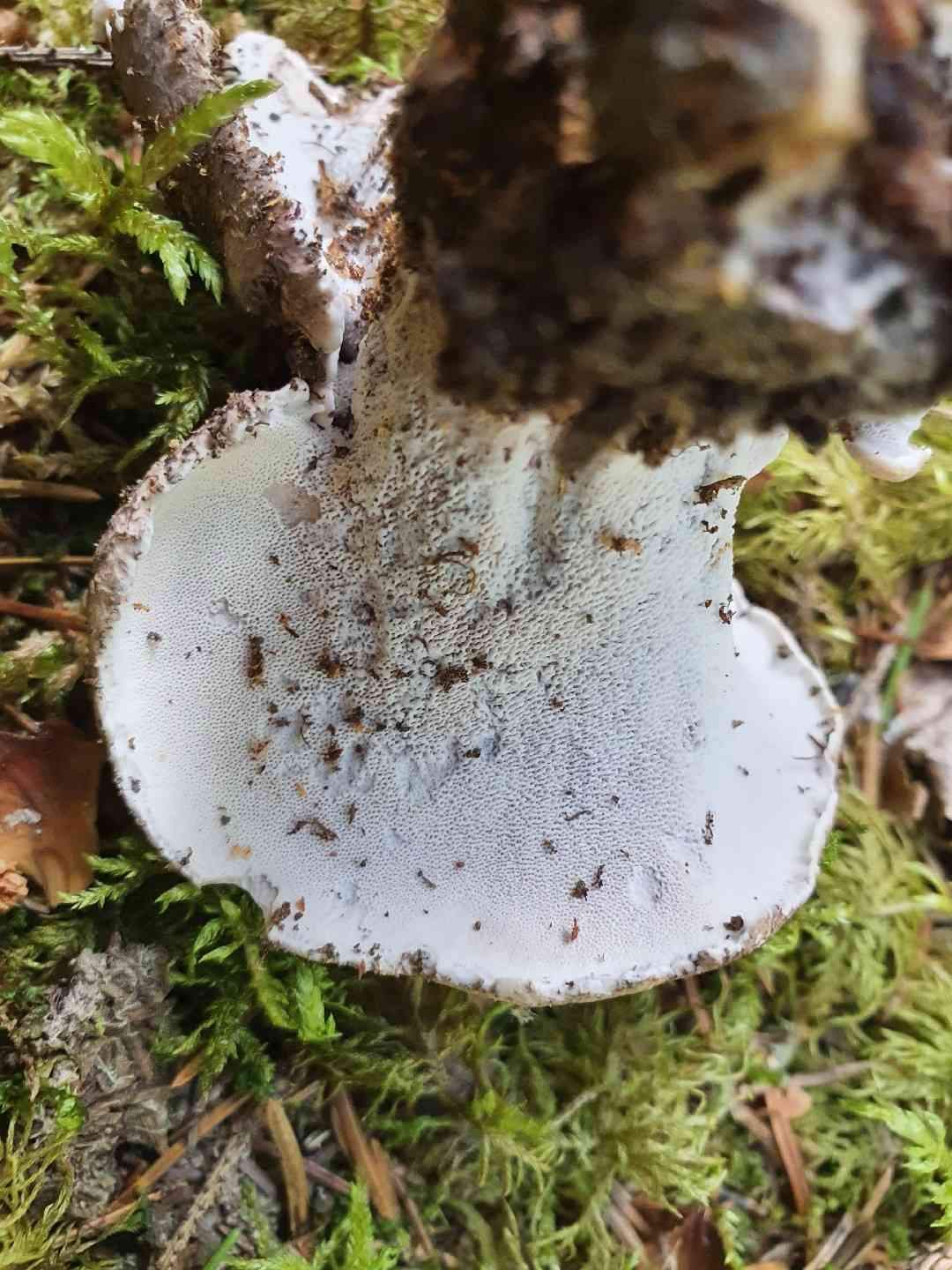
Boletopsis leucomelaena stands out as a unique fungal species, typically recognized by its greyish pileus and strikingly dark stipe. It thrives in coniferous woodland environments, showing a particular preference for the moist, acidic ground often found under pine trees. A key identifying feature is its porous, tubular hymenophore situated on the underside of the cap, rather than the more common gill structure. This fungus frequently appears in small clusters and can be observed from summer through to autumn.
In This Article
Attributes of Boletopsis leucomelaena
Cap Diameter
4 - 9 cm
Height
4 - 7 cm
Cap
Cap 5 - 8 cm across; convex to planoconvex; gray to dark gray or nearly black; with mottled or streaked
Cap Shape
Convex, Flat
Cap Surfaces
Smooth
Stem
Stem 3 - 5 cm long, 1.5 - 2.5 cm thick; whitish, orangish; tough
Stem Shapes
Cylindrical
Stem Surfaces
Scaly
Flesh
Whitish; turns pinkish gray to lilac gray when stained
Ring
Ringless
Spore Print Color
Pale yellowish brown
Odor
Subtle, non-distinct, possibly faintly bitter undertones.
Body Color
BlackGrayWhiteOrange
Flesh Bruises
The flesh or milk does not discolor when bruised or cut.
Growth Form
Solitary, Scattered, Gregarious
Nutrient Gathering
Mycorrhizal
Substrate
On soil
You can find Boletopsis leucomelaena by these plants
Spruces, Pines, Norway spruce
Occurence Habitats
Coniferous Woodland
Endangered Species
No
Scientific Classification of Boletopsis leucomelaena
Phylum
Club fungi
Class
Mushroom-forming fungi
Order
Thelephorales
Family
Bankeraceae
Genus
Boletopsis
Toxicity and Edibility of Boletopsis leucomelaena
Is Boletopsis leucomelaena Toxic?
Toxicity information is not available for this mushroom. Always consult with an expert before consuming any wild mushrooms.